Arthritis in your knees usually means osteoarthritis, and the treatments with the strongest backing are the plainest ones: regular exercise, weight loss if you carry extra weight, and a topical anti-inflammatory gel, with a steroid injection held back for flares. Both major U.S. guidelines say so. Light, magnetic and sound-wave therapies sit well below that line in the guidelines, and the studies on them are mixed.
What is knee osteoarthritis, and how is it diagnosed?
Osteoarthritis (OA) is the most common form of arthritis; the American College of Rheumatology (ACR) estimates it affects 33 million people in the United States (2026). In the knee, the cushioning cartilage wears down and the bone around the joint changes shape. Mayo Clinic lists pain during or after movement, tenderness, stiffness on waking or after sitting, loss of flexibility, a grating feeling on stairs, and bone spurs.
There is no single test. MedlinePlus says your provider asks about symptoms and history, examines the joint, and may use X-rays or lab tests to make sure something else is not behind the symptoms. Mayo adds that blood tests or joint fluid analysis are sometimes used to rule out inflammatory or infectious causes, which is why a knee that turns suddenly hot, red and swollen deserves a prompt call to your doctor. Pain just below the kneecap after jumping or running may be a tendon problem instead; our guide to jumper's knee covers that.
What is the first-line knee osteoarthritis treatment?
The first-line treatment for knee osteoarthritis is exercise, with weight loss when it applies, a topical NSAID (anti-inflammatory gel) and, for flares, a steroid injection. The ACR's 2026 update says: "In people with knee and hip OA, we strongly recommend exercise." It rates the certainty of that evidence as moderate. The 2026 text is a summary the ACR board approved on September 8, 2026; the full manuscript has not been published yet, so the evidence tables are not available to check.
Here is how the ACR's 2026 summary and the American Academy of Orthopaedic Surgeons (AAOS) 2021 guideline handle the main options:
| Option | ACR 2026 (knee) | AAOS 2021 (knee) |
|---|---|---|
| Exercise | Strongly recommend (moderate certainty) | "Recommended over no exercise" (Strong) |
| Weight loss | Strongly recommend if overweight or obese (moderate) | "Sustained weight loss is recommended" (Strong) |
| Topical NSAIDs | Strongly recommend (moderate) | "Should be used... when not contraindicated" (Strong) |
| Braces | Conditionally recommend (very low to moderate, by brace type) | "Could be used" (Moderate) |
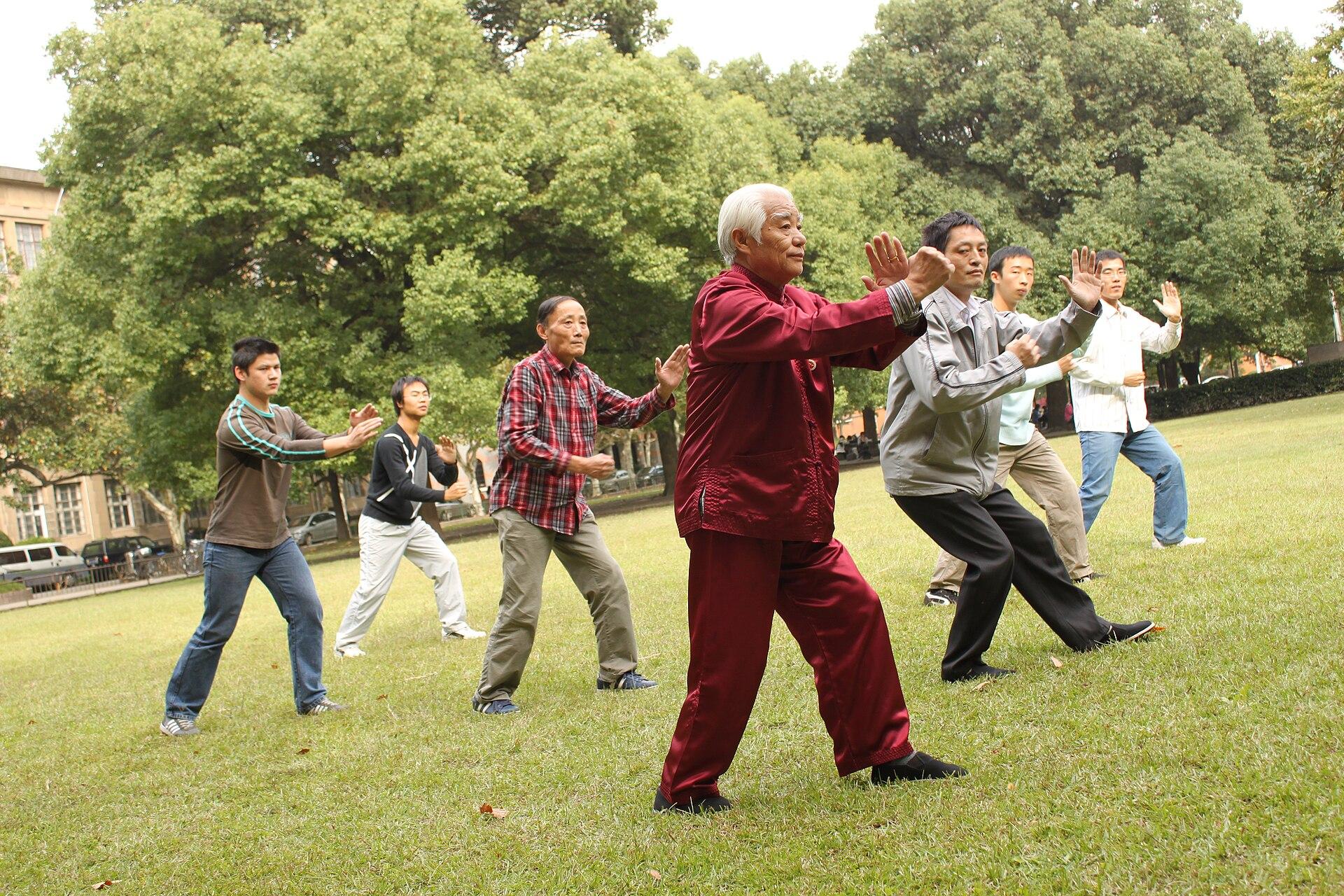
| Tai chi | Conditionally recommend (very low) | Not in the recommendations we read |
| Steroid injection | Strongly recommend (low) | "Could provide short-term relief" (Moderate) |
| Hyaluronic acid injection | Conditionally recommend against (moderate) | "Not recommended for routine use" (Moderate) |
| Platelet-rich plasma (PRP) | Strongly recommend against (low) | "May reduce pain and improve function" (Limited) |
| Stem cell injection | Strongly recommend against (moderate) | Not in the recommendations we read |
Three details matter. First, "conditional" means a good fit for some people after a talk about benefits, harms and cost; it is a softer yes. Second, the ACR's 2019 guideline had listed tai chi and tibiofemoral bracing as strong recommendations; the 2026 summary lists both as conditional. Third, the two guidelines split on PRP, and the AAOS rated its own "may reduce pain" statement only Limited. The ACR 2026 update also added a conditional recommendation for GLP-1 receptor agonist drugs to help people with knee OA and obesity reach a healthier weight alongside diet and exercise. That is a conversation for your doctor.
If your knee hurts when you walk, the ACR also lists, as a good-practice statement, advising canes and other mobility aids as appropriate. Heat or cold, massage and acupuncture each get a conditional recommendation in the 2026 summary.
What "exercise" means in practice. Mayo Clinic Press quotes a physician recommending walking in well-fitted shoes, water-based exercise, and thigh-strengthening work because it helps stabilize the joint. A physical therapist can fit that to your knee, and the ACR advises referral to physical therapy when pain or limits stop you from exercising.
Which injections do the guidelines support?
Only steroid injections get a strong ACR recommendation, and the AAOS describes their benefit as short-term relief. Hyaluronic acid ("gel shots") is not recommended for routine use by the AAOS and is conditionally recommended against by the ACR. PRP and stem cells are strongly recommended against by the ACR; the AAOS gives PRP a Limited "may reduce pain" statement.
The ACR gave its reasons for PRP and stem cells in 2019: preparations and techniques vary so much that it is hard to know exactly what is being injected. Our PRP aftercare guide covers what follows an injection you have already decided on.
Do laser, PEMF, shockwave and red light help arthritis in the knees?
The reviews give different answers by therapy, and none of them make these a first-line treatment. The AAOS 2021 guideline gives each of laser, shockwave and pulsed electromagnetic fields (PEMF) a Limited strength: "may be used" to improve pain or function. The ACR's 2026 summary lists none of them.
| Therapy | What a review found | How to read it |
|---|---|---|
| Laser (photobiomodulation) | Mixed: a 2015 review of 9 trials found no benefit over sham; a 2019 review of 22 trials found less pain | Depends on dose and which trials are counted |
| PEMF | A 2026 review of 9 trials found no pain or total-score gain at one month | High risk of bias, small gains |
| Focused or radial shockwave | An umbrella review of 8 meta-analyses favored it over sham | Certainty rated very low to high across them |
| Red light | No review found for full-body beds | Evidence comes from laser and LED devices aimed at the knee |
Laser. A 2015 meta-analysis of nine trials (518 people) found no significant difference from sham in pain or WOMAC scores and concluded the evidence did not support low-level laser. A 2019 meta-analysis of 22 trials (1,063 people) found pain lower than placebo by 14.23 mm on the visual analog scale at the end of therapy, with larger gains when recommended doses were used, and no adverse events reported. A 2024 network meta-analysis of 11 trials found both low-level and high-intensity laser, each paired with exercise, beat placebo plus exercise at weeks 4 and 8, with high-intensity ahead at week 8. Then a 2023 randomized trial found that adding light therapy to a strengthening program gave no incremental benefit, and its authors wrote it "should not be used as first-line management." Our laser guide goes deeper on Class IV lasers.
PEMF. A 2026 meta-analysis of nine trials (457 people) found no significant gain in pain or total WOMAC at one month. WOMAC pain improved at 18 to 21 days, and stiffness and daily activity improved at one month, but objective function measures did not, risk of bias was high, and the authors said the gains may fall short of clinical meaning. See what PEMF is for how sessions work.
Shockwave. A 2024 umbrella review of eight meta-analyses found shockwave beat sham on pain, with a mean difference of 2.0 on the visual analog scale; those meta-analyses were graded from very low to high certainty. They pooled focused and radial devices and different energy levels, so a result may not match a given device.
Red light. Red light therapy is photobiomodulation, and the trials above used lasers or LED clusters placed on the knee. We did not find a trial or review of full-body red-light beds in knee osteoarthritis, so those results are the closest evidence available, and an imperfect match. Our red light guide covers the wider research.
When is knee replacement the next step?
Replacement is considered when nonsurgical care stops helping and the knee limits daily life. AAOS OrthoInfo lists severe pain or stiffness that limits walking, stairs and getting out of chairs, moderate or severe pain at rest, swelling that does not improve, deformity, and failure to improve with medication, injections or therapy. Recommendations rest on pain and disability, and most patients are 50 to 80.
OrthoInfo says more than 90% of modern knee replacements are still functioning well 15 years on (a longevity figure; ask your surgeon about yours). It lists unlimited walking, swimming, golf, and other low-impact activities as realistic afterward, and says most surgeons advise against running and other high-impact sports. If surgery is on the horizon, read how to prepare for a knee replacement and the knee replacement recovery timeline.
Questions to bring to the surgeon:
- Which of my X-ray findings match my pain?
- What have I not yet tried at full dose, such as a supervised exercise program?
- Which injection, if any, fits my knee, and what should I expect from it?
- If I wait, what changes my answer?
Where do studio services fit?
Studio services sit beside first-line care, not in place of it. The evidence above points to a possible role for laser and shockwave, a weaker one for PEMF, and none we could verify for full-body red light beds. OutRecover's pages describe each service by what people use it for, and its research summaries are on the orthopedic and joint health page.
If you want to try them, two packages match your goal. OutRelief lists knee pain and arthritis pain and stiffness among who it is for, and combines PEMF, Class IV laser and red light, plus an IV and molecular hydrogen, which this guide did not review. OutMove is a shorter program for stiff, achy joints with the same three services. Shockwave is sold by the session on its own. Keep your exercise program going alongside any of them; the 2023 trial above found that light therapy added nothing to a strengthening program.
If a replacement is planned, clear anything new with your surgeon first. OutPrepare is the studio's pre-surgery package, and your surgeon decides whether it fits. If you play pickleball, our pickleball injuries guide covers the common ones.
Your next step
Book a visit with your primary care doctor or an orthopedic surgeon if you have not had your knees examined or X-rayed. Ask for a referral to physical therapy, start walking or water exercise this week, and decide with your doctor whether a steroid injection or a weight-loss plan belongs in it. Add laser or PEMF only as an extra you can stop, judged against a goal you set first, such as walking the course or finishing a set of pickleball.
Sources
- American College of Rheumatology. 2026 Update of the ACR Recommendations for the Management of Osteoarthritis of the Knee, Hip, and Hand (summary). ACR, 2026. https://assets.contentstack.io/v3/assets/bltee37abb6b278ab2c/bltb3d12c34020da842/oa-guideline-summary-2026.pdf
- American College of Rheumatology. ACR Updates Osteoarthritis Guidance, Reinforcing Personalized, Comprehensive Care. Press release, 2026. https://rheumatology.org/press-releases/american-college-of-rheumatology-updates-osteoarthritis-guidance-reinforcing-personalized-comprehensive-care
- Kolasinski SL, et al. 2019 ACR/Arthritis Foundation Guideline for the Management of Osteoarthritis of the Hand, Hip, and Knee. Arthritis Care & Research, 2020. https://pubmed.ncbi.nlm.nih.gov/31908149 (full text: https://www.arthritis.org/getmedia/d57cf9f5-e096-43a2-832d-dbc174065a58/Kolasinski-2020-american-college-of-rheumatology-a.pdf)
- American Academy of Orthopaedic Surgeons. Management of Osteoarthritis of the Knee (Non-Arthroplasty) Clinical Practice Guideline, 3rd Edition. AAOS, 2021. https://www.aaos.org/globalassets/quality-and-practice-resources/osteoarthritis-of-the-knee/oak3cpg-grand-rounds-3.pdf
- Mayo Clinic Orthopedics and Sports Medicine. Knee Arthritis, overview. Mayo Clinic. https://sportsmedicine.mayoclinic.org/condition/kneearthritis
- MedlinePlus. Osteoarthritis. National Library of Medicine. https://medlineplus.gov/osteoarthritis.html
- Mayo Clinic Press. Knee-pain treatment for osteoarthritis. Mayo Clinic Press. https://mcpress.mayoclinic.org/living-well/knee-pain-treatment-for-osteoarthritis
- American Academy of Orthopaedic Surgeons. Total Knee Replacement. OrthoInfo, reviewed 2023. https://orthoinfo.aaos.org/en/treatment/total-knee-replacement/
- Huang Z, et al. Effectiveness of low-level laser therapy in patients with knee osteoarthritis: a systematic review and meta-analysis. Osteoarthritis and Cartilage, 2015. https://pubmed.ncbi.nlm.nih.gov/25914044
- Stausholm MB, et al. Efficacy of low-level laser therapy on pain and disability in knee osteoarthritis: systematic review and meta-analysis of randomised placebo-controlled trials. BMJ Open, 2019. https://pubmed.ncbi.nlm.nih.gov/31662383
- Khalilizad M, et al. Efficacy of high-intensity and low-level laser therapy combined with exercise therapy on pain and function in knee osteoarthritis: a systematic review and network meta-analysis. Journal of Lasers in Medical Sciences, 2024. https://pubmed.ncbi.nlm.nih.gov/39193110
- Jorge AES, et al. Photobiomodulation does not provide incremental benefits to patients with knee osteoarthritis who receive a strengthening exercises program: a randomized controlled trial. Brazilian Journal of Physical Therapy, 2023. https://pmc.ncbi.nlm.nih.gov/articles/PMC10440468
- Chang YS, Lin CY, Huang WC. Pulsed electromagnetic field therapy in people with knee osteoarthritis: a systematic review and meta-analysis. Medicina, 2026. https://pubmed.ncbi.nlm.nih.gov/42075549
- Tang P, et al. The efficacy of extracorporeal shock wave therapy for knee osteoarthritis: an umbrella review. International Journal of Surgery, 2024. https://pmc.ncbi.nlm.nih.gov/articles/PMC11020044
