PEMF stands for pulsed electromagnetic field therapy: a device sends short, repeating bursts of a changing magnetic field through the body, usually while you lie on a mat or hold an applicator against a sore spot. The FDA has cleared specific devices for specific jobs, mainly stubborn fractures and pain and swelling after surgery. For everyday aches the research is mixed, side effects are usually minor, and a few groups should skip it. Here is how to weigh a mat you have seen advertised.
What is PEMF therapy?
PEMF therapy uses a device to pass a pulsed, changing magnetic field through tissue. The NCCIH (the National Institutes of Health's center for complementary health, 2023) lists it among the electromagnet therapies studied for pain or healing. A Cochrane review (2013) notes that mats or small machines can deliver the field to the whole body or to one joint. OutRecover's PEMF service page describes low-frequency pulses delivered by a mat or applicator.
It gets confused with three other things:
| Often mistaken for | What it is | How PEMF differs |
|---|---|---|
| TENS | Electrodes on the skin send a low-voltage electrical current to activate nearby nerves (StatPearls, 2024) | PEMF works through a changing magnetic field, and a mat needs no electrodes on you |
| Static magnets (bracelets, braces) | A fixed magnet that does not pulse. NCCIH found no conclusive evidence it helps any form of pain | PEMF is a different technology with a different research record |
| MRI | A scanner that combines a strong static field, a changing field and radiofrequency energy to make images (FDA) | MRI is a diagnostic tool, not a therapy, and its fields are not what a mat delivers |
Is PEMF FDA approved?
Some PEMF-type devices are FDA-approved or cleared for narrow uses. PEMF therapy as a whole is not. The agency's wording matters: "approved" means a full premarket review, and "cleared" means a 510(k) finding that a device is substantially equivalent to one already on the market. Here is what the paperwork covers.
| Use | What the FDA record says | Type |
|---|---|---|
| Fractures that have not healed | An FDA summary (2020) lists PEMF bone growth stimulators approved through premarket approval in 1979 and 1986. A 2026 final order moved these devices to class II and calls them prescription devices for "established nonunions or failed fusions" and as an adjunct to fracture fixation and spinal fusion | Prescription |
| Pain and swelling after surgery | 21 CFR 890.5290 (2026) defines nonthermal shortwave therapy: pulsed energy at 13.56 or 27.12 MHz "for adjunctive use in the palliative treatment of postoperative pain and edema of soft tissue" | Prescription |
| Knee arthritis and heel pain | One over-the-counter device was cleared for "adjunctive treatment of musculoskeletal pain related to plantar fasciitis of the heel and osteoarthritis of the knee" (FDA 510(k) K152432, 2016) | Over the counter |
Three limits follow from that table. Each listing covers a particular device and a particular use, and none of the wording above mentions general recovery, energy or detox. The FDA's nonthermal definition is pulsed radiofrequency, so ask any provider what their device outputs and which listing covers it. And "adjunctive" means alongside standard care, not instead of it.
Two more traps. "FDA registered" is not approval: the FDA says it issues no registration certificates, and that firms displaying them can misbrand a device. And a product sold under the general wellness policy (2026) can make relaxation claims without clearance, but the FDA adds that inclusion "does not establish that it has been shown to be safe and/or effective."
Where is the evidence thin?
Evidence for PEMF is strongest where the FDA has acted and weakest for general pain. The NCCIH summary says the data is "mixed." For the full research, read OutRecover's PEMF clinical evidence page. This table covers the caveats you should know before you try it.
| Question | What the best summary found |
|---|---|
| Delayed or non-healing fractures | A Cochrane review (2011; four trials, 125 people) found it "may offer some benefit" but called the evidence "inconclusive and insufficient to inform current practice." |
| Knee and joint arthritis | A Cochrane review (2013; nine trials, 636 adults) found "moderate benefit" for pain. A 2020 meta-analysis found short-term relief in knee arthritis but "not superior to other conservative therapies such as physiotherapy." |
| Low back pain | A 2022 meta-analysis (14 trials, 618 people) found less pain in chronic back pain, no significant difference in acute back pain and no better physical function. |
| Shoulder (rotator cuff) | A Cochrane review (2016) found PEMF "may produce no clinically important benefits" compared with placebo. |
| Pain after surgery | A 2022 trial after appendectomy did not verify earlier positive reports and concluded that recommending it as routine surgical pain care "is not warranted." Earlier trials in plastic surgery, summarized on the Science page, found benefits. |
| Nerve pain | A 2026 meta-analysis found "highly fragmented" evidence. Peripheral neuropathy showed no significant pain reduction. |
| Sprains and strains | A 2026 review rated the evidence for pain and function as low quality. |
The pattern: modest and uneven benefit, small trials, different devices and settings, and few head-to-head comparisons with exercise or physical therapy. Cleveland Clinic puts the downside plainly: researchers "haven't been able to prove for certain" that it has health benefits.
Is PEMF safe, and what are the side effects?
PEMF has a good safety record in studies. The NCCIH says electromagnetic therapy appears safe, with minimal or no side effects in many studies. The FDA's bone-stimulator review found the most common device-linked problem was skin irritation, and the Cochrane fracture review found two minor skin complications.
Who should skip it or ask first:
- Pacemaker, defibrillator, insulin pump or other implanted electronics. NCCIH warns that some magnets may interfere with them. The FDA (2021) says to keep magnet-containing electronics six inches from implanted devices, and its bone-stimulator review lists "adverse interaction with electrical implants" as a risk.
- Pregnancy. Cleveland Clinic says to avoid it. NCCIH says to talk with your provider first.
- Epilepsy or a seizure disorder, or a medication patch on your skin. Both appear on Cleveland Clinic's avoid list.
- Metal hardware after surgery. The same FDA review lists adverse interactions with internal and external fixation devices as a risk. Ask your surgeon before adding anything new, especially in the first weeks.
- Unexplained pain. NCCIH advises against using over-the-counter magnetic devices to delay seeing a provider.
OutRecover's service page gives the same cautions: not recommended with pacemakers or electrical implants, and consult your care team if pregnant.
How do you judge a home device or a studio's claims?
Judge it by its paperwork before its marketing. Run through this checklist:
- Get the make and model. A seller who cannot give it fails the test.
- Search it. The FDA's device databases cover approvals, clearances and De Novo grants.
- Match the listing to the claim. If the listing says knee arthritis pain and the ad says "reverse aging," the ad has outrun the paperwork.
- Treat "FDA registered" and "FDA certified" as red flags, per the FDA page above.
- Check the dose. The ActiPatch listing above shows a minimum of 12 hours a day. Trials in an NCCIH-cited back pain review ran 1 to 12 weeks, 2 to 7 days a week. A half-hour session is a different exposure, so ask what the research behind it used.
- Hear the caveats. A provider who does not mention implants and pregnancy before you lie down has skipped a step.
- Think twice before buying. Cleveland Clinic notes that home devices can be very expensive and advises talking to your provider first.
What is a PEMF session at OutRecover like?
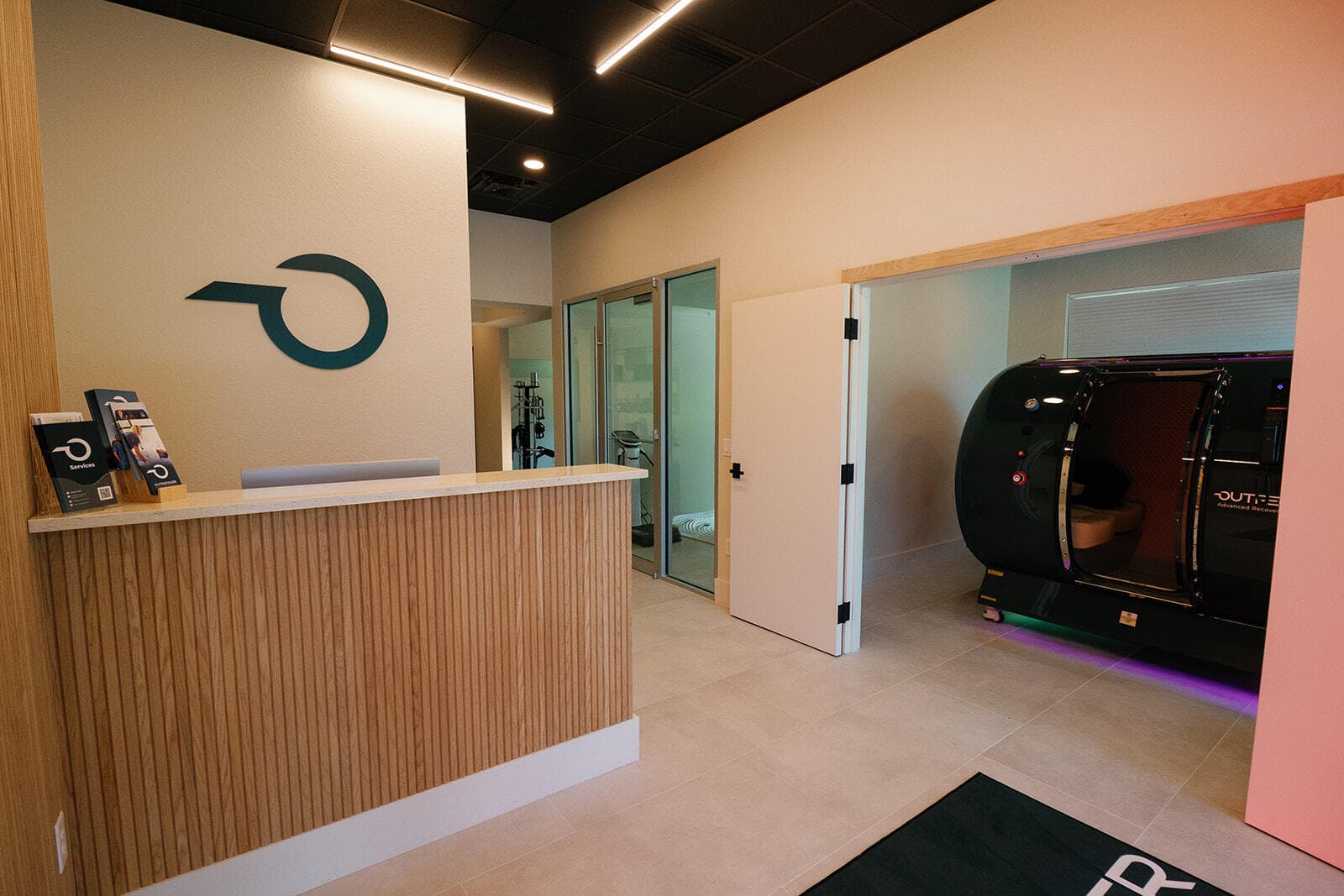
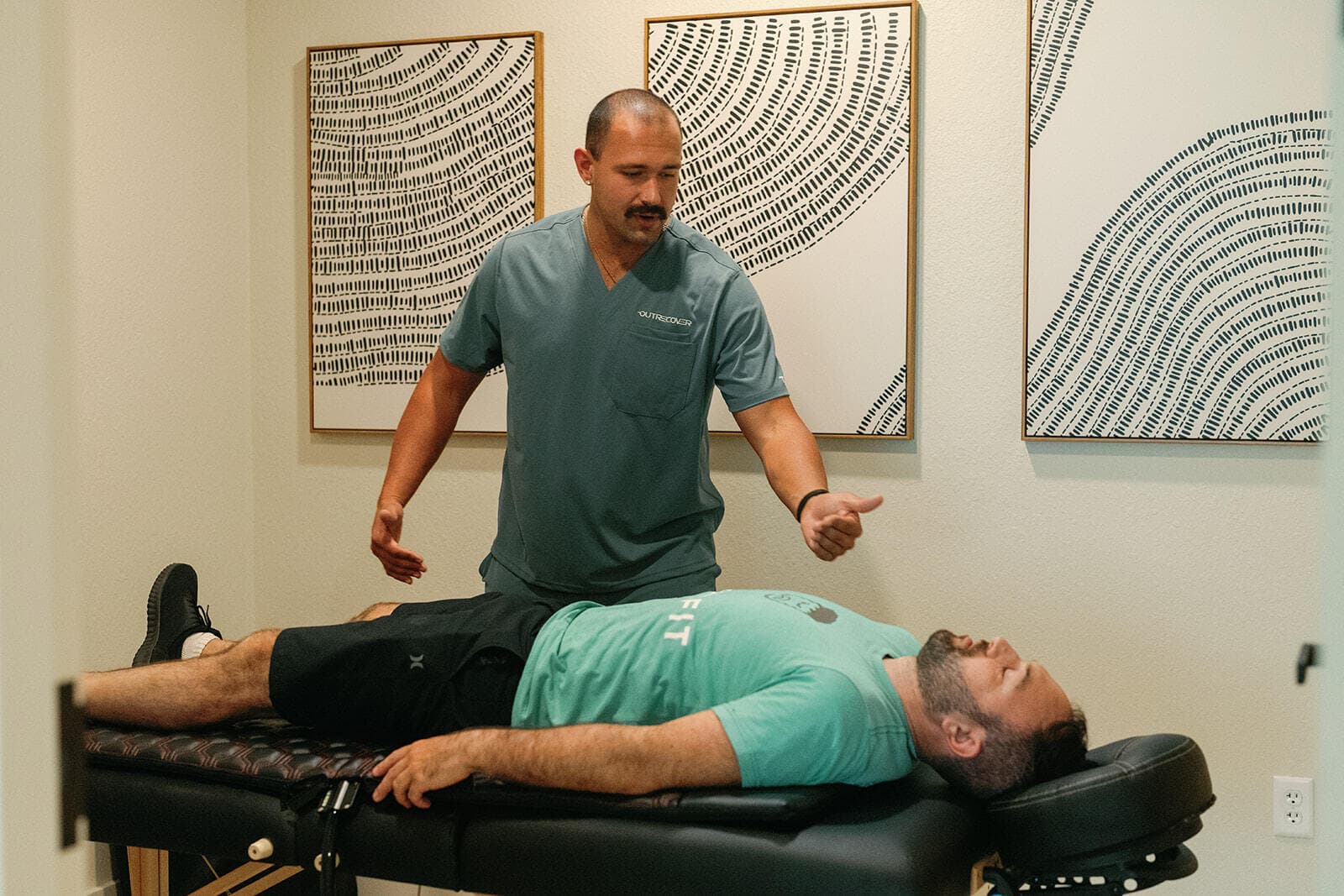
Per OutRecover's PEMF service page, you stay fully clothed while a mat or targeted applicator delivers pulsed fields. Sessions are non-invasive and typically relaxing, and some clients fall asleep. A session runs about half an hour, with low and high intensity options. You can book a single session with no package or membership. The page also says the services are wellness-based and not intended to diagnose, treat, cure or prevent any disease.
Where does PEMF fit in a recovery plan?
PEMF fits best as one low-effort add-on beside the basics: your clinician's plan, strength work and sleep. It is not a substitute for any of them.
Several OutRecover packages pair it with other services. These are the closest matches to the evidence above:
- OutMove pairs PEMF with Class IV laser and red light for back and joint stiffness, where most of the trials above sit.
- OutRelief adds PEMF to laser, red light and hydrogen for lower back, neck and arthritis pain.
- OutFlex targets muscle strains. The review above rates sprain and strain evidence as low.
- OutReset is a one-visit plan for sudden back pain, though the 2022 meta-analysis found no significant PEMF difference in acute back pain.
- OutResolve combines Class IV laser or shockwave with PEMF for tendon pain. Read laser therapy for pain to see what that part has behind it.
- OutPrepare is a one-visit pre-surgery plan. Clear it with your surgeon first.
- OutSignal is a nerve-support package, where the evidence for PEMF is the thinnest.
Because packages bundle several services, none of the studies above tests a package as a whole. The same caution applies to the red light in most of them.
Your next step
- If you have a pacemaker, other implant, pregnancy or recent surgery, ask your clinician before anything else.
- If you are considering a home device, look the model up in the FDA databases first.
- If you want to try a studio session, book one rather than a package. Rate your pain from 0 to 10 before and after each of the first three sessions, and stop if nothing changes. The service page has the booking calendar, and the Science page has the research.
Sources
- National Center for Complementary and Integrative Health (NIH). Magnets for Pain: What You Need to Know. NCCIH, last updated January 2023. https://www.nccih.nih.gov/health/magnets-for-pain-what-you-need-to-know
- FDA. Executive Summary: Reclassification of Non-Invasive Bone Growth Stimulators, Orthopaedic and Rehabilitation Devices Panel. FDA, 2020. https://www.fda.gov/media/141850/download
- FDA. Physical Medicine Devices; Reclassification of Non-Invasive Bone Growth Stimulators (final order, 21 CFR 890.5870). Federal Register, April 16, 2026. https://www.federalregister.gov/documents/2026/04/16/2026-07366/physical-medicine-devices-reclassification-of-non-invasive-bone-growth-stimulators
- 21 CFR 890.5290, Shortwave diathermy. Electronic Code of Federal Regulations, current as of November 4, 2026. https://www.ecfr.gov/current/title-21/chapter-I/subchapter-H/part-890/subpart-F/section-890.5290
- FDA. 510(k) K152432, ActiPatch, indications for use and summary. FDA, 2016. https://www.accessdata.fda.gov/cdrh_docs/pdf15/k152432.pdf
- FDA. Premarket Notification 510(k). FDA, read 2026. https://www.fda.gov/medical-devices/premarket-submissions-selecting-and-preparing-correct-submission/premarket-notification-510k
- FDA. Are There "FDA Registered" or "FDA Certified" Medical Devices? FDA, 2021. https://www.fda.gov/medical-devices/consumers-medical-devices/are-there-fda-registered-or-fda-certified-medical-devices-how-do-i-know-what-fda-approved
- FDA. General Wellness: Policy for Low Risk Devices. FDA guidance, January 6, 2026. https://www.fda.gov/media/90652/download
- FDA. Magnets in Cell Phones and Smart Watches May Affect Pacemakers and Other Implanted Medical Devices. FDA, 2021. https://www.fda.gov/radiation-emitting-products/cell-phones/magnets-cell-phones-and-smart-watches-may-affect-pacemakers-and-other-implanted-medical-devices
- FDA. MRI (Magnetic Resonance Imaging): Benefits and Risks. FDA, read 2026. https://www.fda.gov/radiation-emitting-products/mri-magnetic-resonance-imaging/benefits-and-risks
- Griffin XL, Costa ML, Parsons N, Smith N. Electromagnetic field stimulation for treating delayed union or non-union of long bone fractures in adults. Cochrane Database of Systematic Reviews, 2011. https://pmc.ncbi.nlm.nih.gov/articles/PMC12754039
- Li S, Yu B, Zhou D, He C, Zhuo Q, Hulme JM. Electromagnetic fields for treating osteoarthritis. Cochrane Database of Systematic Reviews, 2013. https://pmc.ncbi.nlm.nih.gov/articles/PMC13080287
- Viganò M, Perucca Orfei C, Ragni E, Colombini A, de Girolamo L. Pain and Functional Scores in Patients Affected by Knee OA after Treatment with Pulsed Electromagnetic and Magnetic Fields: A Meta-Analysis. Cartilage, 2020. https://pmc.ncbi.nlm.nih.gov/articles/PMC8808910
- Sun X, Huang L, Wang L, et al. Efficacy of pulsed electromagnetic field on pain and physical function in patients with low back pain: a systematic review and meta-analysis. Clinical Rehabilitation, 2022. https://pubmed.ncbi.nlm.nih.gov/35077249
- Page MJ, et al. Electrotherapy modalities for rotator cuff disease. Cochrane Database of Systematic Reviews, 2016. https://pmc.ncbi.nlm.nih.gov/articles/PMC8570637
- Perumal M, et al. Pulsed electromagnetic fields for post-appendicectomy pain management: a randomized, placebo-controlled trial. Trials, 2022. https://pmc.ncbi.nlm.nih.gov/articles/PMC9569093
- Lara-Reyes JA, et al. Effectiveness of Pulsed Electromagnetic Field Therapy on Neuropathic Pain: A Systematic Review and Meta-Analysis. Neurology International, 2026. https://pmc.ncbi.nlm.nih.gov/articles/PMC12943413
- Chia CSM, et al. The effects of pulsed electromagnetic field therapy on pain and physical functions in patients with soft tissue injuries: a systematic review of randomised controlled trials. Frontiers in Sports and Active Living, 2026. https://pmc.ncbi.nlm.nih.gov/articles/PMC12916110
- Cleveland Clinic. PEMF (Pulsed Electromagnetic Field) Therapy: What It Is. Cleveland Clinic, undated page read 2026. https://my.clevelandclinic.org/health/treatments/pulsed-electromagnetic-field-pemf-therapy
- Teoli D, et al. Transcutaneous Electrical Nerve Stimulation. StatPearls, NCBI Bookshelf, 2024. https://www.ncbi.nlm.nih.gov/books/NBK537188