A sharp pain in the back of your calf as you pushed off for a short ball or a sprint is most often a calf strain, a partial tear of the calf muscle that usually heals without surgery. Two other problems can feel the same in the first minutes: a torn Achilles tendon and a blood clot in the leg. Both need a doctor, so the first job is sorting them out. After that, recovery means protecting the leg for a few days, then loading it back up in steps.
What is a calf strain, and why do people call it tennis leg?
A calf strain is a tear in the gastrocnemius (the big, visible calf muscle) or the soleus beneath it. "Tennis leg" is the common name for a tear of the inner (medial) head of the gastrocnemius. The StatPearls review (last updated 2023) says it happens with the knee straight and the ankle bent upward, a stretch that comes with a lunge or a push-off, and that it is most common in middle-aged and older people.
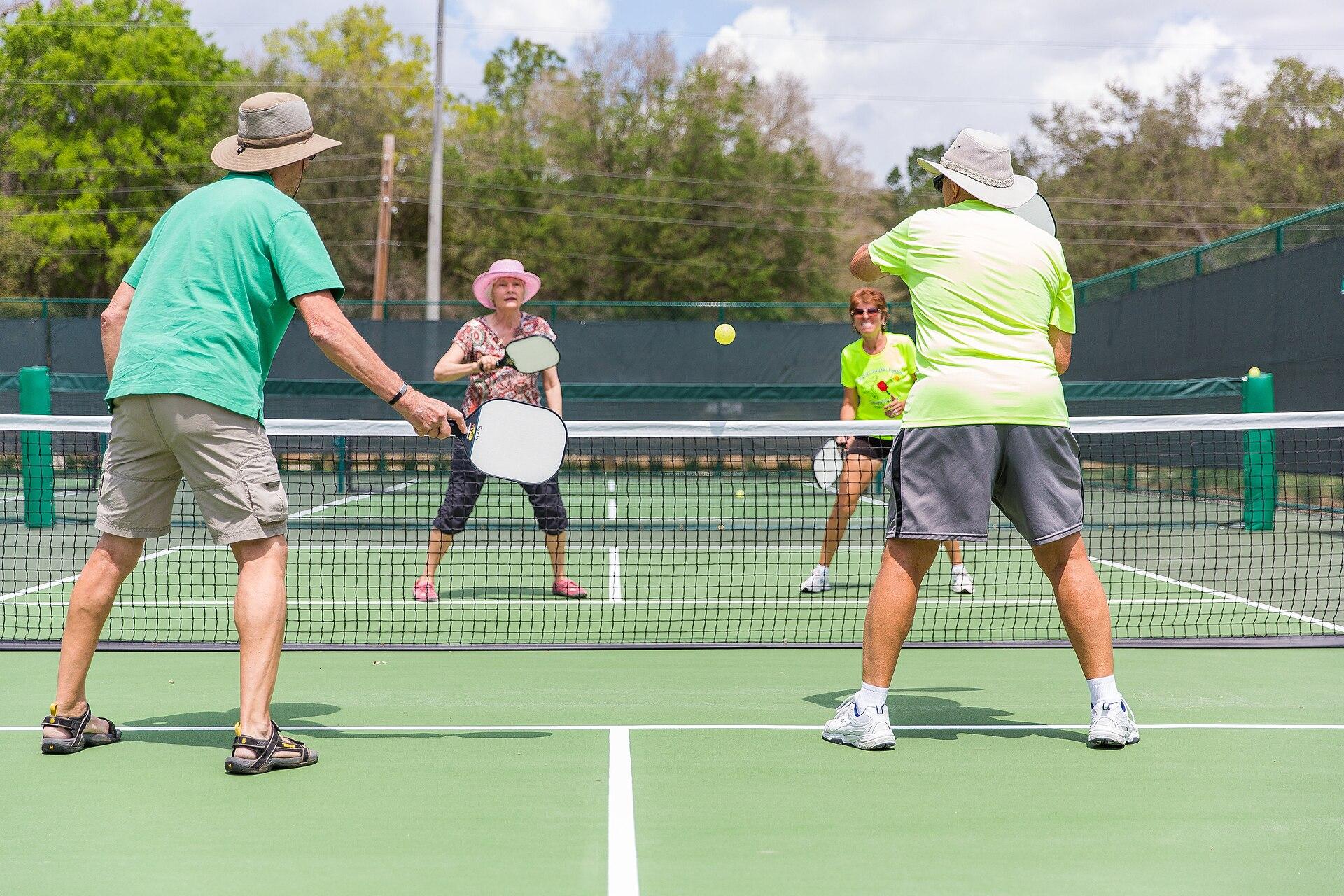
The name misleads. A 2024 review reports that only about 16% of athletes with calf injuries are tennis players. StatPearls lists racquet sports, running, basketball, football and skiing behind it, and the lunge-and-push-off moves of pickleball are the same kind.
People often describe the moment the same way. StatPearls notes a feeling as if something struck the calf, sometimes with a snap like a breaking twig, and pain that builds over the next few steps.
How do you tell a calf strain from an Achilles rupture?
A calf strain hurts in the muscle belly. StatPearls puts gastrocnemius tenderness on the inner side of the calf and soleus tenderness more to the outer side. An Achilles rupture sits lower, near the heel, and takes away your ability to push up onto your toes. AAOS lists a pop, severe pain and swelling near the heel, trouble walking on the leg, and being unable to stand on the toes of that foot.
| Calf strain | Achilles rupture | |
|---|---|---|
| Where it hurts | Calf muscle belly or where it meets the tendon | Near the heel |
| The moment | Snap or "something hit my calf", pain builds over a few steps | Pop, severe pain and swelling near the heel |
| Standing on toes | Painful against resistance; a clinician tests strength | You may be unable on that side |
Sources: StatPearls, 2023, AAOS Achilles rupture.
The bedside check is the Thompson test. AAOS describes it this way: the doctor squeezes your calf and watches whether your foot moves in response. StatPearls adds that a clinician can use it when feeling the tendon does not settle whether it is intact. Leave it to the clinician, because a squeeze on a freshly injured calf is hard to read at home.
Speed matters. AAOS says surgical repair of an Achilles tear goes better when it happens soon after the injury, because the tendon shortens and scars over time. For a lower-grade tendon problem, see our Achilles tendinitis guide.
Could it be a blood clot instead?
Yes, and the two can look alike. A deep vein thrombosis (DVT) in the calf also brings pain, tenderness, swelling and warmth. The CDC Yellow Book (2024) lists pain or tenderness, swelling, warmth, and redness or discoloration of the skin as the typical signs in a limb. The CDC adds that about half of people with a DVT have no symptoms at all, and that diagnosing it takes tests only a doctor can order.
The overlap shows up in the numbers. StatPearls cites a study of 141 people with a clinical diagnosis of tennis leg: 67% had a partial tear of the medial gastrocnemius, 21% had fluid between muscles without a tear, and 10% had a DVT with no visible muscle injury. That is one older study, so read the percentages as a rough picture.
Get seen the same day if:
- the calf is swollen, warm, tender or red (the CDC's signs of a DVT), more than a muscle bruise would explain;
- the pain is getting worse rather than easing over days;
- you have had recent surgery, a long flight or car ride, or time confined to bed;
- you have shortness of breath, chest pain when you breathe in, a cough with blood, or you feel faint. The CDC says signs of a pulmonary embolism call for medical help immediately.
These lists apply the CDC's symptom and risk information to your situation; none of them is a test for a clot. A clinician can check the calf for a clot with ultrasound, which StatPearls notes is also used to look at the muscle.
How are calf strains graded?
Calf strains are sorted into three grades by how much of the muscle is torn: mild, moderate and severe. StatPearls ties each grade to the share of muscle fibers disrupted.
| Grade | What you notice | Fibers torn |
|---|---|---|
| 1 (mild) | Sharp pain, usually able to keep going, minimal loss of strength | Under 10% |
| 2 (moderate) | Cannot walk at the moment of injury, weakness in ankle movements | 10% to 50% |
| 3 (severe) | Possible palpable defect; extensive bleeding or swelling on MRI | 50% to 100% |
Source: StatPearls, 2023.
A 2025 narrative review calls this system overly simple and describes newer MRI-based scales, none clearly better than the rest. The clinical exam stays central to return-to-play decisions.
What should you do in the first few days?
Protect the leg for about one to three days, then start moving it. That is the advice in the PEACE and LOVE editorial in the British Journal of Sports Medicine (2019, in print 2020): unload or limit movement for one to three days to limit bleeding, keep the leg raised, add compression, and avoid prolonged rest.
A short checklist for the first days:
- Compression and a raised leg. A 2024 algorithm paper suggests a compression sleeve of 20 to 30 mmHg, continued for at least a week until there is no swelling or bruising on exam.
- Walking. The same paper allows crutches for the first one to two weeks, then normal weight bearing as tolerated. StatPearls says severe injuries may need limited weight bearing, a cast or an orthosis.
- Heat and massage. StatPearls calls moist heat and massage contraindicated early because they may increase bleeding.
- Pain medicine. StatPearls advises against NSAIDs for the first 24 to 72 hours because of bleeding risk, and PEACE and LOVE questions anti-inflammatories more broadly. Ask your doctor or pharmacist what fits you.
- Ice. Sources disagree: StatPearls lists it as a common measure, while the PEACE and LOVE authors say no high-quality evidence supports it. Use it for comfort if you like it.
If you are not improving, StatPearls says to be re-examined and consider imaging.
How does calf strain recovery work, week by week?
Calf strain recovery runs on graded loading. The 2025 narrative review says experts agree on stepwise progression by severity, though not on one protocol. It describes early loading that most often begins with two to three weeks of light calf stretches and single-leg isometric calf raises, then walking and eccentric strengthening around week three or four, then rising volume through the second month.
| Stage | What the sources describe |
|---|---|
| Days 1 to 3 | Protect, raise the leg, compress; avoid heat and massage |
| Weeks 1 to 2 | Compression until swelling settles; crutches if needed; StatPearls stresses early mobilization to prevent contracture |
| Weeks 2 to 3 | Light calf stretches and single-leg isometric calf raises |
| Weeks 3 to 4 | When single-leg heel raises feel comfortable: light walking and eccentric strengthening |
| Week 3 to month 2 | More strengthening with the knee straight (gastrocnemius) and bent (soleus), then more volume |
| After that | Return to running and sport, decided by criteria (see below) |
Sources: Sports Medicine - Open narrative review, 2025, StatPearls, 2023.
This is the usual shape, and a physical therapist adjusts it to your grade, your sport and your pain.
When can you play pickleball, tennis or run again?
Wait until you are pain-free and have full ankle motion, then return in stages. StatPearls says return to play should not happen before both. A 2026 review in Current Reviews in Musculoskeletal Medicine goes further: current practice favors progressive, criteria-based loading over fixed timelines, and no validated calf-specific return-to-sport criteria exist yet.
Study timelines run wide. The 2025 review reports return-to-competition averages from one MRI study of 8 days for the mildest findings up to 48 days for the most severe, with 17 and 25 days in between. That study was published in 2018, so it is a snapshot of competitive athletes. A 2020 study of elite Australian footballers found that players with severe tearing of the muscle's connective sheet took 31 days on average to return, against 19 days without it. Your own timeline can differ in either direction.
Questions to ask your physical therapist before you go back:
- Which strength and hopping tests do you use for the calf, and what result do you want to see?
- How should I build back, and what would tell us to slow down?
For a related muscle injury on the other side of the leg, see our hamstring strain guide. Our pickleball injuries guide covers the common patterns on court.
What do studies show for laser, PEMF and red light on a calf strain?
The short answer: the studies that exist test other problems, and the evidence is limited. We found no randomized trial of laser, PEMF or red light on torn calf muscle in the sources reviewed for this guide. What does exist:
- Laser and red light (photobiomodulation). A 2024 meta-analysis of 34 trials in healthy people found modest gains in muscle endurance and strength recovery when light was applied before exercise. A 2022 meta-analysis in athletes said a definite therapeutic effect is yet to be established. A 2025 meta-analysis on exercise soreness found less pain and better strength recovery, but called for better trials. A 2025 review of high- and low-level laser for orthopedic pain included eight trials, none on calf strain, and found methods too varied to pool. Soreness after exercise is not a torn muscle.
- PEMF. A 2026 systematic review of PEMF for foot and ankle soft-tissue injuries found four trials (243 people) and low-quality evidence. High-intensity, low-frequency PEMF may add some pain relief; effects on function were uncertain. None studied a calf muscle tear.
The PEACE and LOVE authors write that passive treatments early after a soft-tissue injury had little effect on pain and function compared with an active approach. Whatever else you try, graded loading comes first.
Where do studio services fit in calf strain recovery?
Studio services fit beside graded loading, after a clinician has ruled out an Achilles tear and a clot. Given the evidence above, think of them as optional recovery support with no proven result for a calf tear.
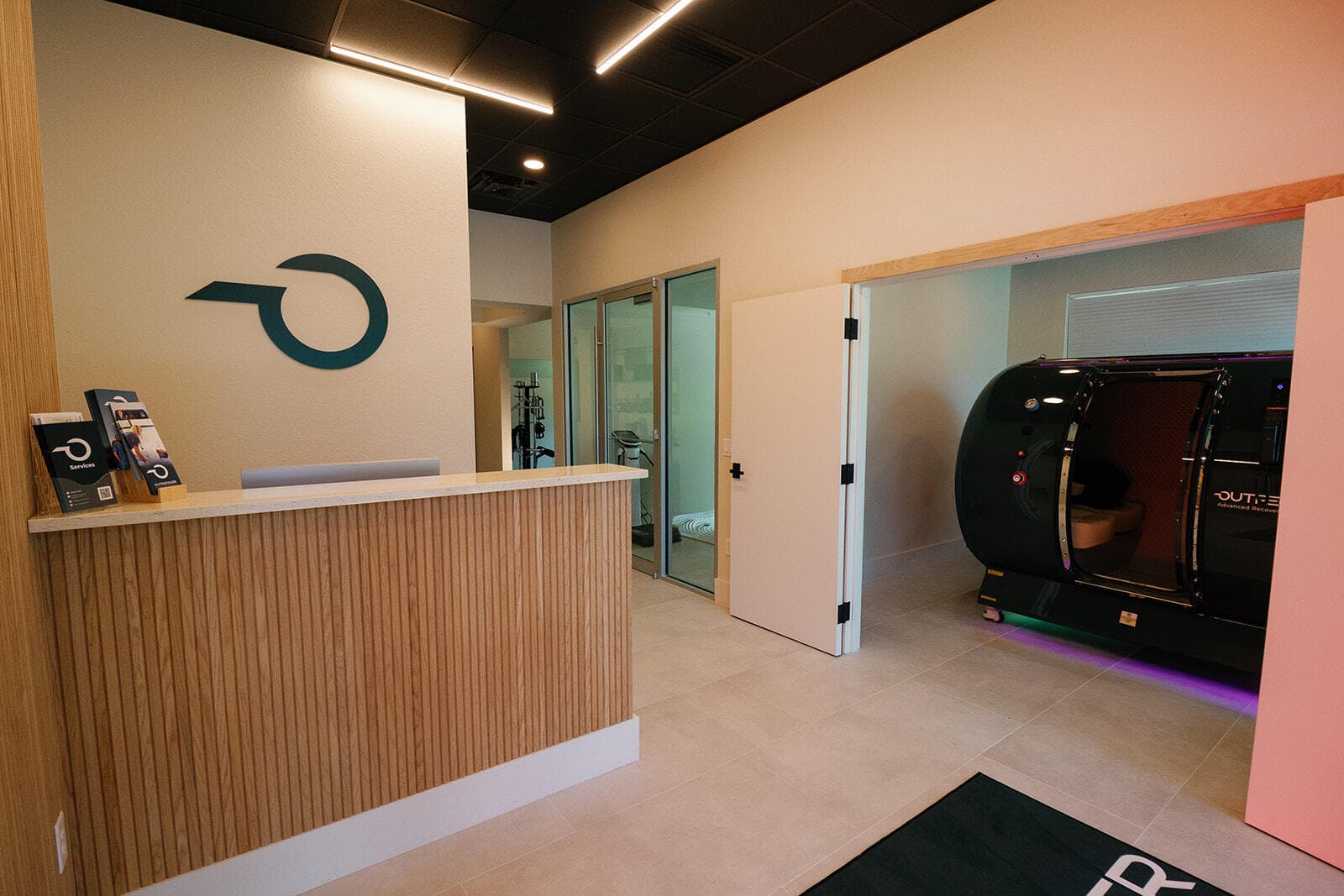
OutFlex is the package built for this: its page lists hamstring, quad and calf strains among who it is for. It pairs PEMF, Class IV laser and red light, with the clinician setting the plan each visit. OutRebuild lists moderate muscle strains and ankle and knee sprains among who it is for, and adds hyperbaric oxygen, vitamin D light and an OutMend IV (through OutInfuse, with medical approval) to the laser and red light; this guide did not review hyperbaric oxygen for muscle injury. Full research summaries sit on the PEMF, Class IV laser and red light science pages, and our red light guide covers the pain research.
Per the studio's pages, PEMF is not recommended with pacemakers or electrical implants, and the laser needs protective eyewear and is not applied over the eyes or cancerous lesions.
What should you do next?
If your calf pain started with a pop and a sharp pull, get an exam within a day or two so a clinician can rule out an Achilles tear and a clot. If any of the clot signs above apply, go today. Once it is a strain, start the protect-then-load sequence with a physical therapist. If you want studio support beside it, book a visit and bring your clinician's diagnosis.
Sources
- Hsu D, Chang K-V. Gastrocnemius Strain. StatPearls, NCBI Bookshelf, last updated August 14, 2023. https://www.ncbi.nlm.nih.gov/books/NBK534766/
- American Academy of Orthopaedic Surgeons. Achilles Tendon Rupture (Tear). OrthoInfo, peer reviewed 2024. https://orthoinfo.aaos.org/en/diseases--conditions/achilles-tendon-rupture-tear
- Centers for Disease Control and Prevention. About Venous Thromboembolism (Blood Clots). CDC. https://www.cdc.gov/blood-clots/about/index.html
- Centers for Disease Control and Prevention. Deep Vein Thrombosis and Pulmonary Embolism. CDC Yellow Book, 2024. https://www.cdc.gov/yellow-book/hcp/travel-air-sea/deep-vein-thrombosis-and-pulmonary-embolism.html
- Pagan-Rosado R, et al. Calf Strains in Athletes: A Narrative Review of Management, Injury Grading, and Return to Sport. Sports Medicine - Open, 2025. https://pmc.ncbi.nlm.nih.gov/articles/PMC12701110
- Pedret C, et al. Calf Injuries: An Anatomy-Based Approach to Diagnosis, Management and Return to Sport. Current Reviews in Musculoskeletal Medicine, 2026. https://pmc.ncbi.nlm.nih.gov/articles/PMC13615943
- Halabchi F, et al. Medial Gastrocnemius Strain: Clinical Aspects and Algorithmic Approach. Medical Journal of the Islamic Republic of Iran, 2024. https://pmc.ncbi.nlm.nih.gov/articles/PMC11469716
- Dubois B, Esculier J-F. Soft-tissue injuries simply need PEACE and LOVE. British Journal of Sports Medicine, 2019 (print 2020). https://pubmed.ncbi.nlm.nih.gov/31377722
- Green B, et al. Return to Play and Recurrence After Calf Muscle Strain Injuries in Elite Australian Football Players. American Journal of Sports Medicine, 2020. https://pubmed.ncbi.nlm.nih.gov/33030961
- Li B-M, et al. Can pre-exercise photobiomodulation improve muscle endurance and promote recovery from muscle strength and injuries in people with different activity levels? A meta-analysis of randomized controlled trials. Lasers in Medical Science, 2024. https://pubmed.ncbi.nlm.nih.gov/38758297
- Luo W-T, et al. Effects of Low-Level Laser Therapy on Muscular Performance and Soreness Recovery in Athletes: A Meta-analysis of Randomized Controlled Trials. Sports Health, 2022. https://pmc.ncbi.nlm.nih.gov/articles/PMC9460079
- Tsou, et al. Effects of Photomodulation Therapy for Delayed Onset Muscle Soreness: A Systematic Review and Meta-Analysis. Journal of Functional Morphology and Kinesiology, 2025. https://pmc.ncbi.nlm.nih.gov/articles/PMC12286287
- Pereira, et al. High- and Low-Level Laser Therapy for the Treatment of Orthopedic Pain: A Systematic Review. Journal of Lasers in Medical Sciences, 2025. https://pmc.ncbi.nlm.nih.gov/articles/PMC12958271
- Chia, et al. The effects of pulsed electromagnetic field therapy on pain and physical functions in patients with soft tissue injuries: a systematic review of randomised controlled trials. Frontiers in Sports and Active Living, 2026. https://pmc.ncbi.nlm.nih.gov/articles/PMC12916110