Red light therapy works for some things better than others, and the answer depends on what you want it to do. The best-studied use for pain is knee osteoarthritis, where a 2019 review of placebo-controlled trials found a modest benefit. For muscle recovery the evidence is mixed, and for skin it rests on a small number of trials. Most of the best evidence comes from targeted devices rather than full-body beds.
Does red light therapy work? What the research says, use by use
The honest summary is a table. Where a row has a review behind it, the quality column repeats what the reviewers reported. It is not our opinion.
| What you want it for | Best evidence we found | Year | What the reviewers said about quality |
|---|---|---|---|
| Knee osteoarthritis pain | Meta-analysis of 22 placebo-controlled trials, 1,063 people | 2019 | Authors judged bias low; a 2024 re-analysis rated certainty low |
| Chronic low back pain | Meta-analysis of 15 trials, 1,039 people | 2016 | Moderate quality, but only at higher doses or for pain under 30 months |
| Muscle performance and recovery | Review of 39 trials, 861 healthy people | 2018 | Very low to moderate quality |
| Wrinkles and skin texture | One randomized trial, 136 volunteers | 2014 | One trial, with outcomes judged from photos by blinded reviewers |
| Pain across chronic conditions | Systematic review of 14 trials | 2026 | Promising, but protocols too varied to standardize |
The sections below say what each row means for a person standing in front of a red light bed.
What is photobiomodulation, and how does light act on cells?
Photobiomodulation (PBM) means using low levels of red or near-infrared light to change how cells behave, without heating them. The leading explanation, laid out in a 2017 review by Hamblin, is that an enzyme in the mitochondria (cytochrome c oxidase) absorbs the light, which raises cellular energy (ATP) production and sets off signaling that reduces oxidative stress and inflammation.
That is a proposed mechanism. Nobody has measured it in your knee after a session. The same review describes a "biphasic dose response": a moderate dose stimulates, and too much can blunt or reverse the effect. OutRecover's red light service page lists red light at 630 to 680 nm and near-infrared at 800 to 880 nm, which overlaps the ranges used in the trials below. For the full research summary, see our red light therapy evidence page.
Does red light therapy work for joint pain?
For knee osteoarthritis, this is the strongest case. A 2019 BMJ Open meta-analysis of 22 placebo-controlled trials found pain fell 14.23 mm on a 100 mm scale more than placebo at the end of treatment. At the recommended doses the gap was 18.71 mm, and it peaked at 31.87 mm two to four weeks after treatment ended. No trial reported adverse events.
Read that carefully. These were low-level laser trials, with light delivered to spots around the knee, and no whole-body bed was involved. A 2024 network meta-analysis rated the certainty of the pain benefit as low, and found no support for better knee function or stiffness. So the fair statement is that targeted light probably eases knee pain a little in the short term. It is not a replacement for exercise, weight management or your orthopedist's plan.
Does red light therapy help low back pain and other pain?
For chronic low back pain, a 2016 meta-analysis of 15 trials found pain relief of up to 1.4 cm on a 10 cm scale in the short term. The authors graded the evidence as moderate quality, and only when the dose was at least 3 joules per point or the pain had lasted under 30 months. Longer-standing pain showed less benefit.
A 2026 systematic review of 14 randomized trials found the clearest pain relief in fibromyalgia and nerve conditions, with low rates of side effects. It also said protocols varied so much that no standard dose can be set. If you want to compare light with other pain tools, our guide to laser therapy for pain covers the higher-powered cousin.
Does red light therapy help muscle recovery and inflammation?
Here the evidence is mixed. A 2015 review of 16 comparisons found positive results in 13, most consistently when light was applied before exercise. A larger 2018 review of 39 trials found some benefit for time to exhaustion, repetitions, peak torque and blood lactate, but rated the quality very low to moderate and cited small samples and wide variety in exercise and light settings.
A 2023 crossover trial tested a full-body bed on 48 active adults. Twenty minutes before cycling sprints, it did not improve power or lactate. Heart rate variability the next morning was higher, which the authors read as a possible recovery signal. That is one small trial, so treat it as a lead.
Inflammation is the claim to treat with the most care. Hamblin's review describes how light may quiet inflammatory signaling, but a mechanism in a lab dish does not show that a session lowers inflammation in your knee. For inflammation, the practical test is the pain and function results above.
What about skin?
The research on skin is small. In a 2014 controlled trial, 113 volunteers were randomized to red or broadband light twice a week for 30 sessions, and 23 served as controls. The treated groups improved on blinded photo review, roughness and ultrasound-measured collagen density.
That is encouraging for one trial. Harvard Health adds that researchers still have not pinned down the best session length or dose for different skin concerns.
Why do results vary so much?
Results vary because dose is built from several settings, and trials and devices differ on all of them. Hamblin's review defines dose by energy density (joules per square centimeter), which depends on power, time and how the light reaches the skin. The knee review above found benefit at 4 to 8 joules per spot at 785 to 860 nm, and 1 to 3 joules at 904 nm.
Before you pay anywhere, ask these:
- Which wavelengths does the device emit, and over what area?
- How long is the session, and how far is your body from the light?
- Is the dose written down, or is it "a few minutes"?
- Was this device or a close match used in any published trial?
- What does the provider say it should and should not be used for?
A provider who cannot answer the first three is asking you to trust a brand.
Full-body beds, targeted devices and masks: how do they differ?
A full-body bed lights most of your body at once. A targeted device (a laser or LED pad) puts a measured dose on one spot. A mask treats the face. The trials behind the best pain results used targeted devices, so a bed borrows their logic more than their proof.
The FDA draws a line worth knowing. Under the 510(k) process, a device is cleared when it is shown to be substantially equivalent to one already on the market, for a stated use. FDA notes that clinical data is not needed for most devices cleared this way. And the uses are narrow: one cleared home LED mask is for treating full-face wrinkles, while another cleared infrared device lists topical heating for arthritis and muscle spasm. "FDA-cleared" tells you the device met a specific standard for a specific use. It does not tell you it treats your pain.
Who should check first, and what are the safety limits?
Side effects in the trials above were rare and mild, but a few groups should check first. A 2024 review advises against using a photosensitizing agent (topical, injectable or oral) before treatment without asking your physician, and notes that trials often exclude people with light-activated conditions such as epilepsy or migraine. Harvard Health says to avoid it with light-sensitive conditions like lupus or certain antibiotics, and to start lower if you have darker skin, which may be more sensitive to visible light.
Protect your eyes. A 2026 case report described a 43-year-old woman who developed bilateral angle closure after using a red light mask; she recovered after stopping and treatment. She had also had a Botox injection the week before. One case cannot prove cause; the authors called the link plausible but unproven and recommended eye protection. Our service page says eye protection is provided and to avoid looking directly at the panels.
If you are recovering from surgery, clear red light with your surgeon first, especially in the first weeks and near an incision.
How often do people use it in studies?
Typically a few times a week for several weeks. In the knee review's dosing table, the first five trials each ran 8 to 10 sessions at two to five sessions a week. The skin trial above used twice-weekly sessions for 30 sessions. Muscle studies often used a single session before exercise.
So one visit to a red light bed is a sample of the method, nowhere near a trial of it. If you try it, pick a window (say, a few weeks), decide what you will measure (pain on stairs, morning stiffness, how you feel after a workout), and judge by that rather than by how warm and relaxed the session felt.
Where red light fits at OutRecover
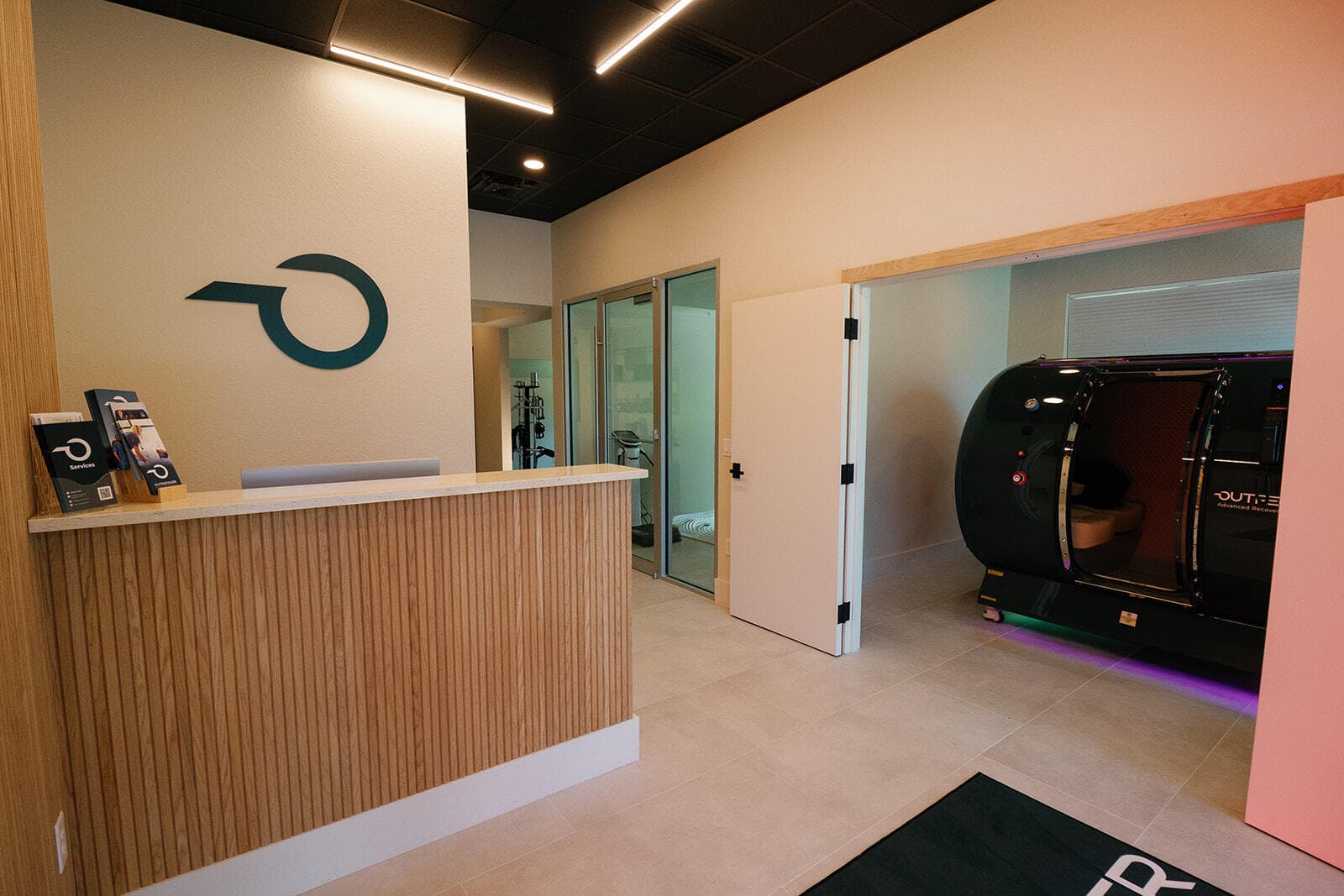
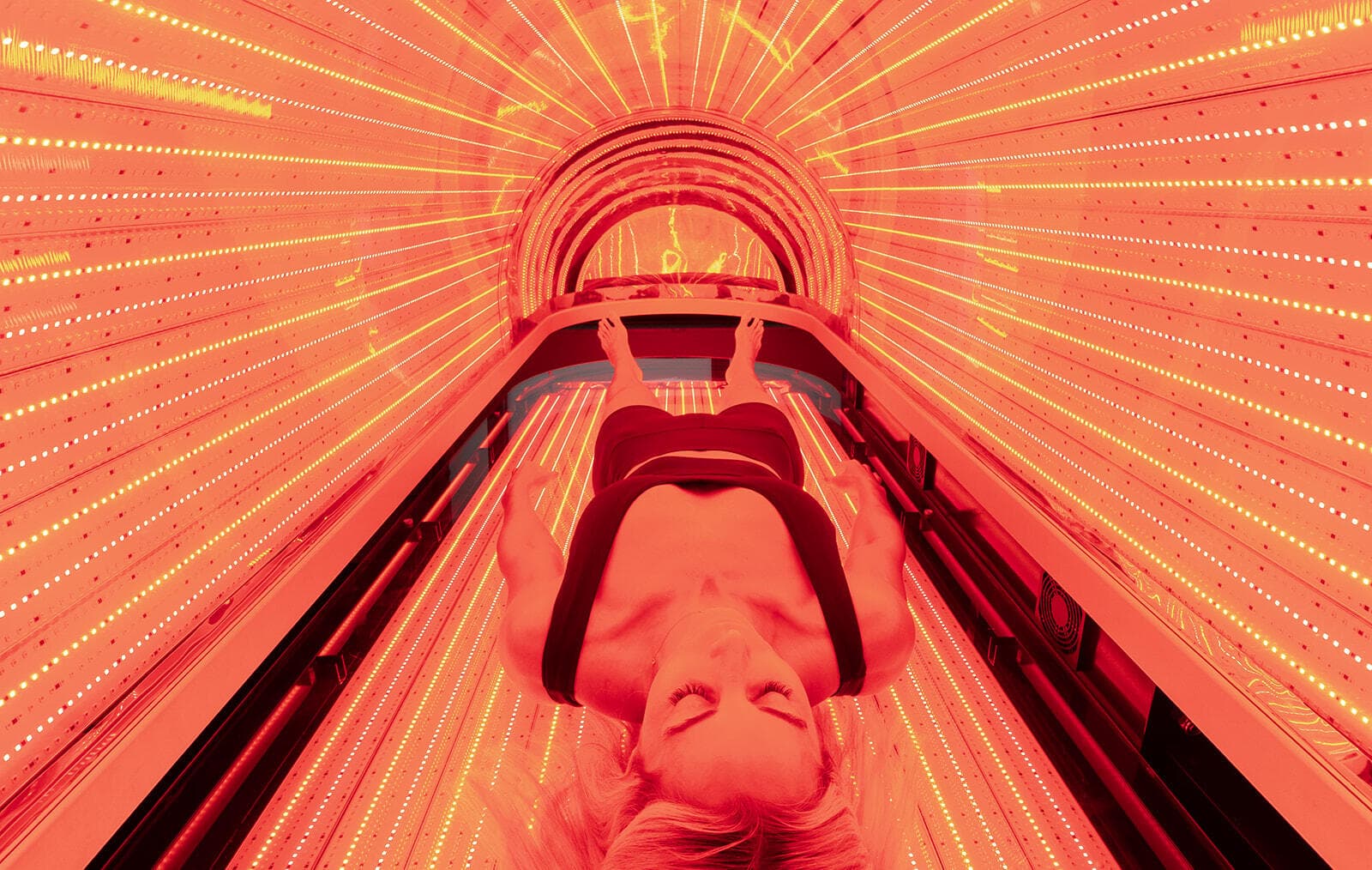
OutRecover offers red light in a full-body bed, described on its service page as red and near-infrared light with a gentle warmth and no UV exposure. You can book single sessions without a package or membership. Based on the evidence above, we think it suits people who want one low-risk tool inside a wider plan, and we do not present it as a standalone fix.
Several packages pair it with other tools. OutRelief is built for pain and inflammation support, OutMove for back and joint stiffness, OutFlex for muscle strains, and OutTrain for athletes who want a recovery routine. If you want to compare it with other modalities, see Class IV laser, which delivers a targeted dose, and PEMF therapy.
Your next step
Use this rule: if your goal is knee or low back pain, try it for a defined stretch alongside exercise, and ask whether a targeted device would give you more. If your goal is faster muscle recovery, expect a small, uncertain effect. If your goal is skin, expect modest changes and plenty of marketing noise.
Whichever you choose, pick a measure, a few weeks, and one question for the provider about dose. For more on the research, read our red light therapy evidence page. To see what a session is like, book one on the service page.
Sources
- Hamblin MR. Mechanisms and applications of the anti-inflammatory effects of photobiomodulation. AIMS Biophysics, 2017. https://pmc.ncbi.nlm.nih.gov/articles/PMC5523874
- Stausholm MB, et al. Efficacy of low-level laser therapy on pain and disability in knee osteoarthritis: systematic review and meta-analysis of randomised placebo-controlled trials. BMJ Open, 2019. https://pubmed.ncbi.nlm.nih.gov/31662383/
- Systematic review and network meta-analysis on the optimal wavelength of low-level light therapy in treating knee osteoarthritis symptoms. Aging Clinical and Experimental Research, 2024. https://pmc.ncbi.nlm.nih.gov/articles/PMC11455796
- Glazov G, Yelland M, Emery J. Low-level laser therapy for chronic non-specific low back pain: a meta-analysis of randomised controlled trials. Acupuncture in Medicine, 2016. https://pmc.ncbi.nlm.nih.gov/articles/PMC5099186
- Ferreira LMA, et al. Photobiomodulation in chronic pain: a systematic review of randomized clinical trials. Frontiers in Integrative Neuroscience, 2026. https://pmc.ncbi.nlm.nih.gov/articles/PMC12909510
- Leal-Junior ECP, et al. Effect of phototherapy (low-level laser therapy and light-emitting diode therapy) on exercise performance and markers of exercise recovery: a systematic review with meta-analysis. Lasers in Medical Science, 2015. https://pubmed.ncbi.nlm.nih.gov/24249354
- Vanin AA, et al. Photobiomodulation therapy for the improvement of muscular performance and reduction of muscular fatigue associated with exercise in healthy people: a systematic review and meta-analysis. Lasers in Medical Science, 2018. https://link.springer.com/article/10.1007/s10103-017-2368-6
- Whole-body photobiomodulation improves post-exercise recovery but does not affect performance or physiological response during maximal anaerobic cycling. Lasers in Medical Science, 2023. https://link.springer.com/article/10.1007/s10103-023-03759-5
- Wunsch A, Matuschka K. A controlled trial to determine the efficacy of red and near-infrared light treatment in patient satisfaction, reduction of fine lines, wrinkles, skin roughness, and intradermal collagen density increase. Photomedicine and Laser Surgery, 2014. https://pmc.ncbi.nlm.nih.gov/articles/PMC3926176
- U.S. Food and Drug Administration. Learn if a medical device has been cleared by FDA for marketing. FDA, accessed 2026. https://www.fda.gov/medical-devices/consumers-medical-devices/learn-if-medical-device-has-been-cleared-fda-marketing
- U.S. Food and Drug Administration. Content of a 510(k). FDA, accessed 2026. https://www.fda.gov/medical-devices/premarket-notification-510k/content-510k
- U.S. Food and Drug Administration. 510(k) summary K221946, LED light therapy mask. FDA, 2022. https://www.accessdata.fda.gov/cdrh_docs/pdf22/K221946.pdf
- U.S. Food and Drug Administration. 510(k) summary K223544, LED light therapy mask. FDA, 2022. https://www.accessdata.fda.gov/cdrh_docs/pdf22/K223544.pdf
- Harvard Health Publishing. Red light therapy for skin care. Harvard Health, undated page. https://www.health.harvard.edu/skin-and-hair-health/red-light-therapy-for-skin-care
- Photobiomodulation use in ophthalmology: an overview of translational research from bench to bedside. Frontiers in Ophthalmology, 2024. https://pmc.ncbi.nlm.nih.gov/articles/PMC11358123
- A rare acute presentation of simultaneous bilateral angle closure in a patient using a red light therapy mask. American Journal of Ophthalmology Case Reports, 2026. https://pmc.ncbi.nlm.nih.gov/articles/PMC13485493