If your hands are stiff when you wake, your knees complain on the stairs, or your shoulders ache for no clear reason, you are in large company. Reviews of studies find that more than half of women in perimenopause and after report muscle or joint pain. What research has not settled is how much of that comes from falling estrogen and how much from age, weight, sleep or a treatable condition. This guide separates what is established from what is not, lists what to rule out with your doctor, and lays out the step with the strongest support: regular strength training.
How common is joint pain in the menopause transition?
Common, and more so than before the transition. A 2026 systematic review of 37 observational studies covering 93,021 women (searched to May 2024) found muscle or joint pain in 40% of premenopausal women, 57% of perimenopausal women and 59% of postmenopausal women (Kruse et al., 2026).
Figures from Kruse et al., 2026:
| Stage | Women reporting muscle or joint pain | Risk compared with premenopause |
|---|---|---|
| Premenopause | 40% | reference |
| Perimenopause | 57% | 1.35 times |
| Postmenopause | 59% | 1.40 times |
An earlier meta-analysis (searched to July 2020) pooled 14 studies of perimenopausal women and put the figure at 71%, with individual studies ranging from 50% to 89% depending on the questionnaire used (Lu et al., 2020). Read these as ranges, not as your odds. Both reviews rely on observational, mostly self-reported data with high variation between studies, and the 2026 authors note that the studies rarely named a specific cause beyond "muscle or joint pain."
Is there a "musculoskeletal syndrome of menopause"?
One review proposed that name, and it has no diagnostic test. A 2024 review in Climacteric introduced the term to group the musculoskeletal changes linked to estrogen loss: joint pain, loss of muscle mass, loss of bone density and progression of osteoarthritis. The authors estimate that more than 70% of women have musculoskeletal symptoms in the transition and 25% are disabled by them (Wright et al., 2024).
The useful idea is that joints, muscle and bone change together in these years. That is why a plan for aching joints should include the muscle around the joint as well as the sore spot. Our guide to sarcopenia and muscle loss after 50 covers the muscle side in detail.
What causes menopause joint pain, and what is proven?
Joint pain is more common around menopause, but how much of it estrogen causes is not proven. The 2026 review says the scientific rationale implicates estrogen deficiency, and also says observational studies have not given conclusive evidence of the mechanism (Kruse et al., 2026). Age, body weight, sleep and low mood travel alongside menopause, which makes the cause hard to isolate.
The best randomized evidence on estrogen and joint pain comes from the Women's Health Initiative (WHI) estrogen-alone trial, which gave 10,739 postmenopausal women who had had a hysterectomy either estrogen or placebo. In post hoc analyses published in 2013:
- About 77% of women reported joint pain at the start, in both groups (Chlebowski et al., 2013).
- After one year, 76.3% on estrogen reported joint pain versus 79.2% on placebo (P = 0.001), with lower pain scores, and the gap persisted through year 3.
- Joint swelling was slightly more frequent on estrogen: 42.1% versus 39.7% (P = 0.02).
The authors called it a modest but sustained reduction in the frequency of joint pain (Chlebowski et al., 2013). Two cautions: the analysis was post hoc, and women were not enrolled because of joint pain, so it did not test estrogen as a treatment for menopausal aches.
The Menopause Society's 2022 position statement reports that women in the WHI and other studies had less joint pain or stiffness on hormone therapy than on placebo (its Level I evidence), and also more joint discomfort after stopping combined therapy. It says there is insufficient evidence for strong conclusions about estrogen and osteoarthritis. The established uses it names are hot flashes, genitourinary symptoms and bone loss (The Menopause Society, 2022). Whether hormone therapy suits you is a decision for you and your clinician. This guide gives no advice on products or doses.
What else can cause joint pain at this age?
Several treatable conditions look like menopause joint pain and become more common in midlife. Ask your doctor to consider them before you assume it is menopause.
- Underactive thyroid. The NIDDK lists joint and muscle pain among its common symptoms, with fatigue, weight gain and trouble tolerating cold, and says women are much more likely than men to develop it (NIDDK). Mayo Clinic says thyroid hormone replacement is typically the most effective way to relieve the joint and muscle pain it causes (Mayo Clinic).
- Low vitamin D. In adults, deficiency can lead to osteomalacia, with bone pain. The NIH says the best blood level has not been established, so a test and your doctor's advice beat guessing with supplements (NIH Office of Dietary Supplements).
- Rheumatoid arthritis. Features include stiffness lasting longer than 30 minutes after waking or rest, swelling and warmth in joints, a pattern on both sides of the body, fatigue and occasional low-grade fever. It is two to three times more common in women (NIAMS).
- Polymyalgia rheumatica. Stiffness in the shoulders, upper arms, hips and neck that usually lasts an hour or more and can start within days. NIAMS says it almost always occurs after age 50 and typically in the late 60s and 70s (NIAMS).
- Osteoarthritis. Common in the same years, and the Menopause Society calls estrogen's role in it unsettled.
A decision rule. Book a visit soon if a joint is swollen, hot or red, if stiffness lasts longer than 30 minutes, if both sides are affected along with fatigue or fever, or if pain started within days. Shorter stiffness does not rule anything out, so a pain that is steady for weeks deserves a look too.
Does strength training help joint pain during menopause?
Exercise has the best support of anything you can do yourself, with one honest limit: the strongest evidence covers osteoarthritis and general pain, and none we found covers menopausal joint pain by name.
- The American College of Rheumatology's 2026 guideline strongly recommends exercise for knee and hip osteoarthritis (moderate-certainty evidence) and weight loss for people with overweight (ACR, 2026). It also advises physical therapy referral for people whose pain or limits get in the way of exercise.
- In the SWAN study of midlife women, those who were more physically active had less bodily pain over seven years, whatever their menopausal status. That is observational, so it shows an association (Sternfeld and Dugan, 2011 review).
- A 2022 meta-analysis of 12 trials (452 postmenopausal women, training up to 16 weeks) found resistance training improved functional capacity and bone density and reduced hot flash frequency, with no serious adverse events. The certainty was very low to low, and joint pain is not among the outcomes in its abstract (Sá et al., 2022).
In plain terms: strength work is low in risk and good for the muscle and bone around your joints, but no trial we found shows it treats menopausal aches specifically. A sensible start is to train the big muscle groups at least twice a week, add load gradually, and ask a physical therapist to set the plan if a joint is swollen or painful. If your knees are the main complaint, see our guide to knee osteoarthritis treatment.
Do weight and sleep matter?
Both are linked to joint pain in this stage, and neither link is proven to run one way. In the 2020 meta-analysis, several included studies found higher body mass index was an independent risk factor for musculoskeletal pain, and sleep disruption, anxiety and low mood were also linked to more pain. Most studies were cross-sectional, and the authors note these symptoms may be results of pain as well as causes (Lu et al., 2020).
For the joints, the ACR guideline's strong recommendation for weight loss in knee and hip osteoarthritis with overweight is the firmest evidence. If night sweats or poor sleep come before your pain, tell your clinician that sequence. It changes what they look for.
Where do OutRecover's services fit?
OutRecover's services support a plan built on strength and a medical check. They do not treat the cause of menopause joint pain, and we found no trial of them for joint pain in the menopause transition.
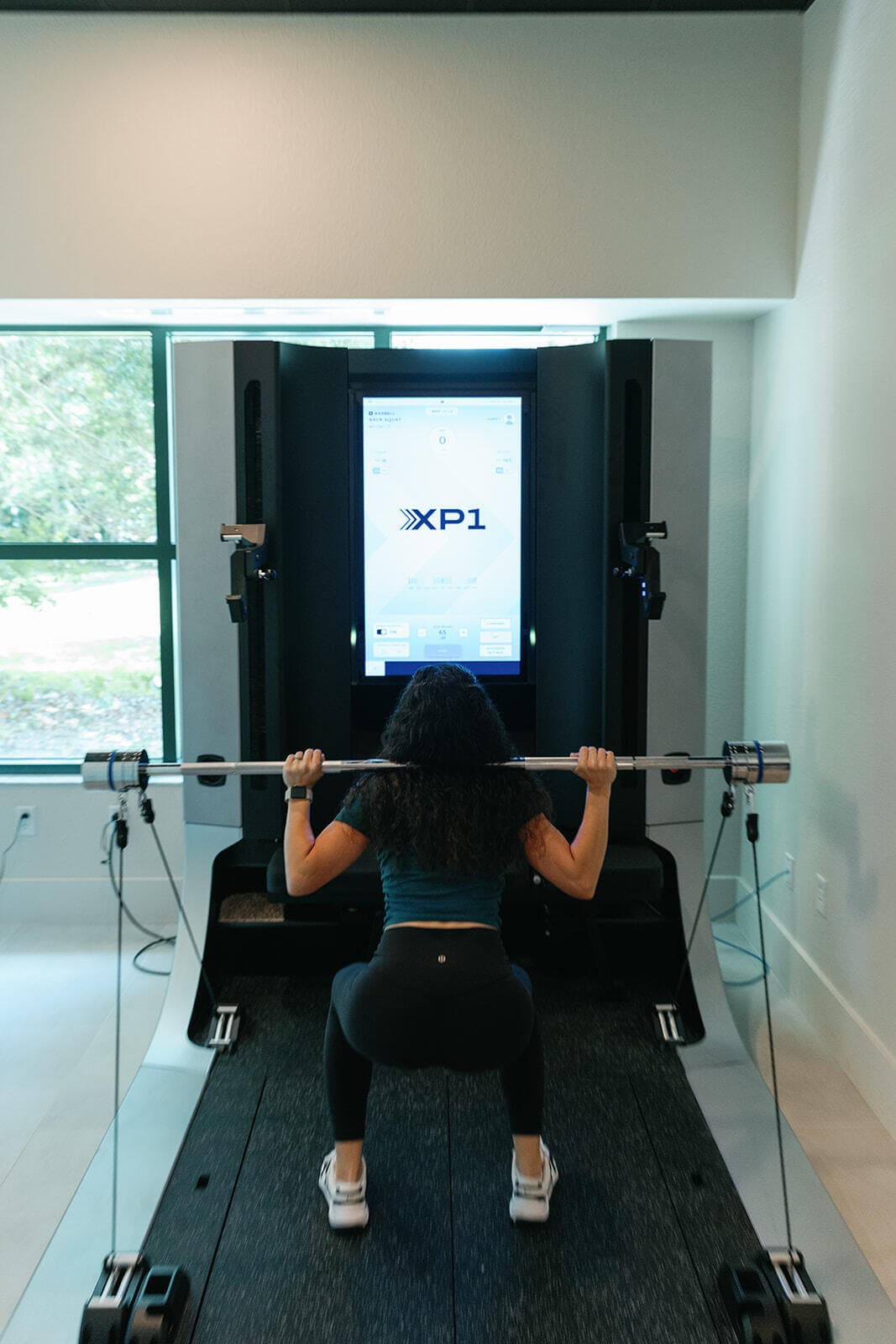
For strength and tracking. OxeFit is guided strength training in which the machine adjusts resistance to your movement. Blood flow restriction training uses light loads with cuffs on the arms or thighs, an option if heavy lifting bothers a joint (not for anyone with a history of DVT or certain circulatory disorders, per the service page). An InBody scan measures muscle, fat and water, which lets you track whether strength work is changing your body.
For comfort. Red light therapy, PEMF and Class IV laser are studied mainly in knee osteoarthritis, and the results are mixed:
- A 2024 meta-analysis of 10 placebo-controlled trials (542 people) found photobiomodulation reduced pain at rest in knee osteoarthritis, with very low certainty of evidence. The authors do not recommend it on its own and suggest it as a complement to standard therapies (Oliveira et al., 2024).
- A 2026 meta-analysis of 9 trials (457 people) found no significant gain in pain or total function scores at one month for PEMF. Some measures improved at specific time points, the risk of bias was high, and the authors say the changes may not reach clinically meaningful thresholds (Chang et al., 2026).
For the studio's own summary of the research, including laser, see the orthopedic and joint health research page.
Packages. Best fit first: OutRelief is built for pain and inflammation, and its page lists arthritis pain and stiffness and pain that disrupts sleep among its uses. It combines PEMF, Class IV laser, red light, an IV and molecular hydrogen (IVs need medical approval). OutMove is the shorter option for stiff, achy joints, with PEMF, laser and red light. Think of both as comfort support to use alongside exercise, not in place of a diagnosis.
What should you do next?
Four steps, in this order:
- Book a visit with your doctor and bring a list: which joints, how long morning stiffness lasts, any swelling, fatigue, fever or sleep changes. Ask whether thyroid and vitamin D checks make sense for you.
- Start strength training twice a week at a level you can repeat, and raise the load slowly.
- Raise sleep and weight with your clinician if either is part of your picture.
- Add studio services last, if comfort is the goal, and tell the studio about any condition or implanted device at intake. The studio can suggest where to start through its recovery quiz.
Sources
- Kruse C, McKechnie T, et al. Musculoskeletal Manifestations of Perimenopause: A Systematic Review and Meta-Analysis of 93,021 Women. JBJS Open Access, 2026. https://pmc.ncbi.nlm.nih.gov/articles/PMC12784006
- Lu C, Liu P, et al. Musculoskeletal Pain during the Menopausal Transition: A Systematic Review and Meta-Analysis. Neural Plasticity, 2020. https://pmc.ncbi.nlm.nih.gov/articles/PMC7710408
- Wright VJ, Schwartzman JD, Itinoche R, Wittstein J. The musculoskeletal syndrome of menopause. Climacteric, 2024. https://pubmed.ncbi.nlm.nih.gov/39077777
- Chlebowski RT, Cirillo DJ, et al. Estrogen alone and joint symptoms in the Women's Health Initiative randomized trial. Menopause, 2013. https://pubmed.ncbi.nlm.nih.gov/23511705
- The North American Menopause Society (now The Menopause Society). The 2022 hormone therapy position statement. Menopause, 2022. https://menopause.org/wp-content/uploads/professional/nams-2022-hormone-therapy-position-statement.pdf
- National Institute of Diabetes and Digestive and Kidney Diseases. Hypothyroidism (Underactive Thyroid). NIH. https://www.niddk.nih.gov/health-information/endocrine-diseases/hypothyroidism
- Mayo Clinic. Hypothyroidism: Does it cause joint pain? https://www.mayoclinic.org/diseases-conditions/hypothyroidism/expert-answers/hypothyroidism/faq-20057789
- NIH Office of Dietary Supplements. Vitamin D: Health Professional Fact Sheet. https://ods.od.nih.gov/factsheets/VitaminD-HealthProfessional/
- National Institute of Arthritis and Musculoskeletal and Skin Diseases. Rheumatoid Arthritis. NIH. https://www.niams.nih.gov/health-topics/rheumatoid-arthritis
- National Institute of Arthritis and Musculoskeletal and Skin Diseases. Polymyalgia Rheumatica and Giant Cell Arteritis. NIH. https://www.niams.nih.gov/health-topics/polymyalgia-rheumatica-giant-cell-arteritis
- American College of Rheumatology. 2026 Update of the ACR Recommendations for the Management of Osteoarthritis of the Knee, Hip, and Hand (summary). 2026. https://assets.contentstack.io/v3/assets/bltee37abb6b278ab2c/bltb3d12c34020da842/oa-guideline-summary-2026.pdf
- Sternfeld B, Dugan S. Physical activity and health during the menopausal transition. Obstetrics and Gynecology Clinics of North America, 2011. https://pmc.ncbi.nlm.nih.gov/articles/PMC3270074
- Sá KMM, et al. Resistance training for postmenopausal women: systematic review and meta-analysis. Menopause, 2022. https://pubmed.ncbi.nlm.nih.gov/36283059
- Oliveira S, et al. Effectiveness of Photobiomodulation in Reducing Pain and Disability in Patients With Knee Osteoarthritis. Physical Therapy, 2024. https://pubmed.ncbi.nlm.nih.gov/38775202
- Chang YS, Lin CY, Huang WC. Pulsed Electromagnetic Field Therapy in People with Knee Osteoarthritis: A Systematic Review and Meta-Analysis. Medicina, 2026. https://pubmed.ncbi.nlm.nih.gov/42075549
