Most of the repair after a marathon happens in the first week, and the studies disagree with each other about what "recovered" means. Blood markers of muscle damage settle in about a week, soreness fades by day four to seven, and a few markers take two weeks or more. A half marathon asks less of you; the one controlled trial of recovery after a half that I found measured fatigue lasting at least 24 hours. Here is what is happening, what to do first, which warning signs mean a medical tent, and when running makes sense again.
What happens in your body after a marathon?
Running 26.2 miles damages muscle fibers, sets off inflammation and briefly dials down parts of your immune system. All three are normal, and all three settle on their own.
Muscle. In a study of 15 recreational male runners, creatine kinase, a muscle enzyme, peaked 24 hours after the race at a 15-fold rise and returned to baseline after one week; lactate dehydrogenase stayed high for two weeks (Kobayashi, 2005). The authors note that lab values were outside normal ranges for some days, so tell a clinician about your race if you have bloodwork that week.
Inflammation. In 102 healthy men, interleukin-6 rose 15.5-fold and C-reactive protein 28-fold after a marathon, and cardiac troponin T, which peaked at the finish, fell back to near pre-race levels within 72 hours (Scherr, 2011). A 2025 narrative review puts the pattern in one line: inflammatory cytokines usually return to baseline within about four days, and C-reactive protein can start rising two to seven days after the race before it normalizes.
Immune system. The same review describes an "open window," a stretch after hard races when infection risk is higher. The classic number is a 1987 Los Angeles Marathon survey of 2,311 runners: 12.9% of finishers reported an upper respiratory infection in the following week, against 2.2% of non-racing runners. That figure is a snapshot from nearly four decades ago and came from self-reports, but later reviews describe the same direction.
What should you do in the first hours after the finish?
Eat, drink steadily without forcing it, and move gently. The joint position statement of the Academy of Nutrition and Dietetics, Dietitians of Canada and the American College of Sports Medicine (2016) gives numbers worth using.
- Carbohydrate: about 1.0 to 1.2 grams per kilogram of body weight per hour for the first 4 to 6 hours, because muscle rebuilds its fuel stores slowly.
- Protein: 0.25 to 0.3 grams per kilogram early on, to supply amino acids for repair.
- Fluid: the statement suggests replacing 125% to 150% of the weight you lost (1.25 to 1.5 liters per kilogram lost) over the hours after the race, since you keep losing fluid after you stop.
- Movement: a slow walk is fine for comfort. In one half-marathon trial, an active-recovery session right after the race left runners feeling less recovered than resting did (Wiewelhove, 2018), so I found no support for a "shake-out jog" at the finish.
One caution about the fluid advice: more is not always better. The CDC's Yellow Book calls the attitude that "you can't drink too much" during prolonged exercise "outdated and dangerous" and says forcing a person who is not thirsty to drink raises the risk of low blood sodium. Spread your drinks over the afternoon and read the next section.
Which warning signs after a race need medical help?
Confusion, fainting, seizures or a staggering walk after a race need emergency care before any recovery plan. Two conditions can cause them, and the signs overlap, so the finish-area medical team or 911 sorts them out.
| What you notice | What it can point to | What the sources say |
|---|---|---|
| Confusion, loss of coordination, hot skin, a very high body temperature | Exertional heat stroke | The ACSM consensus (2023) calls it a true emergency: stop activity and cool the whole body quickly, because "time is tissue." The CDC Yellow Book describes a body temperature of 104 F or higher with marked mental changes. |
| Nausea, headache, weakness, lethargy that gets worse or turns to confusion, even hours after you stopped | Exercise-associated hyponatremia (low blood sodium) | Rosner (2019) defines it as sodium under 135 mmol/L during or up to 24 hours after prolonged exercise, tied to excess water intake. The CDC says treating clinicians should restrict fluid if it is suspected, so do not push more water on someone who is confused. |
| Dizziness, heavy sweating, headache, nausea, fatigue | Heat exhaustion, the milder form | The CDC Yellow Book says it usually settles with rest in a cool place and fluids with salt and glucose, and that it can progress to heat stroke if activity continues. |
Per the CDC, early hyponatremia and heat exhaustion look alike (nausea, headache, weakness), and the clue to hyponatremia is mental changes with a normal temperature after a lot of water.
Winter is a racing season in Naples. The Barron Collier Companies Naples Half Marathon lists January 17, 2027, a 7:00 a.m. start, and an average race-morning temperature of 56 degrees on its own site. A cool start does not cancel the rules above, but heat is a smaller concern than at a summer race.
How long does full marathon recovery take?
Sources report days for most markers and weeks for a few. No single study gives one "recovered" date, because muscle chemistry, soreness and running performance recover on different clocks.
| Timeframe | What the research found |
|---|---|
| First 24 hours | Creatine kinase peaks (Kobayashi, 2005). After a half marathon, fatigue lasts at least 24 hours (Wiewelhove, 2018). |
| Days 2 to 3 | Soreness rose until day 3 in 11 recreational runners (Takayama, 2017). Troponin and cytokine spikes have mostly faded (Scherr, 2011). |
| Days 4 to 7 | Soreness back to pre-race levels, and maximal oxygen uptake, running economy and speed at threshold were within measurement error one week later in those 11 runners (Takayama, 2017). |
| Weeks 2 to 4 | Lactate dehydrogenase can stay up for two weeks (Kobayashi, 2005), and infection risk stays higher for one to two weeks, per the 2025 review. In a 1979 Boston Marathon study of 15 runners, creatine kinase was back to baseline by four weeks (Siegel, 1980). |
These are small studies, mostly of men, and the 1979 and 1987 numbers are snapshots. I found no trial that times full recovery after a half marathon; the half-marathon trial measured 24 hours.
When can you start running again?
A randomized trial supports an easy run about 48 hours after the finish for healthy recreational runners. In the trial, 64 marathon finishers were randomized, and 40-minute moderate sessions at 48, 96 and 144 hours did not worsen muscle-damage blood markers over eight days, and the runners who ran jumped higher at 96 hours than those who rested (Martinez-Navarro, 2021). "Moderate" meant 95% to 105% of the heart rate at the first ventilatory threshold, roughly an easy aerobic effort.
The trial tested one controlled effort and left your full schedule out. Use this as a decision rule:
- Go easy if both legs feel evenly sore, stairs are tolerable and the effort feels conversational.
- Wait or walk if you are still limping, or the soreness is not improving after day 3 to 4.
- Get it looked at if pain sits in one spot, is sharp, or gets worse as you run. That is not muscle soreness; our guides to calf strains and shin splints cover the usual runner cases, and delayed onset muscle soreness explains the day-two ache.
Speed work and long runs can wait until the soreness is gone and you are sleeping normally. That timing is a coaching convention that no study I found tests.
Where do sleep and food fit?
I would put them ahead of any gadget, because the evidence for the gadgets below is modest. On sleep, the 2021 expert consensus on sleep and the athlete (Walsh) notes that habitually sleeping under 7 hours raises susceptibility to respiratory infection in the wider population, which matters during the open window. It also says a single target such as 7 to 9 hours is unlikely to suit everyone and recommends going by your own perceived need. Whether napping or banking extra sleep helps athletes still needs research. See our sleep and recovery guide.
Food is covered in the first-hours section; the same position statement also sets daily carbohydrate needs for heavy training, and it recommends a registered dietitian for a personal plan.
What do compression, massage, cold-water immersion and sauna show?
The reviews find modest relief of soreness and tiredness, and little change in blood markers of damage. That is a real benefit, since feeling better helps you sleep and move, but it differs from speeding up tissue repair.
| Tool | What the evidence shows | Limits |
|---|---|---|
| Massage | In a 2018 meta-analysis of 99 studies (Dupuy), massage was the most effective method for soreness and perceived fatigue. After a half marathon, massage lowered soreness and raised perceived recovery (Wiewelhove, 2018). | The half-marathon trial (46 men) found no benefit on objective fatigue markers. |
| Compression | Dupuy listed compression garments among the methods that lowered soreness (effects across methods ranged from small to large) and found compression techniques helped perceived fatigue. For boots, see our compression boots guide. | Effects are mostly on how sore and tired you feel. |
| Cold-water immersion | A 2023 meta-analysis of 28 studies (Moore) found it better than other recovery methods for soreness and similar for muscle power and flexibility. | After a half marathon, it cut soreness but lowered jump height right after (Wiewelhove, 2018). The studies used water immersion; a dry plunge is a different method. |
| Sauna and heat | A 2023 crossover trial in 16 male basketball players found one 20-minute infrared sauna session (about 43 C, give or take 5) after resistance training lessened the drop in jump performance and soreness. A 2021 review of 32 trials (Wang) found heat lowered soreness-related pain, and its authors call for more high-quality studies. | No marathon or running trial in what I found. Muscle-damage markers did not differ in the sauna trial. |
Massage had the strongest showing in this set. For cold and heat, mixed evidence means the choice comes down to what feels good to you. Wait for any heat until you are drinking normally, and skip it with any warning sign above.
Where studio services fit
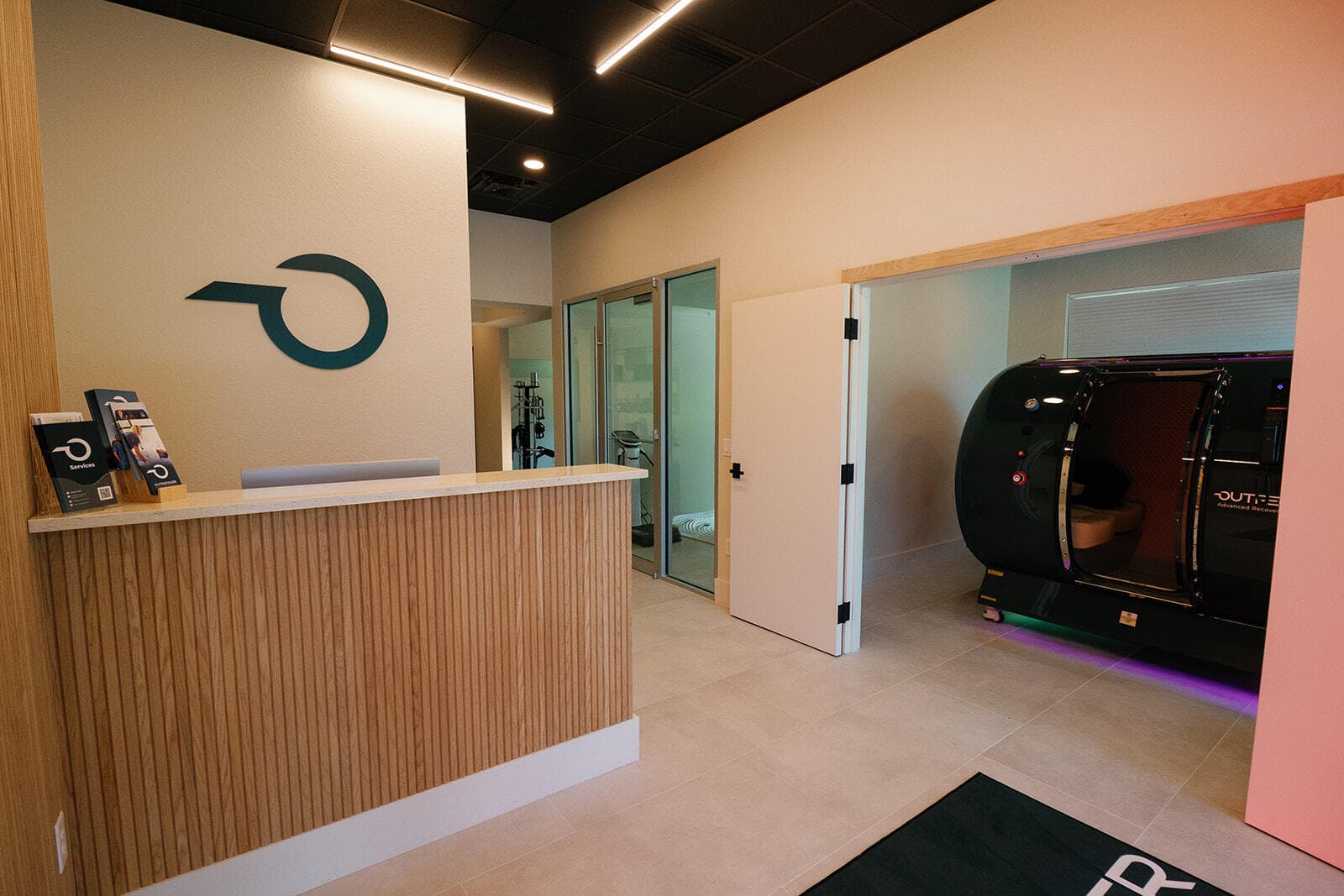
OutRecover sells several of these tools. The evidence above says they can ease soreness, and none of it says they shorten the days your muscles need. Treat them as comfort and routine, alongside sleep and food, not as a way to run sooner.
The studio's compression therapy page describes air-compression boots; the infrared sauna page describes a private cedar cabin and advises clients to stay hydrated and exit if dizzy; and the dry cold plunge page lists safety exclusions, including uncontrolled hypertension. Check them before booking.
If you want these in one plan, two packages match runners best. OutTrain lists runners and endurance athletes among who it is for and includes red light, compression, sauna, cold plunge and an InBody scan. OutPerform is the larger version, listing endurance athletes in a race block. Both pages show current prices. Anyone recovering from surgery should clear any new therapy with their surgeon first.
Your next step
Today: eat, drink steadily, walk, and know the warning signs. Day 2: an easy 40 minutes if both legs feel evenly sore. This week: sleep and eat, then add back running. If you are already planning your next half, put the recovery week on the calendar before the race, not after it.
Sources
- Kobayashi Y, Takeuchi T, Hosoi T, et al. Effect of a marathon run on serum lipoproteins, creatine kinase, and lactate dehydrogenase in recreational runners. Research Quarterly for Exercise and Sport, 2005. https://pubmed.ncbi.nlm.nih.gov/16739683
- Scherr J, et al. 72-h kinetics of high-sensitive troponin T and inflammatory markers after marathon. Medicine & Science in Sports & Exercise, 2011. https://pubmed.ncbi.nlm.nih.gov/21448080
- Braschler L, et al. Physiology and Pathophysiology of Marathon Running: A narrative review. Sports Medicine - Open, 2025. https://pmc.ncbi.nlm.nih.gov/articles/PMC11772678
- Nieman DC. Exercise and Immunity: Clinical Studies (reports Nieman et al., J Sports Med Phys Fitness, 1990, on the 1987 Los Angeles Marathon). Psychoneuroimmunology, 2007. https://pmc.ncbi.nlm.nih.gov/articles/PMC7173539
- Thomas DT, Erdman KA, Burke LM. Position of the Academy of Nutrition and Dietetics, Dietitians of Canada, and the American College of Sports Medicine: Nutrition and Athletic Performance. Journal of the Academy of Nutrition and Dietetics, 2016. https://pubmed.ncbi.nlm.nih.gov/26920240
- Wiewelhove T, et al. Effects of different recovery strategies following a half-marathon on fatigue markers in recreational runners. PLoS ONE, 2018. https://pmc.ncbi.nlm.nih.gov/articles/PMC6226207
- Centers for Disease Control and Prevention. Heat and Cold Illness in Travelers. CDC Yellow Book. https://www.cdc.gov/yellow-book/hcp/environmental-hazards-risks/heat-and-cold-illness-in-travelers.html
- Roberts WO, et al. ACSM Expert Consensus Statement on Exertional Heat Illness: Recognition, Management, and Return to Activity. Current Sports Medicine Reports, 2023. https://pubmed.ncbi.nlm.nih.gov/37036463
- Rosner MH. Exercise-Associated Hyponatremia. Transactions of the American Clinical and Climatological Association, 2019. https://pmc.ncbi.nlm.nih.gov/articles/PMC6735969
- Gulf Coast Runners. Barron Collier Companies Naples Half Marathon (race website). Checked 2026-11-06. https://napleshalfmarathon.net
- Takayama F, et al. Effects of Marathon Running on Aerobic Fitness and Performance in Recreational Runners One Week after a Race. Journal of Sports Medicine, 2017. https://pmc.ncbi.nlm.nih.gov/articles/PMC5613699
- Siegel AJ, et al. Creatine kinase in marathon runners: relationship to training and competition. Yale Journal of Biology and Medicine, 1980. https://pmc.ncbi.nlm.nih.gov/articles/PMC2595821
- Martinez-Navarro I, et al. The week after running a marathon: effects of running vs elliptical training vs resting on neuromuscular performance and muscle damage recovery. European Journal of Sport Science, 2021. https://pubmed.ncbi.nlm.nih.gov/33251988
- Walsh NP, et al. Sleep and the athlete: narrative review and 2021 expert consensus recommendations. British Journal of Sports Medicine, 2021. https://pubmed.ncbi.nlm.nih.gov/33144349
- Dupuy O, et al. An evidence-based approach for choosing post-exercise recovery techniques to reduce markers of muscle damage, soreness, fatigue, and inflammation: a systematic review with meta-analysis. Frontiers in Physiology, 2018. https://pubmed.ncbi.nlm.nih.gov/29755363
- Moore E, et al. Effects of cold-water immersion compared with other recovery modalities on athletic performance following acute strenuous exercise in physically active participants: a systematic review, meta-analysis, and meta-regression. Sports Medicine, 2023. https://pubmed.ncbi.nlm.nih.gov/36527593
- Ahokas EK, et al. A post-exercise infrared sauna session improves recovery of neuromuscular performance and muscle soreness after resistance exercise training. Biology of Sport, 2023. https://pubmed.ncbi.nlm.nih.gov/37398966
- Wang Y, et al. Heat and cold therapy reduce pain in patients with delayed onset muscle soreness: a systematic review and meta-analysis of 32 randomized controlled trials. Physical Therapy in Sport, 2021. https://pubmed.ncbi.nlm.nih.gov/33493991
- OutRecover. Compression Therapy, Infrared Sauna, Dry Cold Plunge, OutTrain and OutPerform pages. https://outrecover.com (read 2026-11-06)