Compression boots do something measurable, and it is smaller than the marketing suggests. Across randomized trials, they mostly make legs feel less sore and more recovered after hard exercise. They have not been shown to make you jump higher, ride faster or clear muscle-damage markers sooner. The research behind that, who should skip them, and how long a session should run are below.
What are compression boots, and how are they different from hospital devices?
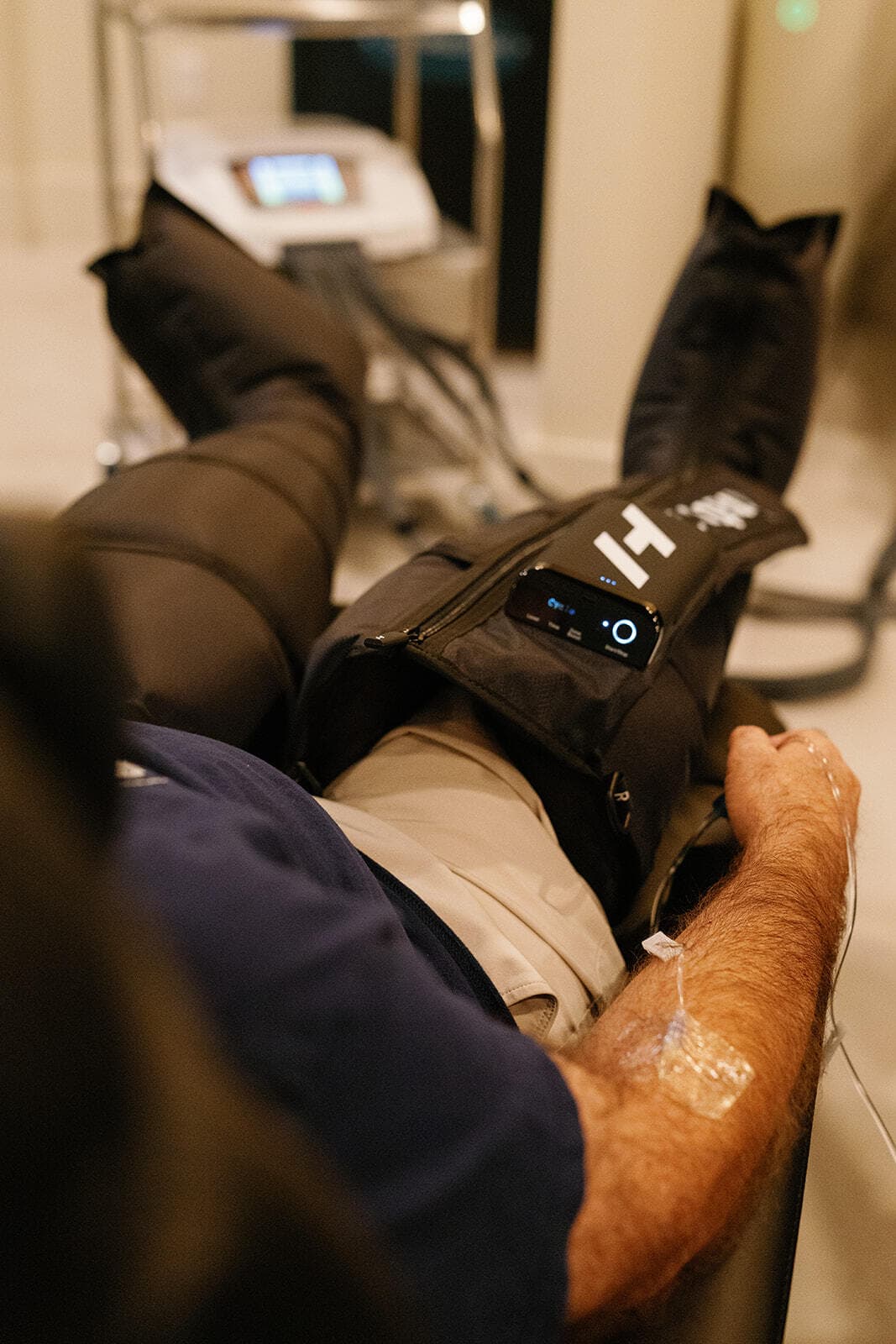
Compression boots are sleeves that fill with air in sections and release, usually moving from the foot toward the hip, to imitate the squeeze of working leg muscles. The technical name is intermittent pneumatic compression (IPC). The same idea has a long medical history: Cleveland Clinic (2023) describes hospital sleeves that inflate every 20 to 60 seconds to keep blood moving in people who cannot walk after surgery or a stroke.
The medical evidence is strong for that job. A 2013 meta-analysis of 70 randomized trials in 16,164 hospitalized patients found blood clots in the leg veins in 7.3% of patients with IPC and 16.7% without. For lymphedema, a 2022 expert consensus from three vascular societies supports sequential pneumatic compression as an add-on in the maintenance phase of treatment.
Sport recovery boots, such as the Normatec system, borrow the technology for a different goal. The clot and lymphedema results above came from hospital patients and prescribed devices, so they do not tell you what a 30-minute session after a long run does. For that, you need studies on exercisers. The studio's research summary covers the clinical evidence across all uses in more depth.
What are the compression boots benefits for soreness and recovery?
The best-supported benefit is less muscle soreness and a better sense of recovery in the one to three days after hard exercise. A 2022 meta-analysis of 12 randomized trials (322 people) found a small drop in soreness (standardized mean difference of -0.33), which its authors call a moderate benefit overall. A 2024 review of 17 studies (319 people) found a trivial to moderate effect on pain and soreness and a trivial to small effect on muscle function, and concluded the main effect is on perceived soreness.
| Study | Who and how | What it found |
|---|---|---|
| Wiśniowski, 2022 (review) | 12 trials, 322 people | Less soreness. No change in jump height or creatine kinase, a muscle-damage marker. |
| Maia, 2024 (review) | 17 studies, 319 people | Trivial to moderate effect on soreness, trivial to small on muscle function. |
| Gu, 2025 (trial) | 20 untrained men after jump training; 15-minute sessions right after and at 24, 48 and 72 hours | Lower soreness scores at 48 and 72 hours. |
| Maia, 2026 (trial) | 21 trained cyclists, 30 minutes versus a sham device | Better perceived recovery, less soreness and fatigue. A 4-minute time trial 24 hours later did not improve. |
| Wiecha, 2025 (umbrella review) | 29 reviews of 863 trials | Compression sits in the middle tier (Class III) for pain at 48 hours. Most of the reviews were rated critically low quality. |
Two cautions come with that table. These trials are small, and several measure soreness on a self-rated scale, which a comfortable, passive session can nudge on its own. The umbrella review also placed compression alongside contrast therapy, kinesiotaping and cryostimulation at 48 hours, with no clear edge over them.
Do compression boots improve flexibility or performance?
Flexibility has some support, and performance does not. In a 2017 trial of 20 resistance-trained men doing three days of heavy squats, those using compression instead of a sham device kept their soreness threshold higher and did not lose flexibility on day three, while the sham group did. It is one small trial.
On performance, the reviews agree. Jump height did not change in the 2022 meta-analysis, and the 2026 cyclist trial found no gain in a time trial a day later. A 2021 critical appraisal of endurance athletes (ultramarathoners, marathoners, triathletes and cyclists) concluded compression may give short-term relief from soreness but did not reduce exercise-induced muscle damage. If you are a runner hoping boots will let you train harder tomorrow, the research does not back that. If your goal is to feel better walking down stairs on day two, it gives some.
The mechanism is plausible. In a small 2018 study of 12 healthy adults, intermittent compression raised blood flow in the thigh artery during and after exercise. That shows what the boots do to circulation. It does not show that the change speeds repair.
Do compression boots help with heavy legs after a flight or a long day on your feet?
The evidence here is indirect. The trials of flight and long-day compression tested stockings rather than boots. A Cochrane review of airline passengers (2021) found high-certainty evidence that compression stockings reduce symptomless clots on flights of four hours or more and low-certainty evidence that they reduce leg swelling. We did not find a trial of recovery boots used after landing.
The CDC Yellow Book says the absolute risk of a travel clot is low for most healthy travelers, and recommends walking, calf exercises and an aisle seat. Society guidelines it cites suggest stockings or medication only for travelers at increased risk, such as after recent surgery or with a prior clot, and that decision belongs with your doctor. Boots after you land may feel good for heavy legs. They are not a clot-prevention plan.
Who should skip compression boots, or ask a doctor first?
Check this list before your first session. Sources differ in how firm they are, so the wording below matches each one.
- A known or suspected clot in the leg. Swelling, warmth and pain in one leg need a call to your provider (Cleveland Clinic, 2023). A large hospital trial's protocol stopped compression for suspected or confirmed DVT (Al-Dorzi, 2022). Vascular specialists do use compression in treated DVT, but that is a medical decision. OutRecover's compression page says to avoid active DVT sites.
- Heart failure or fluid in the lungs. Pneumatic boots push blood toward the heart and were long considered off-limits in congestive heart failure. A small 2002 study of 20 patients under hospital monitoring found no change in heart pressures. That is not permission to use them in a spa chair without your cardiologist. A 2020 consensus notes that guidelines treat decompensated cardiac insufficiency as a contraindication to compression bandaging and stockings. The studio's lymphatic compression page asks you to check with your physician for congestive heart failure, pulmonary edema or active infection.
- Open wounds, leg ulcers, burns, skin infection or fragile skin. Johns Hopkins lists leg ulcers, burns and peripheral vascular disease as higher-risk, and notes older adults are more prone to skin breakdown.
- Numb or tingling feet, including diabetic neuropathy. The same 2020 consensus reports nerve injury with pneumatic compression and names loss of sensation as a reason pressure damage can go unnoticed. It advises extra care, padding and low pressure for people with polyneuropathy.
- Recent surgery. If you are recovering from an operation, clear boots with your surgeon first. Our guide to swelling after surgery covers that case.
A session should feel snug and rhythmic. Per Johns Hopkins, you should be able to slide a finger between the sleeve and your leg, and pain is a reason to stop.
How long and how often should you use compression boots?
No trial has compared frequencies, so there is no proven dose. What the studies used gives a sensible starting point: the 2024 review found protocols of about 20 to 30 minutes at about 80 mmHg were the most common, and the 2026 cyclist trial used 30 minutes. The studio's session is 30 minutes and passive, according to its page.
Treat these rules as a starting point and adjust to how you feel:
- After a single hard session, one 20 to 30 minute session right afterward is the pattern most trials tested.
- During a heavy block or event, the trials that showed lasting soreness effects repeated sessions across consecutive days: the 2017 squat study treated on days two through six, and the 2025 trial treated at 0, 24, 48 and 72 hours.
- On easy days, nothing in the research says you need them.
- If two or three sessions change nothing for you, the research says the effect is mostly perceptual, so stop and spend the time on sleep, food and an easier day.
Normatec or BOA Max: what does OutRecover offer?
OutRecover has two pneumatic systems, and its pages describe them differently. The Normatec compression service uses leg sleeves (arm sleeves are listed too) that inflate in sequence from the foot upward. The page lists post-workout recovery, heavy tired legs, post-surgical circulation and leg swelling, and describes a 30-minute passive session.
The BOA Max lymphatic compression service is a full-body suit that compresses the legs, arms and core at once. Its page lists post-surgical swelling, post-liposuction and plastic surgery recovery, full-body recovery and fluid retention, and describes a passive session, starting at 45 minutes, that it says mimics manual lymphatic drainage. Its research summary has the clinical evidence.
We did not find a study that compares the two for muscle soreness, so we cannot say one is better for a post-run recovery. As a rule of thumb from their listed uses, Normatec fits an athlete's legs after training, and BOA Max fits swelling and fluid concerns.
Where compression fits at OutRecover
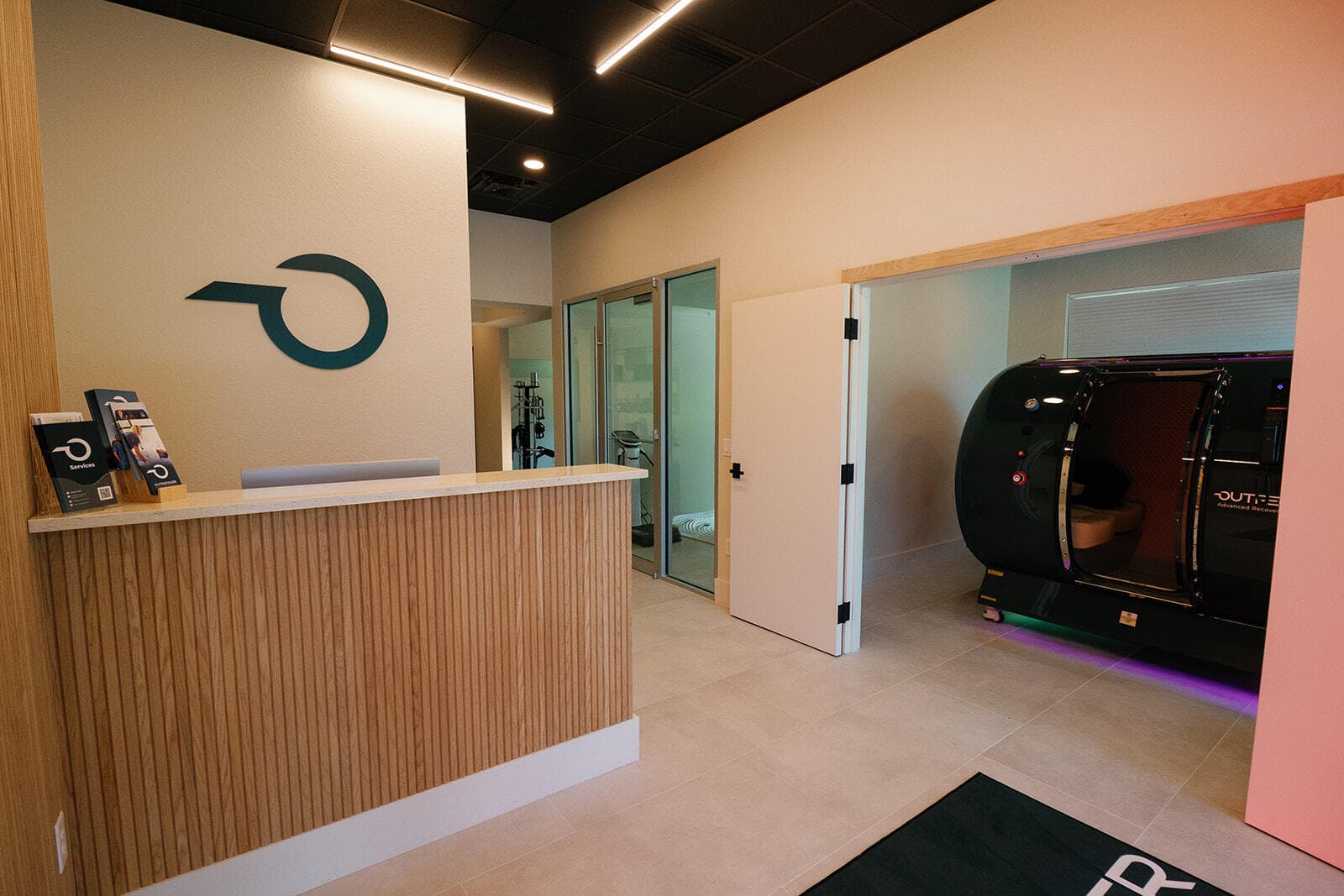
For a runner, golfer or pickleball player, the honest role is a low-effort add-on that may take the edge off soreness, on top of sleep, food and smart training load. OutTrain, the athletic recovery package, names runners, pickleball and golf players among its audience and includes Normatec with red light therapy, the infrared sauna, the dry cold plunge and an InBody scan. OutPerform is built for people training several times a week and includes Normatec too. Our pickleball injuries guide covers the other recovery tools for that sport.
If your legs feel heavy or swell after long hours standing or sitting, OutRestore is the package whose listing names that and includes BOA Max. If compression is not right for you, OutFlow is listed for swelling in people sensitive to compression.
Your next step
If you have none of the cautions above, try one session after your hardest workout of the week and rate your soreness the next two mornings against a similar week without it. If you have a heart, clot, skin or nerve concern, ask your doctor first and bring this guide. Then book a session and mention any of those conditions when you book.
Sources
- Cleveland Clinic. Intermittent Pneumatic Compression. Health Library, reviewed 2023. https://my.clevelandclinic.org/health/treatments/14791-intermittent-pneumatic-compression-ipc-device
- Ho KM, Tan JA. Stratified meta-analysis of intermittent pneumatic compression of the lower limbs to prevent venous thromboembolism in hospitalized patients. Circulation, 2013. https://pubmed.ncbi.nlm.nih.gov/23852609
- Lurie F, et al. American Venous Forum, American Vein and Lymphatic Society and Society for Vascular Medicine expert opinion consensus on lymphedema diagnosis and treatment. Phlebology, 2022. https://pubmed.ncbi.nlm.nih.gov/35258350
- Wiśniowski P, et al. The effect of pressotherapy on performance and recovery in the management of delayed onset muscle soreness: a systematic review and meta-analysis. Journal of Clinical Medicine, 2022. https://pmc.ncbi.nlm.nih.gov/articles/PMC9028309
- Maia F, Nakamura FY, Sarmento H, et al. Effects of lower-limb intermittent pneumatic compression on sports recovery: a systematic review and meta-analysis. Biology of Sport, 2024. https://pubmed.ncbi.nlm.nih.gov/39416507
- Gu Z, et al. Effects of intermittent pneumatic compression on delayed onset muscle soreness and recovery of muscular fatigue. PM&R, 2025. https://pubmed.ncbi.nlm.nih.gov/40094188
- Maia F, Barreira J, Tito S, et al. Effects of intermittent sequential pneumatic compression on functional, biochemical, and perceptual recovery markers in trained cyclists: a randomized sham-controlled crossover trial. International Journal of Sports Physiology and Performance, 2026. https://pubmed.ncbi.nlm.nih.gov/42114826
- Wiecha S, et al. Physical therapies for delayed-onset muscle soreness: an umbrella and mapping systematic review with meta-meta-analysis. Sports Medicine, 2025. https://pubmed.ncbi.nlm.nih.gov/40120073
- Haun CT, et al. Does external pneumatic compression treatment between bouts of overreaching resistance training sessions exert differential effects on molecular signaling and performance-related variables compared to passive recovery? PLoS One, 2017. https://pubmed.ncbi.nlm.nih.gov/28662152
- Stedge HL, Armstrong K. The effects of intermittent pneumatic compression on the reduction of exercise-induced muscle damage in endurance athletes: a critically appraised topic. Journal of Sport Rehabilitation, 2021. https://pubmed.ncbi.nlm.nih.gov/33418535
- Zuj KA, et al. Enhanced muscle blood flow with intermittent pneumatic compression of the lower leg during plantar flexion exercise and recovery. Journal of Applied Physiology, 2018. https://pubmed.ncbi.nlm.nih.gov/29122964
- Clarke MJ, et al. Compression stockings for preventing deep vein thrombosis in airline passengers. Cochrane Database of Systematic Reviews, 2021. https://pubmed.ncbi.nlm.nih.gov/33878207
- Centers for Disease Control and Prevention. Deep Vein Thrombosis and Pulmonary Embolism. CDC Yellow Book, page checked 2026-11-05. https://www.cdc.gov/yellow-book/hcp/travel-air-sea/deep-vein-thrombosis-and-pulmonary-embolism.html
- Al-Dorzi HM, et al. The effect of intermittent pneumatic compression on deep-vein thrombosis and ventilation-free days in critically ill patients with heart failure. Scientific Reports, 2022. https://pmc.ncbi.nlm.nih.gov/articles/PMC9122920
- Ringley CD, et al. Evaluation of pulmonary arterial catheter parameters utilizing intermittent pneumatic compression boots in congestive heart failure. The American Surgeon, 2002. https://pubmed.ncbi.nlm.nih.gov/11893109
- Rabe E, et al. Risks and contraindications of medical compression treatment: a critical reappraisal, an international consensus statement. Phlebology, 2020. https://pmc.ncbi.nlm.nih.gov/articles/PMC7383414
- Johns Hopkins Medicine. DVT Prevention: Intermittent Pneumatic Compression Devices. Health Library. https://www.hopkinsmedicine.org/health/treatment-tests-and-therapies/dvt-prevention-intermittent-pneumatic-compression-devices
- OutRecover. Compression Therapy and Lymphatic Compression service pages; OutTrain, OutPerform, OutRestore and OutFlow package pages. https://outrecover.com