Most swollen ankles are fluid that gravity pulled down over a long day, and they ease overnight. The same swelling can also come from a medicine, from vein valves that no longer work well, and occasionally from the heart, kidneys, liver or a blood clot, so the pattern matters more than the puffiness. Below are the usual causes, the signs that need a doctor today or emergency care, what helps at home, and an honest word on where compression services fit.
Why are my swollen ankles worse by evening?
Ankles swell when fluid builds up in the tissue of the feet, ankles and legs, a problem called edema. Gravity makes the lower body show it most. MedlinePlus (reviewed 2025) says painless swelling is common among older people and lists long airplane flights or car rides and standing for long periods as frequent triggers. Its edema overview adds eating too much salt and standing or walking a lot when the weather is warm.
Vein valves are another common reason. Cleveland Clinic explains that in chronic venous insufficiency the valves in leg veins are damaged, blood pools in the legs, and swelling shows in the lower legs and ankles, especially after standing a while or at the end of the day. Use this table to match what you notice to what it can point to.
| What you notice | What it can point to | Source |
|---|---|---|
| Both ankles puffy by evening, back to normal after a night lying down | A long day upright, heat, salt, or weak vein valves | NHS, 2026; Cleveland Clinic |
| Swelling began weeks after a blood pressure medicine was started or raised | A medicine effect (next section) | MedlinePlus |
| A dent stays when you press, with stretched or shiny skin | Edema, often from heart failure or a vein that is not working well | Mayo Clinic |
| Swollen legs with swelling in the belly, or breathlessness | Heart, kidney or liver trouble | MedlinePlus |
| One leg only, painful, warm or red | Possible clot or infection (see the warning signs below) | NHS; MedlinePlus |
Swelling after an operation follows its own timeline, which our guide to reducing swelling after surgery covers. This guide is about everyday swelling.
Can your medicine cause swollen ankles?
Yes, and amlodipine is a common example. MedlinePlus lists swelling of the hands, feet, ankles or lower legs among its side effects. A 2019 meta-analysis, a snapshot now seven years old, of 22 placebo-controlled trials (7,226 patients) found edema in 16.6% on amlodipine and 6.2% on placebo, with lower rates at 2.5 to 5 mg than at 10 mg. About 37% of the edema cases on amlodipine were unrelated to the drug, so a new medicine is a clue and not a verdict.
The NHS Specialist Pharmacy Service says this swelling usually appears weeks to months after starting or raising a dose, is usually in both ankles, and tends to worsen in the evening. MedlinePlus also lists antidepressants, estrogen and testosterone, anti-inflammatory pain relievers and steroids as medicines that can make legs swell, and says never to stop a medicine you suspect without talking to your provider first.
Questions to bring to the prescriber:
- Did the swelling start after this medicine, or after a change in dose?
- Is a lower dose or a different medicine an option? The Specialist Pharmacy Service lists reducing the dose, switching to another calcium channel blocker or another class, or adding a second drug as choices a prescriber weighs.
- Should anything be checked to rule out heart, kidney, liver or vein causes?
When are swollen ankles a warning sign?
Call 911 for shortness of breath or chest pain, and the same day for swelling in one leg, especially with pain, warmth or redness. Most swollen ankles are not emergencies, and the NHS says swelling often goes away on its own. These signs are the exceptions, drawn from MedlinePlus, the NHS, the CDC and Mayo Clinic.
| Level | Signs | What to do |
|---|---|---|
| Emergency | Shortness of breath, chest pain or tightness, coughing up blood, a pounding heartbeat, feeling faint or confused. These can mean a clot in the lungs. | Call 911. Do not drive yourself. |
| Same day | New or worse swelling in one leg or ankle with no clear cause; a swollen leg that is red, hot or painful; fever; swelling in the face or belly; swelling that is severe or starts suddenly; swelling with diabetes; swelling that worsens when you have heart or kidney disease. | Call your doctor today, or urgent care. |
| Soon | Both ankles swollen and not better after a few days of home care, or getting worse, or you have a heart, kidney or leg-vein diagnosis. With a history of liver disease, new leg or belly swelling needs a call right away. | Make an appointment. |
Two details change how you read the table. The CDC says about half of people with a blood clot in a leg vein have no symptoms at all, so do not rely on pain as the test. And Mayo Clinic advises calling your provider if, after sitting a long time such as on a long flight, you have leg pain and swelling that will not go away, especially on one side.
What helps swollen ankles at home?
The sources agree on a short list, and each item is cheap. They describe these as things that may reduce swelling, not as cures, and we found no trial that says how high to raise your legs or for how long.
- Raise your legs. MedlinePlus says to put your legs on pillows above heart level while lying down. The NHS says to raise them on a chair or pillows when you can.
- Walk. MedlinePlus says leg exercise helps pump fluid back to the heart, and the NHS recommends gentle exercise such as walking. In warm weather, take breaks from long standing.
- Go easy on salt. Mayo Clinic says cutting salt often relieves edema. MedlinePlus says a low-salt diet may reduce fluid build-up.
- Choose roomy footwear. The NHS suggests wide, comfortable shoes with a low heel and a soft sole, and nothing tight on the feet or legs. MedlinePlus adds no tight garters around the thighs.
- Check your medicines with your prescriber, as above.
If the swelling does not improve after a few days, the NHS says to see a GP. Treatment after that depends on the cause, and a doctor may use tests such as a leg-vein ultrasound, blood tests or an ECG to find it.
Do compression stockings help swollen ankles?
For many people, yes. A 2018 evidence-based consensus statement recommends medical compression stockings to reduce leg swelling in chronic venous disease and in people whose legs swell from jobs that keep them standing or sitting, and to prevent swelling on long flights (all graded as strong recommendations on moderate-quality evidence). Mayo Clinic says compression garments often relieve edema.
Fit and the right pressure matter. Cleveland Clinic Florida's vein center describes prescribed, properly fitted medical-grade support hose as especially helpful when veins cause swelling, and says they are sold at medical supply stores and some pharmacies.
Check first with your doctor if you have heart failure, poor circulation in the legs, or severe diabetic nerve damage. A 2020 international consensus lists severe peripheral artery disease and severe cardiac insufficiency among the contraindications for sustained compression, and advises monitoring when the ankle-brachial index is under 0.9. If you are not sure whether stockings suit you, that is a ten-minute question for your doctor.
What about swollen feet after a flight?
Swollen feet after a long flight are common and usually settle within a day or so of moving around. Walk the aisle, flex your calves while seated, and choose an aisle seat if you can: the CDC Yellow Book calls frequent walking and calf exercises reasonable and says an aisle seat might be protective.
A Cochrane review of 12 trials (2021) found high-certainty evidence that stockings reduce symptomless clots on flights of more than five hours and low-certainty evidence that they reduce leg swelling. For clot prevention specifically, the CDC says the American Society of Hematology suggests stockings for travelers at substantially increased risk, such as after recent surgery or with a prior clot, and advises against them for travelers with no risk factors. The absolute risk of a clot is low, roughly 1 passenger in 4,700 to 1 in 6,000 on flights over four hours in the studies the CDC cites, and most travel-related clots occur within the first one to two weeks. So a leg that is swollen, painful or warm on one side in the weeks after you land needs a call, not a wait.
Where do compression services at a recovery studio fit?
Studio compression services give you a comfortable hour with your feet up while your legs are squeezed. A session will not tell you why your ankles swell, and it does not replace a medicine review, stockings or care for a heart, kidney, liver or vein condition.
The evidence needs stating plainly. The best trials of pneumatic compression are in lymphedema, a different condition: a 2026 systematic review of seven randomized trials in lower-limb lymphedema found volume reduction in all seven before-and-after comparisons and over the control group in five, with moderate certainty. In our search we did not find trials of studio-style sessions, or of H-Wave or red light, for everyday ankle swelling in older adults. Our compression boots guide covers what the research does show for boots.
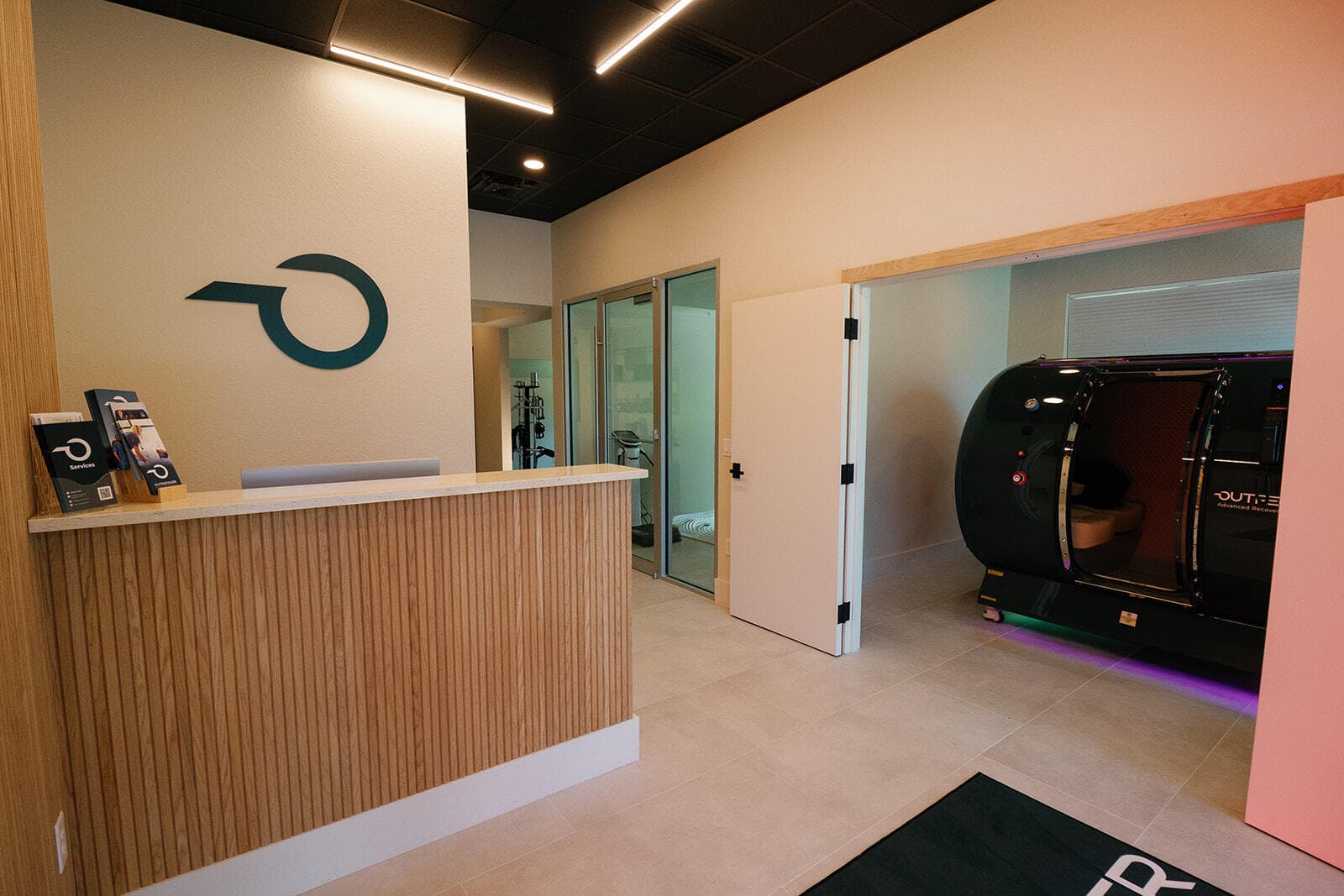
What OutRecover offers, as its own pages describe it:
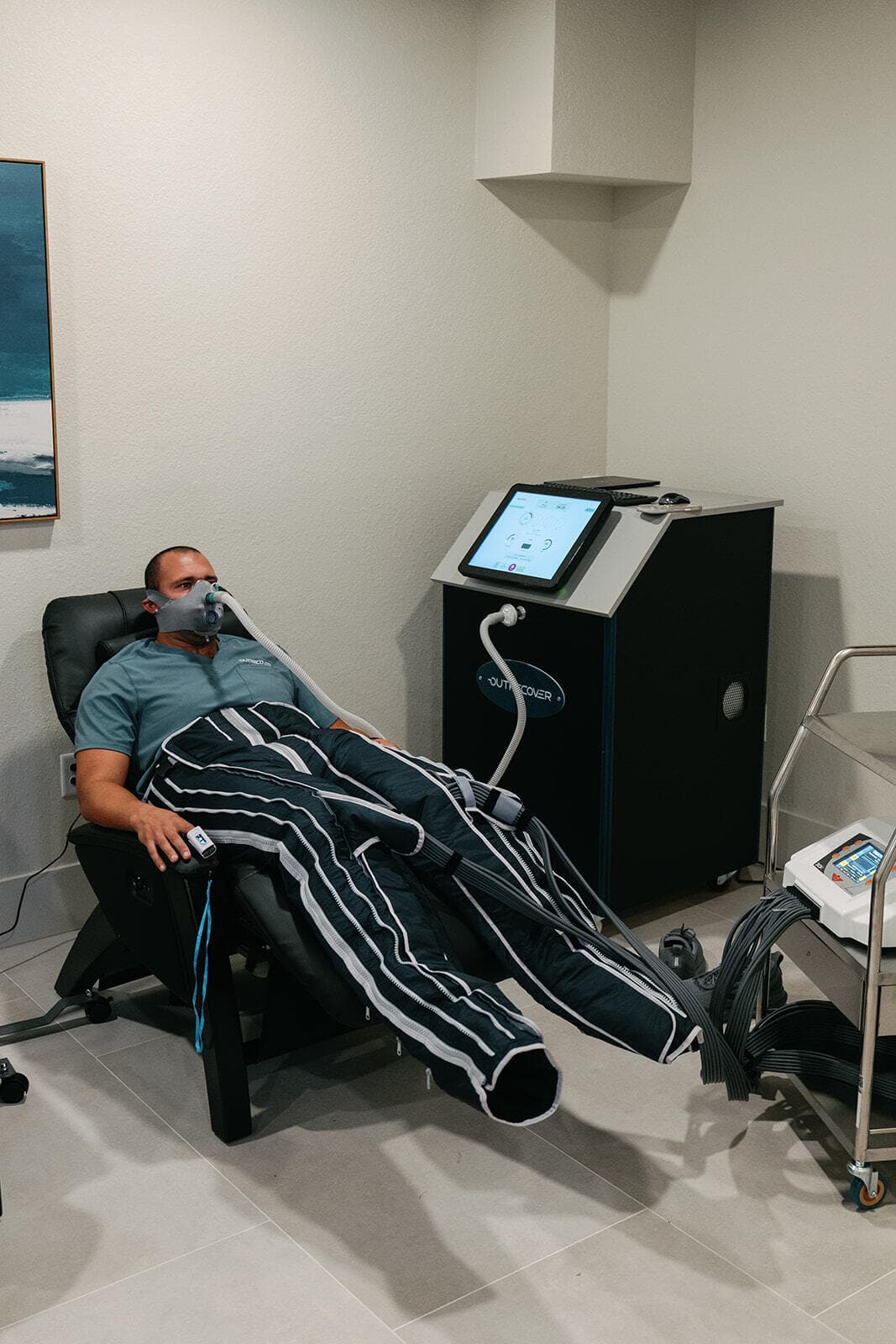
- Compression therapy: air-compression boots that inflate in sequence from the feet up, a passive session. See the research summary.
- Lymphatic compression: a full-body compression suit with programmed cycles from feet to core, also passive. See the research summary.
- H-Wave: gentle low-frequency electrical stimulation through pads, described as supporting circulation and swelling. It is not suitable with a pacemaker or implanted electronic device.
- Red light: a full-body panel session with gentle warmth.
The studio asks you to avoid compression over an active DVT site, open wounds or skin infection, and to check with your physician before lymphatic compression if you have congestive heart failure, pulmonary edema or an active infection.
Two packages are built for this. OutRestore lists swelling from long hours standing or sitting, heavy tired legs and swelling after hard training, and combines red light, lymphatic compression and molecular hydrogen. It is the closer fit for evening ankle swelling. OutFlow is for mild leg or ankle swelling and for people who are sensitive to compression or cannot use it, and swaps compression for H-Wave. Every service is also sold by the single session, so you can try one before choosing a package.
What should you do this week?
Get the cause looked at before you buy anything.
- For a week, jot down which ankle swells, what time of day, and whether it is gone by morning. Add any medicine you started or changed in the last few months.
- Take the note to your primary care doctor, and ask whether stockings suit you and in what strength.
- If you are cleared and the swelling is mild, try the home steps above for two weeks.
- If you want a studio session on top of that, tell the team about your diagnoses and medicines when you book.
Wellness services are not a substitute for your doctor's advice.
Sources
- MedlinePlus. Foot, leg, and ankle swelling. Medical Encyclopedia, reviewed 2025-05-19. https://medlineplus.gov/ency/article/003104.htm
- MedlinePlus. Edema. National Library of Medicine, page checked 2026-11-06. https://medlineplus.gov/edema.html
- NHS. Swollen ankles, feet and legs (oedema). Page last reviewed 2026-02-26. https://www.nhs.uk/conditions/oedema/
- Mayo Clinic. Edema: symptoms and causes. Mayo Foundation for Medical Education and Research, page checked 2026-11-06. https://www.mayoclinic.org/diseases-conditions/edema/symptoms-causes/syc-20366493
- Cleveland Clinic. Chronic Venous Insufficiency (CVI). Health Library, page checked 2026-11-06. https://my.clevelandclinic.org/health/diseases/16872-chronic-venous-insufficiency-cvi
- Cleveland Clinic Florida. Vein Center: compression therapy. Page checked 2026-11-06. https://my.clevelandclinic.org/florida/departments/heart/depts/vein-center
- MedlinePlus. Amlodipine. Drug information, page checked 2026-11-06. https://medlineplus.gov/druginfo/meds/a692044.html
- Vukadinovic D, Scholz SS, Messerli FH, et al. Peripheral edema and headache associated with amlodipine treatment: a meta-analysis of randomized, placebo-controlled trials. Journal of Hypertension, 2019. https://pubmed.ncbi.nlm.nih.gov/31107359
- NHS Specialist Pharmacy Service. Managing peripheral oedema caused by calcium channel blockers. Page checked 2026-11-06. https://sps.nhs.uk/articles/managing-peripheral-oedema-caused-by-calcium-channel-blockers
- Centers for Disease Control and Prevention. About Venous Thromboembolism (Blood Clots). Page checked 2026-11-06. https://www.cdc.gov/blood-clots/about/index.html
- Centers for Disease Control and Prevention. Deep Vein Thrombosis and Pulmonary Embolism. CDC Yellow Book, page checked 2026-11-06. https://www.cdc.gov/yellow-book/hcp/travel-air-sea/deep-vein-thrombosis-and-pulmonary-embolism.html
- Clarke MJ, et al. Compression stockings for preventing deep vein thrombosis in airline passengers. Cochrane Database of Systematic Reviews, 2021. https://pubmed.ncbi.nlm.nih.gov/33878207
- Rabe E, et al. Indications for medical compression stockings in venous and lymphatic disorders: an evidence-based consensus statement. Phlebology, 2018. https://pmc.ncbi.nlm.nih.gov/articles/PMC5846867
- Rabe E, et al. Risks and contraindications of medical compression treatment: a critical reappraisal, an international consensus statement. Phlebology, 2020. https://pmc.ncbi.nlm.nih.gov/articles/PMC7383414
- O'Donnell TF, Tedesco A, Fish J. A systematic review of contemporary randomized controlled trials for treatment of lower extremity lymphedema by intermittent pneumatic compression devices. Journal of Vascular Surgery: Venous and Lymphatic Disorders, 2026. https://pmc.ncbi.nlm.nih.gov/articles/PMC13197773
- OutRecover. Compression Therapy, Lymphatic Compression, H-Wave and Red Light service pages; OutRestore and OutFlow package pages. Pages checked 2026-11-06. https://outrecover.com