Active recovery means easy movement after a hard session or on a rest day: a walk, an unhurried spin on a bike, a loose swim. The research says it is a pleasant habit that clears lactate from your blood and may take the edge off soreness, but it has not been shown to make you perform better the next day. Sleep, food and how you stack your hard days matter more, so start there and treat easy movement as the extra.
What is active recovery, and what counts?
Active recovery is low-effort exercise done to help you recover, either within about an hour of a hard session (a cool-down) or on a day you would otherwise take off. A review in Sports Medicine defines the cool-down version as 5 to 15 minutes of low to moderate exercise within an hour of training (Van Hooren and Peake, 2018). The rest-day version has no formal definition, and we found no trial in the reviews below that tests it directly.
What counts: movement you could hold a conversation through, that leaves your legs feeling better at the end than at the start. A hard interval session, a long run you push through and a heavy lift do not count, however short.
What does the research show about active recovery?
Three findings repeat across the reviews. Active recovery clears lactate faster than sitting. It may reduce how sore you feel. It has not been shown to improve how you perform later.
Lactate. In a trial of ten men, active recovery at 80 to 100 percent of lactate threshold cleared blood lactate faster than passive rest (Menzies, 2010). The Sports Medicine review adds the catch: blood lactate falls faster, but not necessarily the lactate inside the muscle (2018). Faster lactate clearance in the blood does not by itself tell you that your muscles are recovering sooner.
Soreness. A meta-analysis of 99 studies (Dupuy, 2018) found that active recovery, massage, compression garments, water immersion, contrast water therapy and cryotherapy each produced a small to large drop in muscle soreness. Massage came out ahead. The Van Hooren review read the cool-down studies more cautiously: most evidence showed no meaningful reduction in soreness (2018).
Performance. Van Hooren and Peake concluded that an active cool-down is largely ineffective for same-day and next-day performance, that it does not appear to prevent injuries, and that it may interfere with muscle glycogen resynthesis. The same review found preliminary evidence that doing it regularly does not blunt your training adaptations. A newer network meta-analysis of competitive endurance athletes (2026) found that no physical recovery modality outperformed passive recovery on any outcome, and that its soreness results flipped when two of five trials were removed. Treat its soreness numbers as unsettled.
| Question | What the reviews say | How sure to be |
|---|---|---|
| Clears blood lactate faster | Yes, in blood | Fairly sure; small trials |
| Reduces soreness | Maybe; reviews disagree | Unsettled |
| Improves next-day performance | Largely no | Fairly sure, from reviews of mixed-quality trials |
| Harms training adaptation | No sign of it so far | Preliminary |
What matters more than active recovery?
Sleep, enough food (protein first) and a sensible training load. Each has stronger support than any single recovery technique, and each is free. The American College of Sports Medicine joins two partner organizations in saying that recovery from exercise is enhanced by well-chosen nutrition (2016).
Sleep. A 2021 expert consensus on athletes' sleep found that elite athletes often sleep under 7 hours a night and recommended an individual approach over a single number. A systematic review of ten studies (218 athletes) found that sleep extension had the most beneficial effect on later performance (Bonnar, 2018). Our sleep and recovery guide goes deeper.
Protein and carbohydrate. The International Society of Sports Nutrition position is that people who exercise need about 1.4 to 2.0 grams of protein per kilogram of body weight a day (2018 update). Its nutrient timing statement says total daily protein takes priority over timing (2017), and that fast carbohydrate refeeding matters mainly when you have under four hours before the next hard session.
Load. The joint consensus statement of the European College of Sport Science and the American College of Sports Medicine says successful training needs overload but must avoid excessive overload combined with inadequate recovery (2013). Hard days stacked without easy days between them are the usual route to the stalled, flat feeling covered in our overtraining syndrome guide.
What are good examples of active recovery?
Anything easy that you enjoy enough to repeat. Pick one, keep it gentle, and stop before it becomes a workout.
- Walking. The simplest option, and kind to joints on the day after a long run or a match.
- Easy cycling. Spin with the resistance low. If you cannot speak in full sentences, ease off.
- Swimming or water walking. Loose and unloaded, good after heavy leg days.
- Mobility work. Slow, comfortable range-of-motion work for the joints you used. One 2025 meta-analysis found that stretching alone did not significantly improve soreness, strength or performance, so do it for how it feels.
A rule of thumb (ours, from no study): after a hard session keep it to 10 to 20 minutes, and on a rest day an easy 20 to 40.
What should you do for recovery after a workout?
Use the day's demand to decide. The table below is our own way of choosing, with no trial behind it.
| Your situation | What to do |
|---|---|
| Hard session, next hard session in under 4 hours | Eat carbohydrate and protein soon, and skip extra movement |
| Hard session, next hard session tomorrow or later | Eat, hydrate, easy walk if you like, sleep a full night |
| Day after a hard session, mild soreness | Easy walk, cycle or swim; train a different area if you do train |
| Sharp pain, swelling, or soreness that is not easing after about five days | Stop and see a clinician |
Our delayed onset muscle soreness guide covers what ordinary soreness feels like and when it is something else.
Where do studio services fit in your recovery?
Studio services sit on top of sleep, food and load. Several are passive, so they suit days when you want recovery without more effort, and the evidence for each is weaker than for the basics above.
Compression therapy is the best-supported. A 2024 meta-analysis of 17 studies (319 participants) found that lower-limb compression had a trivial to small effect on muscle function and a trivial to moderate effect on soreness, and concluded it might mainly reduce perceived soreness. The studio's session is passive: you sit and the boots do the work. Our compression boots guide has the detail and the cautions.
The infrared sauna and dry cold plunge are listed on the studio's pages for muscle relaxation, stress and training recovery. We did not open a review that tests either one against active recovery, so treat them as comfortable options and read the infrared sauna and cold plunge research pages. Both pages list cautions: the sauna is not recommended with certain cardiovascular conditions, and the plunge is not suitable for people with uncontrolled hypertension or Raynaud's syndrome.
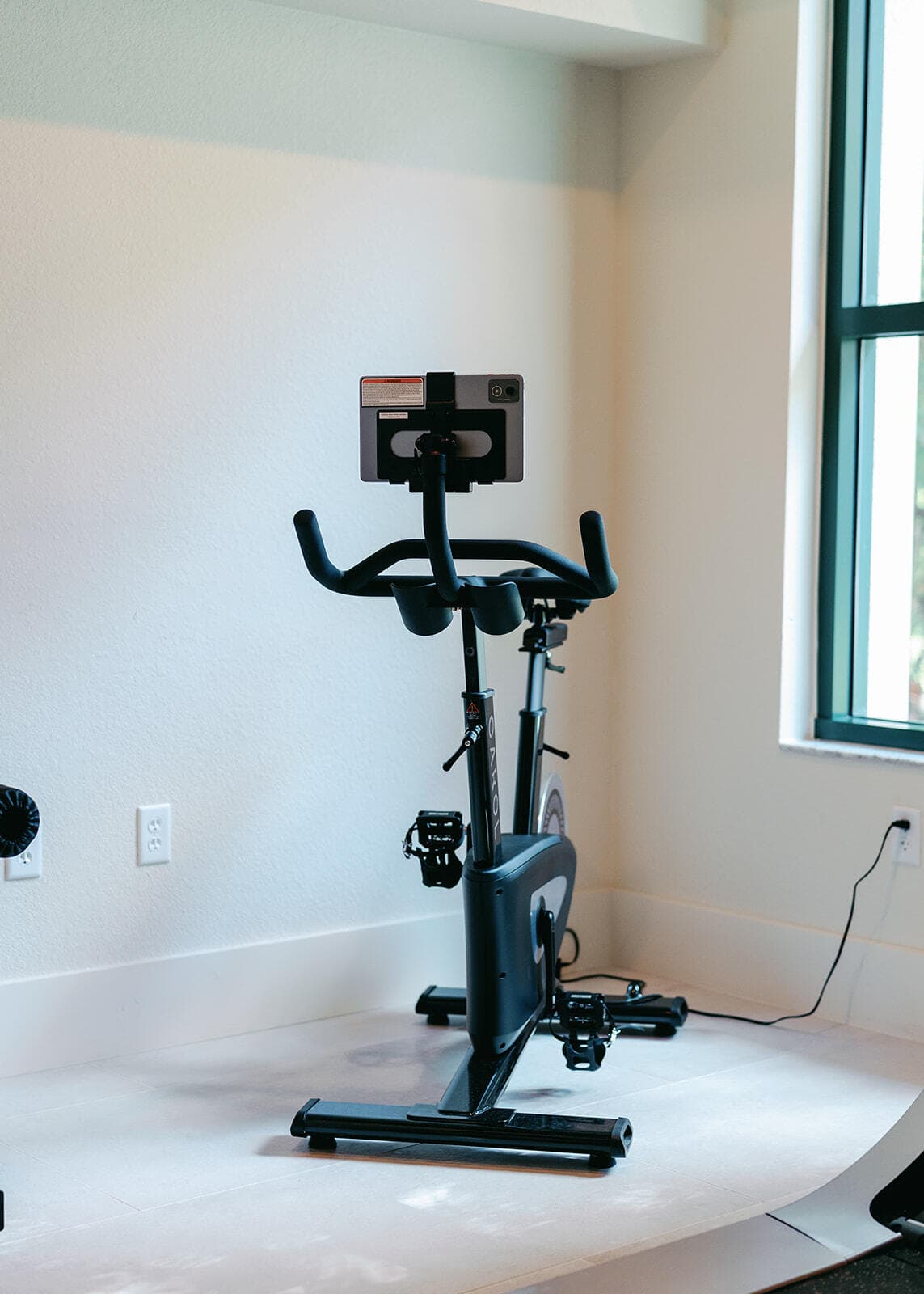
The AI bike (CAROL) is a training session and does not count as active recovery. The studio describes a guided ride with short all-out sprints, and says it is not recommended during acute injury. Count it as a workout on a training day, and keep your recovery days easier. Its research page, OxeFit and AI bike training, covers the evidence, which does not test the bike as a recovery tool.
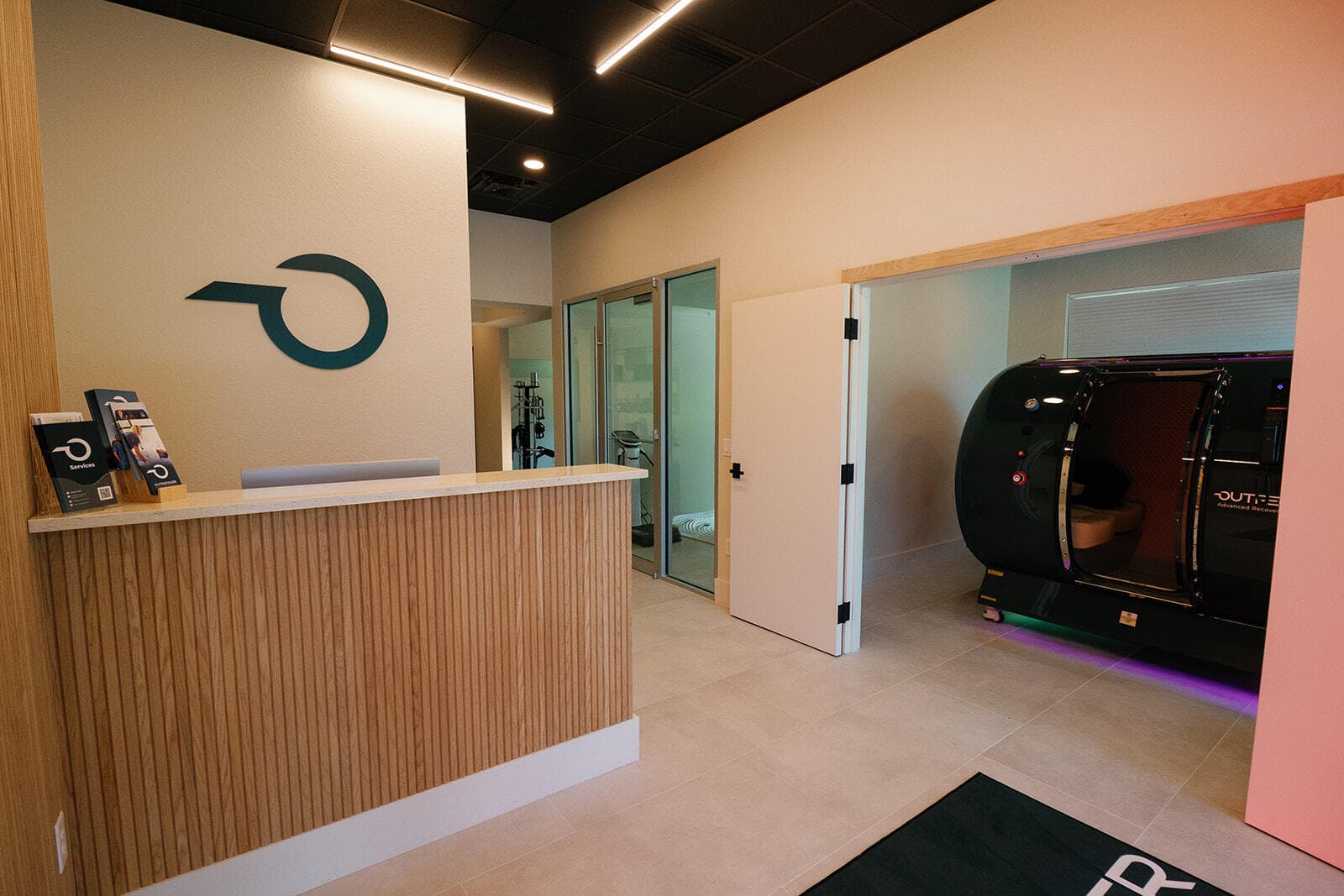
Two packages are built for this kind of training week. OutTrain is the best fit for someone who trains regularly and wants recovery in the routine: its listing names runners, cyclists, pickleball and golf players and lifters, and includes red light, compression, the infrared sauna, the dry cold plunge and an InBody scan. OutPerform is for people training several times a week or in a race block, with more visits and an athletic IV (IVs need medical approval). Both are optional comforts, not treatments, and neither replaces sleep. If you are recovering from surgery, clear anything new with your surgeon first.
Your next step
For two weeks, protect sleep and protein first. Keep your easy days easy, with a walk or an easy spin. Rate your legs from 1 to 10 each morning. If you want to add a studio session on your heaviest day, book one and compare those mornings against a similar week without it.
Sources
- Van Hooren B, Peake JM. Do We Need a Cool-Down After Exercise? A Narrative Review. Sports Medicine, 2018. https://pubmed.ncbi.nlm.nih.gov/29663142
- Dupuy O, et al. An Evidence-Based Approach for Choosing Post-exercise Recovery Techniques: A Systematic Review With Meta-Analysis. Frontiers in Physiology, 2018. https://pubmed.ncbi.nlm.nih.gov/29755363
- Jin Y, et al. Physical recovery modalities in competitive and elite endurance athletes: a systematic review and network meta-analysis. Frontiers in Sports and Active Living, 2026. https://www.frontiersin.org/journals/sports-and-active-living/articles/10.3389/fspor.2026.1876924/full
- Menzies P, et al. Blood lactate clearance during active recovery after an intense running bout depends on the intensity of the active recovery. Journal of Sports Sciences, 2010. https://pubmed.ncbi.nlm.nih.gov/20544484
- Meeusen R, et al. Prevention, diagnosis, and treatment of the overtraining syndrome: joint consensus statement of the European College of Sport Science and the American College of Sports Medicine. Medicine and Science in Sports and Exercise, 2013. https://pubmed.ncbi.nlm.nih.gov/23247672
- Thomas DT, Erdman KA, Burke LM. Position of the Academy of Nutrition and Dietetics, Dietitians of Canada, and the American College of Sports Medicine: Nutrition and Athletic Performance. Journal of the Academy of Nutrition and Dietetics, 2016. https://pubmed.ncbi.nlm.nih.gov/26920240
- Walsh NP, et al. Sleep and the athlete: narrative review and 2021 expert consensus recommendations. British Journal of Sports Medicine, 2021. https://pubmed.ncbi.nlm.nih.gov/33144349
- Bonnar D, et al. Sleep Interventions Designed to Improve Athletic Performance and Recovery: A Systematic Review. Sports Medicine, 2018. https://pubmed.ncbi.nlm.nih.gov/29352373
- International Society of Sports Nutrition. ISSN exercise and sports nutrition review update: research and recommendations. Journal of the International Society of Sports Nutrition, 2018. https://pmc.ncbi.nlm.nih.gov/articles/PMC6090881
- International Society of Sports Nutrition. Position stand: nutrient timing. Journal of the International Society of Sports Nutrition, 2017. https://pmc.ncbi.nlm.nih.gov/articles/PMC5596471
- Maia F, et al. Effects of lower-limb intermittent pneumatic compression on sports recovery: a systematic review and meta-analysis. Biology of Sport, 2024. https://pubmed.ncbi.nlm.nih.gov/39416507
- Effects of post-exercise stretching versus no stretching on lower limb muscle recovery and performance: a meta-analysis. Frontiers in Physiology, 2025. https://pmc.ncbi.nlm.nih.gov/articles/PMC12521117