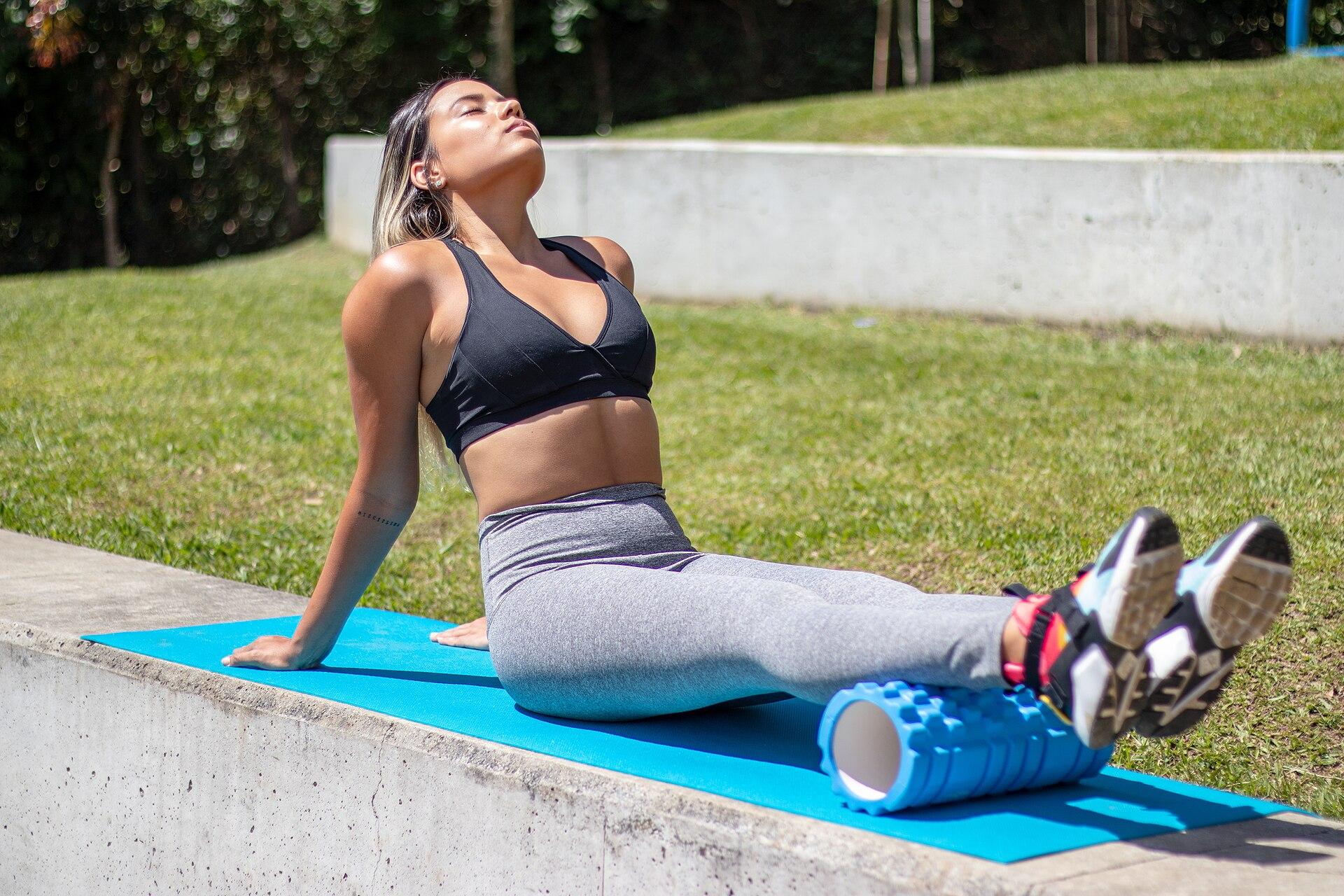
Foam rolling earns a place in your routine for two modest jobs: it eases soreness for a while and loosens a tight area for a short stretch of time. It does not make you faster, stronger or quicker to recover in any way the research can measure reliably. If you have ten minutes to spare around a workout, it is a fair way to spend them. If you do not, skipping it costs you very little.
What are the foam rolling benefits, and what does it not do?
The best-supported foam rolling benefits are less perceived muscle pain after hard exercise and a short-term gain in flexibility. A 2019 meta-analysis of 21 studies (Wiewelhove and colleagues) found that rolling after exercise reduced muscle pain by about 6% and slightly softened the drop in sprint (3.1%) and strength (3.9%) performance. Rolling before exercise improved flexibility by about 4% and sprint performance by 0.7%, with no meaningful change in jumping or strength.
The authors called the overall effects "rather minor and partly negligible," and noted that most included studies were small. That is the honest summary: a small, real effect on how muscles feel and move, and nothing you should plan a season around.
| What you hope for | What the evidence shows | Source |
|---|---|---|
| Less soreness after a hard session | Small benefit, strongest outcome in the review | Wiewelhove, 2019 |
| A better range of motion right now | Large effect compared with doing nothing, similar to stretching | Wilke, 2020 |
| Faster sprints or stronger lifts afterward | Small at most, and not statistically reliable for recovery | Wiewelhove, 2019 |
| Higher jumps | Negligible | Wiewelhove, 2019 |
| Long-term strength or power gains from rolling regularly | None found across eight low-risk-of-bias studies | Konrad, 2022 |
A 2020 review and meta-analysis (Skinner and colleagues) reached a similar place: rolling increases range of motion, appears useful for recovery from exercise-induced muscle damage, and shows no harm to other athletic measures. Note the gap between "appears useful" and "proven to speed recovery."
Does foam rolling help with sore muscles?
Yes, a little, and mostly in how sore you feel. Soreness has the larger body of evidence in that review, and its authors say it supports rolling after a workout. The measured effect (about 6%, a small-to-moderate effect size) is a change you might notice on a pain scale, and it will not erase a hard Monday.
Soreness that arrives a day or two after unfamiliar work has its own timeline, and nothing in these reviews shows rolling shortens it. Our guide to delayed onset muscle soreness lays out what that timeline looks like and what else has been studied.
Does foam rolling improve flexibility and range of motion?
Foam rolling does, briefly. A 2020 meta-analysis of 26 trials found a large acute gain in joint range of motion compared with no exercise, and no difference from stretching. A 2024 review of 38 studies went a step further: its title states that neither rolling nor stretching gives a superior acute flexibility gain compared with any other warm-up.
The lasting version needs time. In a 2022 meta-analysis of training studies (290 people, average age about 24), foam rolling programs increased range of motion by a moderate amount, but only when they ran longer than four weeks. One calf trial in that review used 90 seconds, three times a week, for five weeks. A 2024 comparison found static stretching and foam rolling similar for long-term range of motion, with stretching ahead in programs of four weeks or less.
How long and how often should you foam roll?
No study has settled a single best dose. The research gives a range, and the clinical advice sits inside it. The training studies in the 2022 review used roughly 20 to 90 seconds per muscle group, two to three sessions a week. Cleveland Clinic suggests one to two minutes per sore or stiff area, slow rolls with deep breaths, a repeat of three to five passes over a tender spot, and no more than about 10 minutes in a session. It says you can roll daily or a few times a week.
A practical starting plan, built from those numbers:
- Before a workout: 30 to 60 seconds on each of the two or three muscle groups you are about to load, then move into your warm-up.
- After a workout: one to two minutes on whichever areas feel tight or sore.
- Pressure: start light. Cleveland Clinic advises finding your tolerance first and adjusting if you are sore from rolling the next day.
- Stay on muscle. Harvard Health says the main concern is rolling over bone, such as knees, pelvis or shoulder blades.
Should you stretch before or after a workout?
Warm up with movement before, and save long holds for after or a separate session. A 2016 systematic review (Behm and colleagues) found that static stretching right before testing changed performance by about -3.7%, dynamic stretching by +1.3%, and that holding a static stretch 60 seconds or longer per muscle cost more (-4.6%) than shorter holds (-1.1%). The same review recommends stretching inside a warm-up that includes additional dynamic activity afterward, which had inconsequential effects on performance.
An earlier review (Behm and Chaouachi, 2011) suggests a warm-up built from light aerobic activity, then large-amplitude dynamic stretching, then sport-specific movement. For long holds, it notes static stretching in a separate session can give range-of-motion benefits.
After the workout, stretching is fine, and it is a good time to build flexibility. It will not do much for soreness. A Cochrane review of 12 studies concluded that stretching before, after, or both does not produce clinically important reductions in delayed onset soreness in healthy adults. On the 100-point soreness scale, the pooled drop one day later was about half a point for pre-exercise stretching and about one point for post-exercise stretching.
| When | Do this | Why |
|---|---|---|
| Before a round, run or lift | Easy aerobic work, then dynamic moves (leg swings, lunges with a twist), then your sport | Dynamic stretching showed small gains; long static holds showed small losses |
| Right before maximum effort | Skip holds beyond 60 seconds per muscle | Longer holds showed the larger performance dip |
| After training | Foam roll tight areas, then hold stretches | Builds toward the ACSM total below |
| On its own, two or more days a week | Static stretching for flexibility | Where the range-of-motion benefit comes from |
For a baseline, the American College of Sports Medicine's position stand (2011) recommends flexibility work for each major muscle-tendon group, 60 seconds in total per exercise, on at least two days a week. That figure is for maintaining joint range of movement, and it makes no promise about recovery.
Who should be careful with foam rolling?
Skip it over a broken bone or an open wound, and ask a clinician first if you have a clot risk, an inflamed area or an infection. A 2021 international expert panel (37 experts in the final round, mostly sports scientists and physiotherapists) reached consensus on two contraindications, open wounds and bone fractures. It reached consensus on cautions for local tissue inflammation, myositis ossificans (bone forming in muscle after an injury), osteomyelitis (bone infection) and deep vein thrombosis.
Two things to be clear about. First, osteoporosis, blood thinners and recent injury or surgery were on the panel's early lists and did not make the final consensus, so the panel does not give a rule for them. If any of those apply to you, ask your doctor or physical therapist before you start, particularly over the legs. Second, the panel's authors say clinical data on the actual risks is still needed.
Practical stops: sharp or lingering pain, numbness, or swelling and warmth in one leg are reasons to stop and call your provider. If you are recovering from surgery, clear rolling with your surgeon first.
Where do studio services fit?
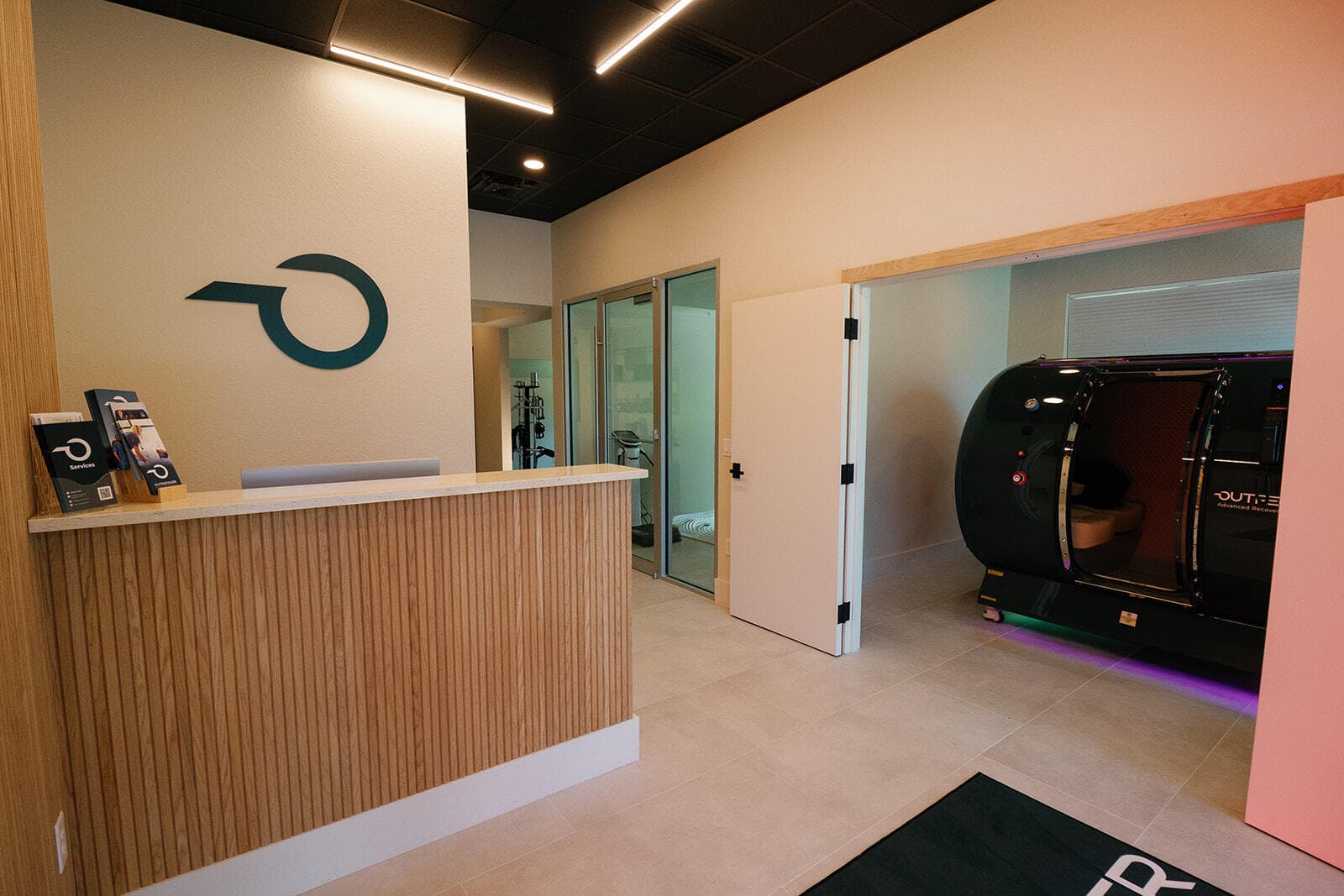
Rolling and stretching are free, and the research says their effects are small and short. A studio visit adds something different: passive recovery that needs no effort from you. Be clear on what the evidence supports for each.
Compression therapy at OutRecover is a 30-minute passive session in air-compression sleeves. A 2022 meta-analysis of 12 trials (322 people) found it reduced muscle soreness (SMD -0.33), with no significant effect on jump height or the muscle-damage marker creatine kinase, and the authors described the benefit as moderate. That is close to the foam roller's profile: soreness yes, performance no. Our compression boots guide covers the trials, and the research summary covers the clinical uses.
OutTrain is the athletic recovery package whose listing names runners, pickleball and golf players, and lifters, and includes compression, red light, the infrared sauna, the dry cold plunge and an InBody scan. OutPerform is the fuller version for people training several times a week. Neither replaces sleep, food and a sensible training week. Our active recovery guide covers the low-intensity movement that belongs alongside any of them.
Your next step
Try this for two weeks: roll the two muscle groups you load most for 60 seconds each before training, and the tightest area for one to two minutes after, three days a week. Rate your soreness the next morning. If it is no better, drop it and keep the warm-up. If you have a clot, fracture, wound or surgery in your history, ask your clinician first, then book a compression session or ask the front desk which package fits your week.
Sources
- Wiewelhove T, et al. A meta-analysis of the effects of foam rolling on performance and recovery. Frontiers in Physiology, 2019. https://pmc.ncbi.nlm.nih.gov/articles/PMC6465761
- Skinner B, Moss R, Hammond L. A systematic review and meta-analysis of the effects of foam rolling on range of motion, recovery and markers of athletic performance. Journal of Bodywork and Movement Therapies, 2020. https://pubmed.ncbi.nlm.nih.gov/32825976
- Wilke J, Müller AL, Giesche F, Power G, Ahmedi H, Behm DG. Acute effects of foam rolling on range of motion in healthy adults: a systematic review with multilevel meta-analysis. Sports Medicine, 2020. https://pubmed.ncbi.nlm.nih.gov/31628662
- Warneke K, et al. Foam rolling and stretching do not provide superior acute flexibility and stiffness improvements compared to any other warm-up intervention: a systematic review with meta-analysis. Journal of Sport and Health Science, 2024. https://pubmed.ncbi.nlm.nih.gov/38244921
- Konrad A, Nakamura M, Tilp M, Donti O, Behm DG. Foam rolling training effects on range of motion: a systematic review and meta-analysis. Sports Medicine, 2022. https://pmc.ncbi.nlm.nih.gov/articles/PMC9474417
- Konrad A, Nakamura M, Behm DG. The effects of foam rolling training on performance parameters: a systematic review and meta-analysis including controlled and randomized controlled trials. International Journal of Environmental Research and Public Health, 2022. https://pmc.ncbi.nlm.nih.gov/articles/PMC9517147
- Konrad A, Alizadeh S, et al. Static stretch training versus foam rolling training effects on range of motion: a systematic review and meta-analysis. Sports Medicine, 2024. https://pmc.ncbi.nlm.nih.gov/articles/PMC11393112
- Behm DG, Blazevich AJ, Kay AD, McHugh M. Acute effects of muscle stretching on physical performance, range of motion, and injury incidence in healthy active individuals: a systematic review. Applied Physiology, Nutrition, and Metabolism, 2016. https://pubmed.ncbi.nlm.nih.gov/26642915
- Behm DG, Chaouachi A. A review of the acute effects of static and dynamic stretching on performance. European Journal of Applied Physiology, 2011. https://pubmed.ncbi.nlm.nih.gov/21373870
- Herbert RD, de Noronha M, Kamper SJ. Stretching to prevent or reduce muscle soreness after exercise. Cochrane Database of Systematic Reviews, 2011. https://pubmed.ncbi.nlm.nih.gov/21735398
- Garber CE, et al. American College of Sports Medicine position stand: quantity and quality of exercise for developing and maintaining cardiorespiratory, musculoskeletal, and neuromotor fitness in apparently healthy adults. Medicine and Science in Sports and Exercise, 2011. https://pubmed.ncbi.nlm.nih.gov/21694556
- Bartsch KM, Baumgart C, et al. Expert consensus on the contraindications and cautions of foam rolling: an international Delphi study. Journal of Clinical Medicine, 2021. https://pmc.ncbi.nlm.nih.gov/articles/PMC8622134
- Cleveland Clinic. Should you try foam rolling? Health Essentials, 2023. https://health.clevelandclinic.org/foam-rolling
- Harvard Health Publishing. Foam roller: could you benefit from this massage tool? https://www.health.harvard.edu/exercise-and-fitness/foam-roller-could-you-benefit-from-this-massage-tool
- Wiśniowski P, et al. The effect of pressotherapy on performance and recovery in the management of delayed onset muscle soreness: a systematic review and meta-analysis. Journal of Clinical Medicine, 2022. https://pmc.ncbi.nlm.nih.gov/articles/PMC9028309
- OutRecover. Compression Therapy service page; OutTrain and OutPerform package pages. https://outrecover.com