Contrast therapy, alternating heat and cold in one sitting, has a modest research record. In trials of hot and cold water after hard exercise, people tended to feel less sore and lose less strength than with plain rest, though the studies were small and the gains often fell short of what you would notice. Nobody has settled the best order, timing or temperature. Cold can also work against you after lifting. The details, and how to do it safely, follow.
What is contrast therapy?
Contrast therapy means moving between a hot exposure and a cold one, usually a few rounds in one session. At home that is a hot shower followed by a cold one. At a recovery studio it is often a sauna followed by a cold plunge. In the research literature the term nearly always means contrast water therapy: alternating immersion in warm and cold water.
That distinction matters for what you can trust. The reviews discussed below studied water. A sauna heats you with air or infrared light, a different stimulus from a warm bath. This guide found no controlled trial, among the sources it opened, that tested a sauna followed by a cold plunge against rest. Treat the water studies as the closest evidence, not a direct test.
Does contrast therapy help recovery after exercise?
A little, and mostly for soreness. A 2013 systematic review in PLoS One (Bieuzen and colleagues) pooled trials of contrast water therapy after muscle-damaging exercise. It found less soreness and less loss of muscle strength than passive recovery at every follow-up from under 6 hours to 96 hours. It also found little difference against cold water alone, warm water, compression, active recovery or stretching.
The same review lists the caveats that matter. All 18 trials had a high risk of bias. When the review's authors put results on a common 10 cm pain scale, many of the reductions were small enough to fall below clinical relevance: roughly 7% at 24 hours and 6% at 48 hours. The authors found no data to say what the best method is, and they noted that the effects may suit elite sport most.
Later work is no more generous. A 2017 review of team-sport recovery (Higgins and colleagues) covered 23 articles and 606 participants. Contrast therapy did not help neuromuscular recovery, and neither it nor cold water changed how sore players felt. A 2026 network meta-analysis in competitive endurance athletes concluded that the randomized evidence does not support recommending one physical recovery method over another on efficacy. It added that preference, cost and perceived benefit are fair reasons to choose one.
What about the cold half on its own?
The cold half has the better-known record for soreness. The Cochrane review of cold-water immersion (Bleakley and colleagues, 2012) compared water under 15 degrees C with rest in 14 studies. It found some evidence of less muscle soreness at 24, 48, 72 and 96 hours. It also found that the best method and the safety were unclear, and most trials did not track adverse events. That review is now more than a decade old.
If your question is mainly about the plunge, how long to cold plunge takes it on directly, and the dry cold plunge research summary lists the studies behind it. For soreness itself, see delayed onset muscle soreness.
Should you do cold after strength training?
If building muscle is a goal, be careful with cold right after lifting. In a 12-week trial (Roberts and colleagues, 2015), people who sat in cold water after strength sessions gained less muscle mass and strength than people who did active recovery. The cold group also showed blunted activity in the signals that drive muscle growth after a session.
Later reviews back the direction while softening the size. A 2021 meta-analysis (Malta and colleagues) of 8 studies found that regular cold-water immersion hurt resistance-training adaptations and left endurance performance unchanged. A 2024 meta-analysis of muscle growth (Pinero and colleagues) found the attenuation likely small, with real uncertainty, and nearly all participants were young men. A 7-week trial (Fyfe and colleagues, 2019) found less muscle fiber growth but no difference in strength gain.
Here is what the evidence does and does not settle:
- Settled enough: regular cold right after lifting tends to blunt muscle gain and may blunt strength gain.
- Not settled: how long a gap protects your gains, whether warm exposure first changes the picture, and whether the effect holds for women and older adults, who were rarely studied.
No trial this guide opened tested a gap between lifting and cold, so any specific number would be a guess.
Does the order or timing of heat and cold matter?
The reviews cannot tell you. Bieuzen's group found no data to name an optimal contrast protocol, and the trials vary in temperature, time per round and number of rounds. Ending on cold is common practice, and no source opened for this guide shows it works better.
A reasonable way to decide, framed as a judgment and not a finding:
| Your situation | A sensible default |
|---|---|
| Heavy lifting day, muscle or strength is the goal | Skip cold for now. Use heat, a walk or an easy session instead. |
| Endurance day, or a hard match | Contrast or cold is reasonable. Malta's review found no effect on endurance performance. |
| Rest day, sore or stiff | Heat, cold or both, whichever you tolerate and enjoy. |
| Not sure | Do one round, note how you feel that evening and the next morning, then adjust. |
What does sauna bring to the mix?
The best-known sauna research is observational. In the Finnish cohort reported in JAMA Internal Medicine (Laukkanen and colleagues, 2015), 2,315 men aged 42 to 60 were followed for a median of about 21 years. Men who used a sauna four to seven times a week had a lower risk of sudden cardiac death than men who used one once a week (hazard ratio 0.37, 95% CI 0.18 to 0.75). The data were collected from 1984 to 1989, so they are a snapshot more than three decades old.
Observational means sauna users may differ from non-users in ways the study could not fully adjust for. It does not show that a sauna prevents anything, the men used traditional Finnish saunas, and it says nothing about adding a cold plunge. A 2018 review in Mayo Clinic Proceedings (Laukkanen and colleagues) says the same: more trials are needed. For the infrared research, including how it compares with traditional heat, see the infrared sauna research summary and infrared vs traditional sauna.
Who should skip contrast therapy, or ask first?
Both halves stress the heart and blood pressure, in opposite directions. The Mayo review lists unstable angina, recent heart attack, uncontrolled high blood pressure, decompensated heart failure and severe aortic stenosis as reasons to avoid sauna, with caution for low blood pressure on standing, since blood pressure can fall during recovery after a session. For cold, a review of "autonomic conflict" (Shattock and Tipton, 2012) describes how cold water submersion can set off abnormal heart rhythms, even in healthy volunteers, and may be dangerous for vulnerable people, and the research summary lists cardiovascular disease, uncontrolled hypertension, Raynaud's phenomenon and cold urticaria as reasons to avoid immersion.
A checklist before you start:
- Heart or blood pressure condition, or you take blood pressure medicine: get your doctor's go-ahead first.
- Pregnant: ask your clinician. A 2001 review in the American Journal of Medicine (Hannuksela and Ellahham) called sauna safe in uncomplicated pregnancies, but it is 25 years old, and the studio's own sauna page does not recommend it during pregnancy.
- Alcohol: none before or between rounds. The same review links alcohol in a sauna to low blood pressure, arrhythmia and sudden death.
- Never alone in very cold water. The studio's plunge page says the same. Have someone nearby, keep your head out of the water, and get out at the first dizziness or numbness.
- Recovering from surgery: clear it with your surgeon first. Heat and cold change swelling, circulation and incision comfort, and they are not part of most surgical plans.
- Heat illness: drink water, and learn the signs in heat exhaustion symptoms.
Where do studio services fit?
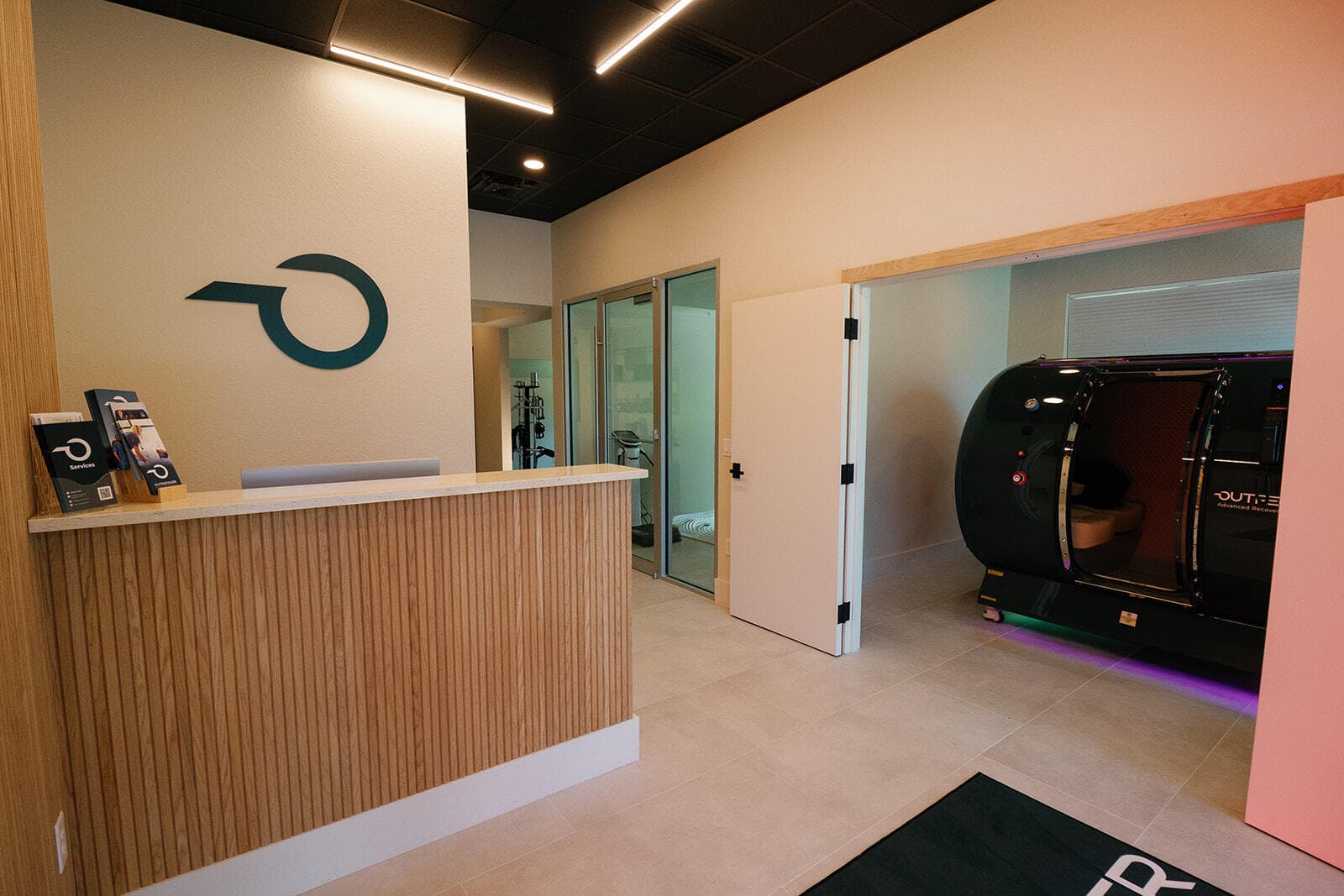
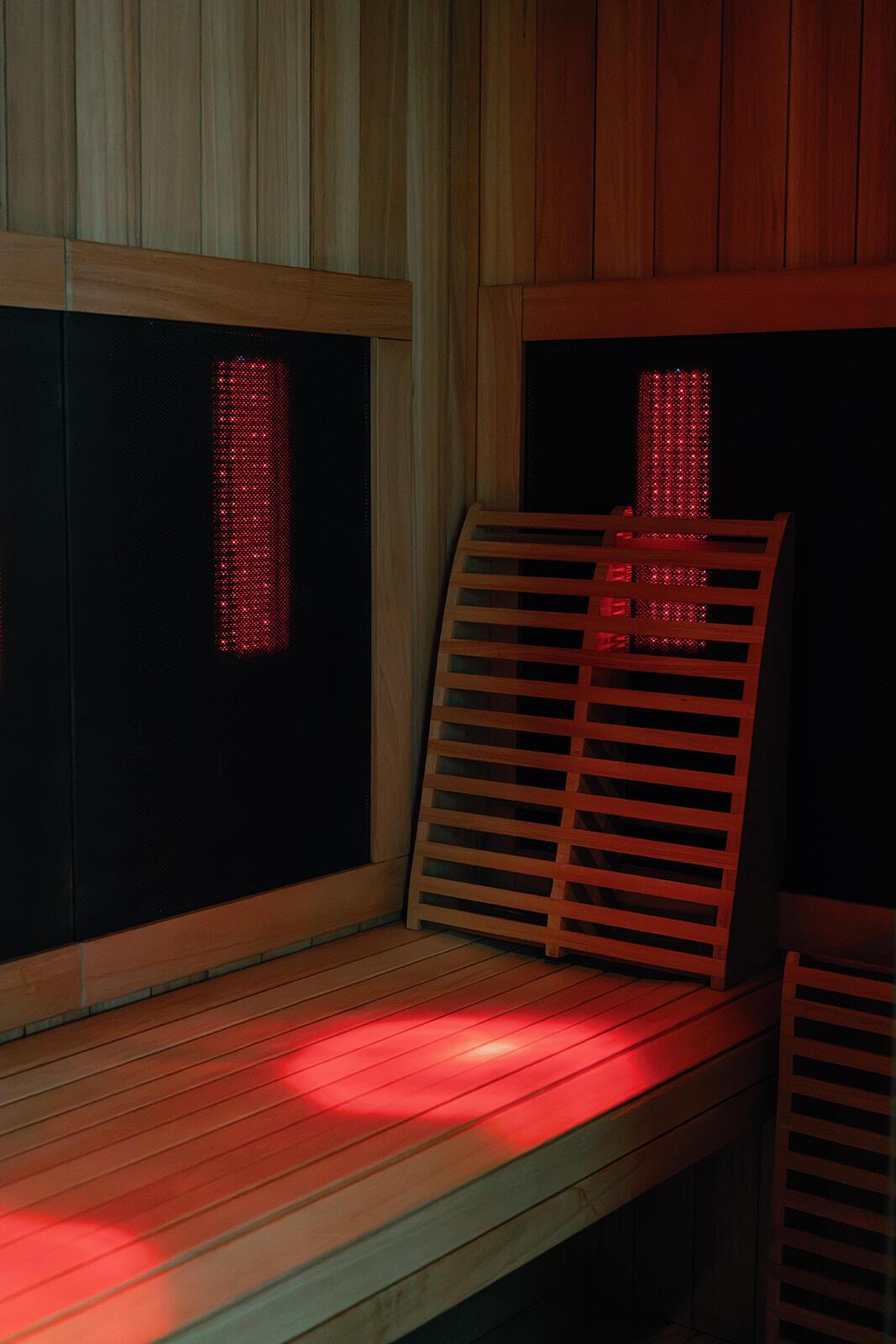
The studio's infrared sauna is a private cedar cabin you book by the session, and its dry cold plunge is cold immersion without getting wet. The plunge page says the two are often paired for contrast therapy. Both pages list who should skip them. The sauna page asks you to bring water and leave if you feel dizzy, and the plunge page says never to plunge alone.
Given the evidence above, a studio session is best described as a way to try a routine you may enjoy, with staff nearby, not as a proven recovery shortcut. If you train several days a week, OutTrain bundles the sauna and plunge with red light therapy, compression boots and a body composition scan, and it fits most active adults. OutPerform adds more sessions and athletic IVs for heavy training blocks. Either way, ask your clinician about the plunge if you lift for muscle, and about both services if you have a heart or blood pressure condition. Compression boots and active recovery are lower-risk options with their own evidence.
What should you do next?
Pick one hard day and one easy day this week. Try heat and cold on the easy day, keep cold away from the lifting day, and write down how your legs feel the next morning. If your doctor has said anything about your heart or blood pressure, ask before the first round. If you want a plan, the studio can put one together around your training week.
Sources
- Bieuzen F, Bleakley CM, Costello JT. Contrast water therapy and exercise induced muscle damage: a systematic review and meta-analysis. PLoS One, 2013. https://pmc.ncbi.nlm.nih.gov/articles/PMC3633882
- Higgins TR, Greene DA, Baker MK. Effects of cold water immersion and contrast water therapy for recovery from team sport: a systematic review and meta-analysis. Journal of Strength and Conditioning Research, 2017. https://pubmed.ncbi.nlm.nih.gov/27398915
- Physical recovery modalities in competitive and elite endurance athletes: a systematic review and network meta-analysis finding limited evidence of benefit over passive recovery. Frontiers in Sports and Active Living, 2026. https://pmc.ncbi.nlm.nih.gov/articles/PMC13531764
- Bleakley C, McDonough S, Gardner E, Baxter GD, Hopkins JT, Davison GW. Cold-water immersion (cryotherapy) for preventing and treating muscle soreness after exercise. Cochrane Database of Systematic Reviews, 2012. https://pubmed.ncbi.nlm.nih.gov/22336838
- Roberts LA, Raastad T, Markworth JF, et al. Post-exercise cold water immersion attenuates acute anabolic signalling and long-term adaptations in muscle to strength training. Journal of Physiology, 2015. https://pubmed.ncbi.nlm.nih.gov/26174323
- Malta ES, Dutra YM, Broatch JR, Bishop DJ, Zagatto AM. The effects of regular cold-water immersion use on training-induced changes in strength and endurance performance: a systematic review with meta-analysis. Sports Medicine, 2021. https://pubmed.ncbi.nlm.nih.gov/33146851
- Pinero A, Burke R, Augustin F, et al. Throwing cold water on muscle growth: a systematic review with meta-analysis of the effects of postexercise cold water immersion on resistance training-induced hypertrophy. European Journal of Sport Science, 2024. https://pmc.ncbi.nlm.nih.gov/articles/PMC11235606
- Fyfe JJ, Broatch JR, Trewin AJ, et al. Cold water immersion attenuates anabolic signaling and skeletal muscle fiber hypertrophy, but not strength gain, following whole-body resistance training. Journal of Applied Physiology, 2019. https://pubmed.ncbi.nlm.nih.gov/31513450
- Laukkanen T, Khan H, Zaccardi F, Laukkanen JA. Association between sauna bathing and fatal cardiovascular and all-cause mortality events. JAMA Internal Medicine, 2015. https://pubmed.ncbi.nlm.nih.gov/25705824
- Laukkanen JA, Laukkanen T, Kunutsor SK. Cardiovascular and other health benefits of sauna bathing: a review of the evidence. Mayo Clinic Proceedings, 2018. https://pubmed.ncbi.nlm.nih.gov/30077204
- Hannuksela ML, Ellahham S. Benefits and risks of sauna bathing. American Journal of Medicine, 2001. https://pubmed.ncbi.nlm.nih.gov/11165553
- Shattock MJ, Tipton MJ. "Autonomic conflict": a different way to die during cold water immersion? Journal of Physiology, 2012. https://pmc.ncbi.nlm.nih.gov/articles/PMC3459038