The two saunas warm you in different ways, and the research behind them is uneven. A traditional sauna heats the air around you, usually to about 150 to 195°F. An infrared cabin runs cooler, around 110 to 140°F, and warms you with radiant heat. Most of the long-term health data comes from traditional Finnish saunas. Infrared studies are smaller and shorter. If you are choosing between a gym's hot dry sauna and an infrared session, the useful question is which one you can tolerate and will use regularly, once your doctor has no objection.
Infrared sauna vs traditional sauna: how does each one heat you?
A traditional sauna warms the air in the room, and the air warms your skin. An infrared sauna uses panels that give off infrared light, which warms your body directly at a lower air temperature. Cleveland Clinic (2022) puts infrared cabins at roughly 110 to 135°F and traditional saunas at 150 to 195°F. Harvard Health (2025) gives 120 to 140°F for infrared and 150 to 195°F for a traditional dry sauna.
| Traditional sauna (a gym's hot dry sauna) | Infrared sauna | |
|---|---|---|
| How it heats | Heats the air; air warms you | Infrared panels warm you directly |
| Typical air temperature | About 150 to 195°F | About 110 to 140°F |
| Core temperature change in one 2025 lab study | +0.4°C after three 10-minute rounds at 80°C | +0.0°C after 45 minutes at 45 to 65°C |
| Main body of research | Large Finnish population studies, many years of follow-up | Smaller trials, mostly short |
The core temperature row comes from a 2025 comparison of 20 healthy adults aged 24 on average, each of whom tried hot water immersion, a traditional sauna and a far infrared sauna. Far infrared heating raised core temperature the least, and hot water immersion was the only one of the three to raise the immune markers the authors measured. That is one session per person in young, healthy volunteers. It tells you the two are not interchangeable minute for minute. It does not tell you what months of use do. The studio's research summary notes the same study and that repeated infrared exposure may still add up.
Mayo Clinic's expert answer makes the practical point: an infrared sauna gives the exercise-like reactions people want, such as sweating and a faster heart rate, at lower temperatures, which makes it a choice for people who cannot stand a regular sauna's heat.
What does the research say about each one?
Traditional sauna has the deeper record, and most of it is observational. The best-known study, a 2015 JAMA Internal Medicine cohort, followed 2,315 middle-aged Finnish men for a median of 20.7 years. Men who used a sauna four to seven times a week had a lower risk of sudden cardiac death than men who used one once a week (hazard ratio 0.37). The men were examined between 1984 and 1989, so this is a snapshot of an older, male, Finnish group. Observational data shows an association, not cause and effect.
Randomized trials are less generous. Harvard Health (2025) describes a 2023 trial of 41 people with stable coronary artery disease: after eight weeks of Finnish sauna four times a week, they showed no meaningful difference in blood pressure or artery measures compared with people who skipped the sauna. It also cites a September 2025 review of 20 randomized trials of passive heating. That review found no improvement in most heart-health measures, and about a 4-point drop in systolic blood pressure that the article calls not well supported. Harvard's cardiologist offers a fair reading of the gap: the trials may be too short, or frequent sauna users may simply be healthier to begin with.
Infrared sits further down the evidence ladder:
- Breadth. A 2018 systematic review of dry sauna bathing found 40 studies and 3,855 participants. Only 13 were randomized trials, and most had fewer than 40 people. Twenty-five involved infrared saunas, nearly all at 60°C for 15 to 30 minutes.
- Quality. The review calls study quality variable, with small samples, differing protocols and inconsistent reporting. Most reported benefits.
- Safety signal. Adverse effects in the infrared studies were mild to moderate heat discomfort, light-headedness in one study, and no severe events, though the samples were small.
- Expert read. Mayo Clinic says studies of infrared saunas in conditions such as high blood pressure, heart failure and arthritis show some proof that saunas may help, that larger and more exact studies are needed, and that some of those studies used a regular sauna.
A 2018 Mayo Clinic Proceedings review of Finnish sauna bathing gathers observational, randomized and non-randomized work and frames its proposed mechanisms as postulated. Neither type of sauna has been shown to heal an injury or speed muscle recovery in the sources above, and this guide makes no such claim.
Which is more comfortable, and how long should a session last?
Most people find the infrared cabin easier to sit in, because the air is cooler and breathing is easier. Session length differs by tradition. Harvard says Finnish people average two or three saunas a week of up to 20 minutes. For infrared, a Cleveland Clinic physician suggests starting near 110°F for 5 to 10 minutes, keeping sessions under 30 minutes and limiting visits to three or four a week. That advice is from one 2022 article, so treat it as a conservative starting point.
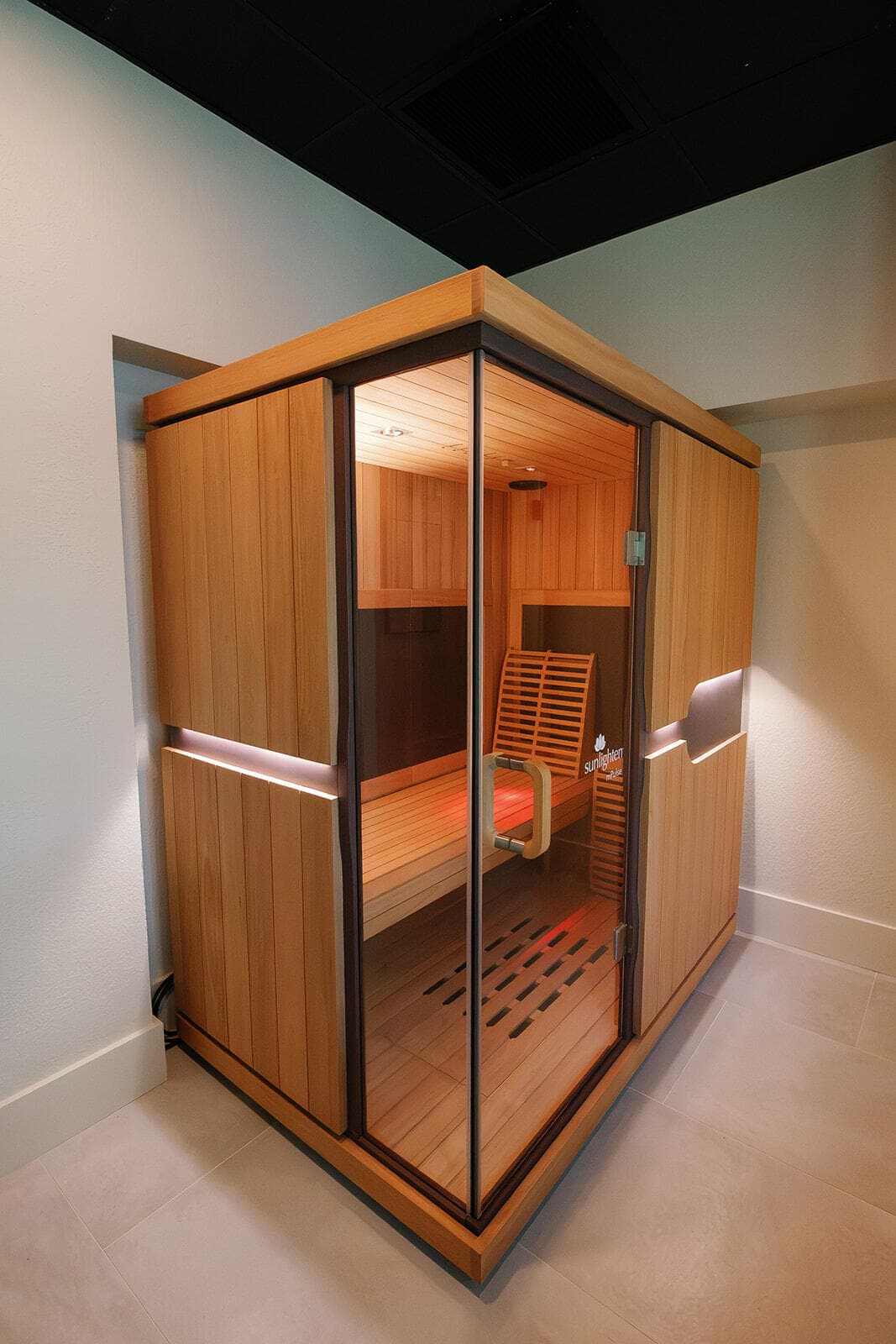
OutRecover's infrared sauna page lists a 45-minute session in a private cedar cabin, usually at 120 to 150°F, with towels provided. Ask the team how that time divides between heating and cooling down, and how to build up if you are new to heat.
A first-session plan for either type:
- Start with a short stay. Harvard suggests five minutes at first while you pay attention to symptoms.
- Sit upright or recline, whichever lets you keep your head cool and your breathing easy.
- Leave if you feel extremely hot, light-headed or dizzy. Do not push through it.
- Cool down gradually. Harvard advises against stepping straight into cold air.
- Drink afterward, and use a sauna as an add-on to exercise, not a replacement.
How much should you drink in a sauna?
Plan to replace what you sweat. Cleveland Clinic advises bringing water into the sauna, notes that sports drinks with electrolytes may help, and says to avoid alcohol. Harvard says to hydrate afterward. Mayo Clinic's guidance on dehydration says thirst is a reliable guide for most healthy people, pale urine suggests you are well hydrated, and alcohol and heavy caffeine add to fluid loss.
Alcohol deserves its own flag. A 2001 review in the American Journal of Medicine found that drinking alcohol during sauna bathing raises the risk of low blood pressure, irregular heart rhythm and sudden death, and should be avoided. The review is old, but the physiology it describes has not changed.
Who should check with a doctor before using a sauna?
Anyone with a heart, blood pressure or fluid-balance issue should ask first. The 2001 review lists unstable angina, a recent heart attack and severe aortic stenosis as contraindications, and says sauna is safe for most people with stable coronary disease. Harvard advises caution with low blood pressure, valve disease or heart failure, because a sauna can lower blood pressure for a while.
Check with your doctor if any of these apply:
- You have heart disease, heart failure, a valve problem or low blood pressure, or you get dizzy when you stand.
- You take diuretics or other heart or blood pressure medicines. Mayo Clinic notes that people with heart disease often take drugs that remove fluid, lower blood pressure or slow the heart rate, which limits the body's ability to compensate for fluid loss.
- You are pregnant or trying to conceive. ACOG (2021) says it is best not to use saunas early in pregnancy, because studies link them to birth defects. The 2001 review took a more permissive view of uncomplicated pregnancies. Ask your obstetrician.
- You have multiple sclerosis. Cleveland Clinic says people with MS tend to be heat intolerant.
- You are ill, or recovering from surgery. Clear any new heat therapy with your surgeon first.
OutRecover's own page says the sauna is not recommended if you are pregnant or have certain cardiovascular conditions, and to exit if you feel dizzy or unwell.
How do you choose between them?
Choose by what you will keep doing, and by what your doctor allows. Three rules cover most cases:
- You already use a gym sauna comfortably. There is no medical reason to switch. The long-term population data sits with that kind of heat.
- Hot dry air is too much for you. Infrared lets you stay seated at a lower air temperature. Know that the core temperature rise was smaller in the one lab comparison, so do not assume an infrared minute equals a traditional one.
- You want a particular health result. Neither sauna is proven to deliver it. Ask your clinician before paying for sessions on that hope.
Where does an infrared session fit at OutRecover?
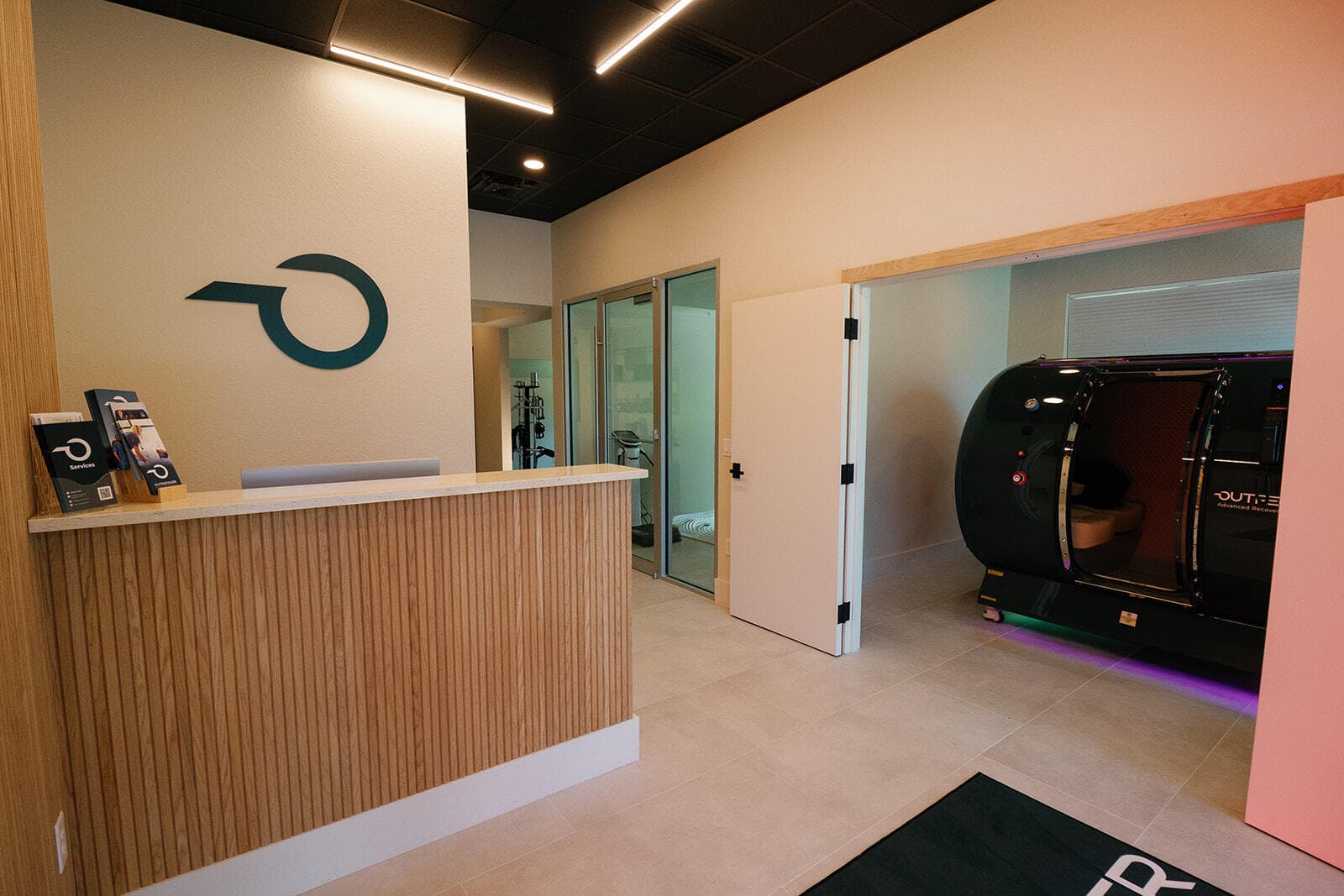
OutRecover offers a private infrared sauna at its North Naples studio on Piper Boulevard, bookable as a single session with no package or membership. Its page lists muscle relaxation, joint stiffness, cardiovascular health and stress as what people use it for. The evidence for those uses is mixed and limited, as above, and the infrared sauna research summary covers it in full.
For people who want sauna as part of a training week, OutTrain includes infrared sauna alongside red light, compression boots, a dry cold plunge and an InBody scan, and is built for runners, cyclists, pickleball and golf players and anyone with post-workout soreness. OutPerform is the heavier version for people training several times a week. Heat and cold in one visit is its own question, covered in contrast therapy. If sore legs are the problem, compression boots have their own research.
Next step: if your doctor is comfortable with heat, book one session at the infrared sauna page, tell the staff about any conditions or medicines at intake, and treat the first visit as a test of how you tolerate it.
Sources
- Cleveland Clinic. Infrared Saunas: What They Do and 6 Health Benefits. Health Essentials, 2022. https://health.clevelandclinic.org/infrared-sauna-benefits
- Harvard Health Publishing. Can regular sauna sessions support a healthy heart? Harvard Heart Letter, 2025. https://www.health.harvard.edu/heart-health/can-regular-sauna-sessions-support-a-healthy-heart
- Mayo Clinic. Do infrared saunas have any health benefits? Expert answers. https://www.mayoclinic.org/healthy-lifestyle/consumer-health/expert-answers/infrared-sauna/faq-20057954
- Atencio JK, et al. Comparison of thermoregulatory, cardiovascular, and immune responses to different passive heat therapy modalities. Am J Physiol Regul Integr Comp Physiol, 2025. https://pubmed.ncbi.nlm.nih.gov/40332494
- Laukkanen T, et al. Association between sauna bathing and fatal cardiovascular and all-cause mortality events. JAMA Internal Medicine, 2015. https://pubmed.ncbi.nlm.nih.gov/25705824
- Hussain J, Cohen M. Clinical Effects of Regular Dry Sauna Bathing: A Systematic Review. Evidence-Based Complementary and Alternative Medicine, 2018. https://pmc.ncbi.nlm.nih.gov/articles/PMC5941775
- Laukkanen JA, Laukkanen T, Kunutsor SK. Cardiovascular and Other Health Benefits of Sauna Bathing: A Review of the Evidence. Mayo Clinic Proceedings, 2018. https://pubmed.ncbi.nlm.nih.gov/30077204
- Hannuksela ML, Ellahham S. Benefits and risks of sauna bathing. American Journal of Medicine, 2001. https://pubmed.ncbi.nlm.nih.gov/11165553
- American College of Obstetricians and Gynecologists. Can I use a sauna or hot tub early in pregnancy? Ask ACOG, 2021. https://www.acog.org/womens-health/experts-and-stories/ask-acog/can-i-use-a-sauna-or-hot-tub-early-in-pregnancy
- Mayo Clinic Health System. Mayo Clinic Q&A: How does dehydration affect the heart? Mayo Clinic News Network. https://newsnetwork.mayoclinic.org/discussion/mayo-clinic-qa-how-does-dehydration-affect-the-heart