If you are new to cold plunging, the shortest honest answer is a minute or two at the warmer end of "cold." Clinicians who write for beginners say that, and the research protocols behind the longer numbers you see online ran 10 to 15 minutes in trials built to study soreness and muscle adaptation, never meant to coach first-timers. Below you will find what those studies used, what the first minute does to your body, who should skip the plunge, and how timing around strength training matters.
How long should you cold plunge?
For a first-timer, Cleveland Clinic advises a session of a minute or two, never more than five minutes, in water between 50 and 59 degrees Fahrenheit (10 to 15 C), and nothing below 40 F (4 C). It suggests beginners plunge once or twice a week and add days only if they tolerate it. That is one clinic's practical guidance, which no trial produced, but it sits well inside what the studies below tested.
No evidence shows that longer works better. The soreness evidence is modest, and the reviews disagree about whether minutes matter at all.
What temperatures and minutes did research use?
Studies of cold water immersion (CWI) mostly tested water around 10 to 15 C for 10 to 15 minutes, and the authors report them as the protocols tested, with no advice to copy them. The table lists protocols from the papers we read.
| Source | Water and time studied | What it found |
|---|---|---|
| Machado et al., 2016 (9 trials, searched to 2015) | Pooled by subgroup; best results at 11 to 15 C for 11 to 15 minutes | CWI slightly better than passive recovery for muscle soreness |
| Roberts et al., 2015 | 10 minutes after each lifting session, 12 weeks | Smaller strength and muscle gains than with active recovery |
| Fyfe et al., 2019 | 15 minutes at 10 C after each session, 7 weeks | Muscle fiber growth blunted; leg press strength gains were similar |
| Cain et al., 2025 | Water 15 C or colder for at least 30 seconds | Mixed: see below |
Two cautions apply. The Machado review is now more than ten years old, so treat it as a snapshot, and its conclusion is only that CWI "can be slightly better" than rest. A later 2022 meta-analysis of 28 studies found CWI beat several other recovery methods for soreness, yet its meta-regression showed that water temperature and exposure time were rarely moderators of the result. In plain words, nobody has pinned down a best dose. The Cochrane review (2012, so also a snapshot) found some evidence that CWI reduces delayed onset muscle soreness compared with rest, insufficient evidence on other outcomes, and noted that most trials did not track adverse events.
For the wider picture on health claims, a 2025 systematic review of 11 studies and 3,177 participants found lower stress at 12 hours after immersion and better sleep quality and quality of life, but no clear effect on mood or immunity, and short-term increases in inflammation. Its authors say the evidence rests on few trials, small samples and narrow study groups, and call for better trials. If you want the benefits question answered in full, the Dry Cold Plunge research page covers it; this guide stays on time, temperature and safety.
Why does the first minute matter most?
The first 30 seconds to two minutes are when cold water does its most abrupt work on you. A 2020 narrative review describes the cold shock response as a gasp followed by uncontrollable hyperventilation, with heart rate, blood pressure and cardiac output rising quickly. The response peaks about 30 seconds after entry and adapts over roughly two minutes.
That timing explains the beginner advice. If you get through the first two minutes calmly, the sharpest part is behind you. Controlled breathing helps, and the studio's service page says breathing techniques are taught and staff guidance is available.
The shock also fades with practice. In a study of repeated short immersions, heart rate and breathing rate during the first 30 seconds dropped by the seventh immersion compared with the first, though the initial gasp did not change. It was a laboratory study of repeated short dips, so read it as a reason to start short and repeat, and take no schedule from it.
Who should skip a cold plunge or ask a doctor first?
Cold water constricts blood vessels, raises blood pressure and makes the heart work harder, which is why several groups should get medical clearance first. Cleveland Clinic lists heart disease, high blood pressure, diabetes and pregnancy. The same 2020 review adds that people with known or undiagnosed heart disease are more likely to have rhythm disturbances in ice-cold water, and a physiology review of autonomic conflict describes cold-water arrhythmias even in healthy volunteers, in a paper about submersion with the face in the water.
Raynaud's phenomenon is the other flag. NIAMS says cold exposure is its most common trigger, and Mayo Clinic lists putting hands in cold water among the examples. OutRecover's service page says the plunge is not suitable for people with uncontrolled hypertension, Raynaud's syndrome or cold agglutinin disease, and states: never plunge alone.
Checklist before your first session:
- You have no heart condition, or your cardiologist has said yes.
- Your blood pressure is controlled.
- You do not have Raynaud's.
- You are not pregnant, or your clinician has cleared it.
- Someone knows you are plunging and a staff member or friend is within reach.
- If you are recovering from surgery, your surgeon has approved anything new.
Does a cold plunge after lifting blunt your gains?
A regular plunge soon after strength training can blunt gains. In Roberts' trial, 21 men lifted twice a week for 12 weeks, finishing with either 10 minutes of cold water or active recovery. Strength and muscle mass increased more in the active recovery group. Fyfe's smaller study (16 men) found blunted muscle fiber growth but similar maximal strength gains. A 2021 meta-analysis concluded that regular CWI had a deleterious effect on resistance training adaptations without affecting aerobic performance.
Cleveland Clinic's clinician says to avoid plunging within about four hours of a muscle-building workout, and that rest days between workouts may be fine. Read the four-hour figure as expert opinion, since no trial in this guide tested it.
A decision rule you can use:
- Your goal is muscle or strength: plunge on rest days, or skip it after lifting.
- Your goal is endurance or you play a sport: the meta-analysis found no effect on aerobic performance, so timing after cardio is less of a worry.
- You are unsure: ask your trainer or physical therapist which sessions the plunge should avoid.
Cold plunge vs ice bath: what is different?
An ice bath is a tub of cold water chilled with ice. Cleveland Clinic notes that a tub of cold tap water can reach a temperature low enough for a cold plunge, and that some people add bags of ice to go colder. The research above studied water immersion, whatever the vessel.
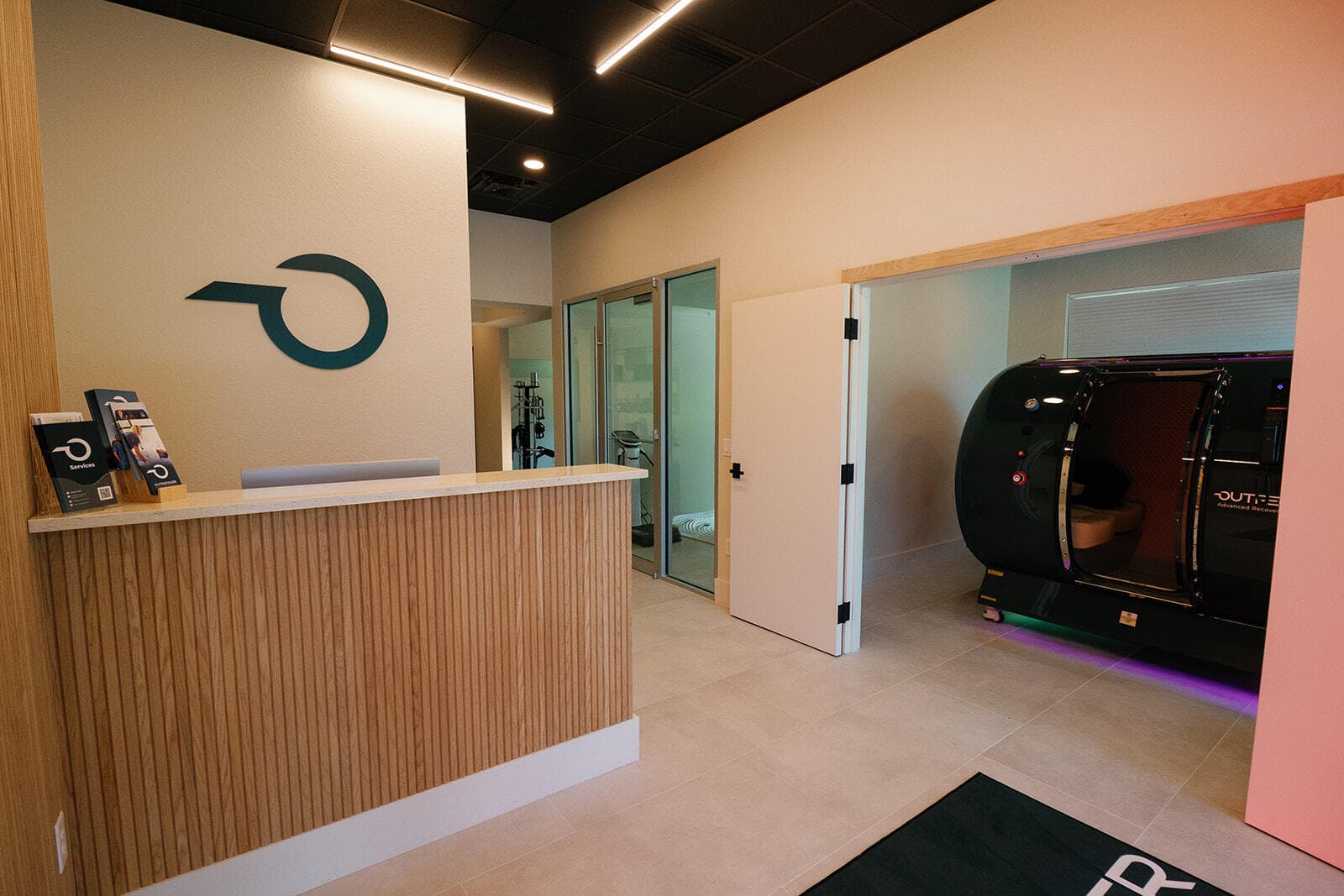
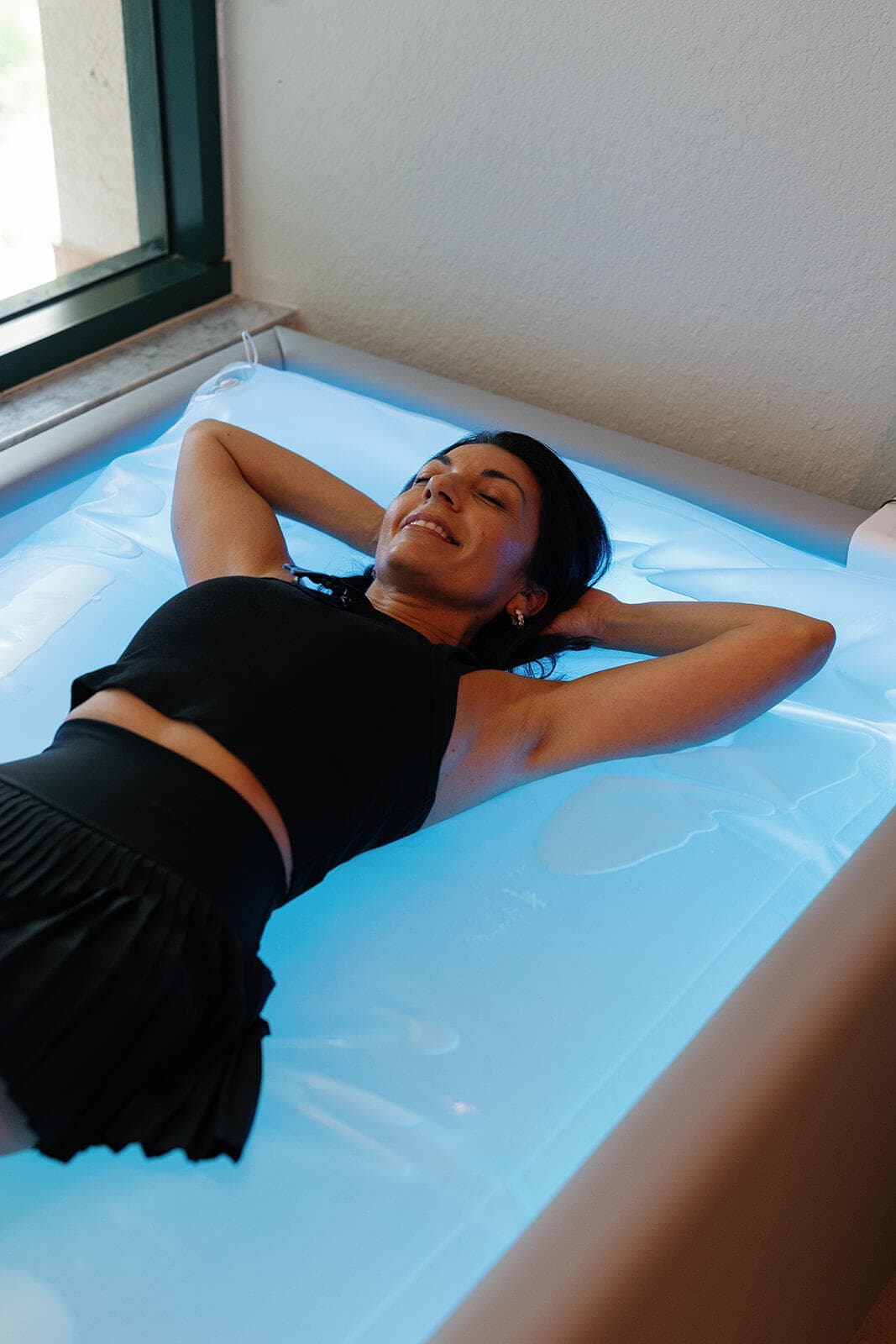
OutRecover's dry cold plunge is described on its own page as cold therapy without getting wet, kept at 45 to 55 degrees Fahrenheit (7 to 13 C), with the client immersed to the shoulders for a chosen duration, guided by staff and often paired with sauna. That is as far as the page goes, and we found no studies comparing a dry plunge with an ice bath. Everything in this guide about minutes and temperatures comes from water-immersion research, so treat it as indirect for any dry system. The studio can tell you how its equipment works.
Pairing cold with heat is its own topic: see contrast therapy. One more finding worth knowing is that the 2022 meta-analysis found CWI more effective than contrast water therapy for most recovery outcomes.
What does a careful first session look like?
The plan below is an illustration built from the beginner guidance above. It is no prescription, and anyone with a condition on the checklist should skip it.
- Talk to your doctor first if any item on the checklist applies.
- Book a session when staff are on site, and tell them it is your first.
- Choose the warmer end of the range if you have a choice, and do not go below 40 F anywhere.
- Get in slowly and breathe out long and slow through the first minute. The gasp is normal; it fades.
- Stay one to two minutes. Do not chase a number.
- Get out right away if you feel lightheaded, dizzy, short of breath or numb in a way that worries you.
- Dry off, put on warm clothes and rewarm gradually.
- Wait a few days before the next one. Once or twice a week is the beginner range Cleveland Clinic gives.
- Skip it after heavy lifting if building muscle is your priority.
Where do studio services fit?
A dry cold plunge is a reasonable, low-effort addition to a training week if you pass the screening and keep your expectations modest. The evidence suggests it may take the edge off soreness, and it is not proven to speed up recovery, treat injury or build fitness. The service sits alongside the infrared sauna in the studio, and the page lists the dry cold plunge service for single sessions.
Two packages include it. OutTrain is built for runners, cyclists and endurance athletes, tennis, pickleball and golf players, team sport athletes and lifters, and anyone with post-workout soreness, and includes red light, compression, the sauna, the cold plunge and an InBody scan. OutPerform adds more visits and athletic IVs (which need medical approval) for competitive athletes, people in a race block and anyone training several times a week. If soreness is your main complaint, our guide to delayed onset muscle soreness covers the options. Neither package replaces advice from a surgeon or physical therapist.
What should you do next?
Run the checklist above, and if any line gives you pause, ask your doctor before you book. If everything is clear, choose a session when staff are in, tell them it is your first, and plan one to two minutes. Then note how you feel the next morning before deciding whether to go again.
Sources
- Machado AF, et al. Can Water Temperature and Immersion Time Influence the Effect of Cold Water Immersion on Muscle Soreness? A Systematic Review and Meta-Analysis. Sports Medicine, 2016. https://pubmed.ncbi.nlm.nih.gov/26581833
- Bleakley C, et al. Cold-water immersion (cryotherapy) for preventing and treating muscle soreness after exercise. Cochrane Database of Systematic Reviews, 2012. https://pubmed.ncbi.nlm.nih.gov/22336838
- Cain T, et al. Effects of cold-water immersion on health and wellbeing: A systematic review and meta-analysis. PLOS ONE, 2025. https://pubmed.ncbi.nlm.nih.gov/39879231
- Moore E, et al. Effects of Cold-Water Immersion Compared with Other Recovery Modalities on Athletic Performance Following Acute Strenuous Exercise. Sports Medicine, 2022. https://pubmed.ncbi.nlm.nih.gov/36527593
- Roberts LA, et al. Post-exercise cold water immersion attenuates acute anabolic signalling and long-term adaptations in muscle to strength training. Journal of Physiology, 2015. https://pubmed.ncbi.nlm.nih.gov/26174323
- Fyfe JJ, et al. Cold water immersion attenuates anabolic signaling and skeletal muscle fiber hypertrophy, but not strength gain, following whole-body resistance training. Journal of Applied Physiology, 2019. https://pubmed.ncbi.nlm.nih.gov/31513450
- Malta ES, et al. The Effects of Regular Cold-Water Immersion Use on Training-Induced Changes in Strength and Endurance Performance. Sports Medicine, 2021. https://pubmed.ncbi.nlm.nih.gov/33146851
- Knechtle B, et al. Cold Water Swimming: Benefits and Risks, A Narrative Review. International Journal of Environmental Research and Public Health, 2020. https://pmc.ncbi.nlm.nih.gov/articles/PMC7730683
- Rapid habituation of the cold shock response. PubMed Central. https://pmc.ncbi.nlm.nih.gov/articles/PMC4580772
- Shattock MJ, Tipton MJ. 'Autonomic conflict': a different way to die during cold water immersion? Journal of Physiology, 2012. https://pubmed.ncbi.nlm.nih.gov/22547634
- Cleveland Clinic. Health Benefits of Cold Plunges. https://health.clevelandclinic.org/what-to-know-about-cold-plunges
- National Institute of Arthritis and Musculoskeletal and Skin Diseases. Raynaud's Phenomenon. https://www.niams.nih.gov/health-topics/raynauds-phenomenon
- Mayo Clinic. Raynaud's disease: Symptoms and causes. https://www.mayoclinic.org/diseases-conditions/raynauds-disease/symptoms-causes/syc-20363571
- OutRecover. Dry Cold Plunge, OutTrain and OutPerform pages. https://outrecover.com/services/dry-cold-plunge