Most people spend the first week or two resting, bent slightly at the waist, with a compression garment on and sometimes a drain in place. Many return to desk work at about two weeks, add exercise at four to six weeks, and watch swelling fade over three months or longer. That is the usual shape of abdominoplasty recovery, and your surgeon's plan sets your actual dates. This guide lays out the stages, the warning signs, and where the evidence is firm or thin.
How long is tummy tuck recovery, stage by stage?
Tummy tuck recovery runs in stages: walking on day one, desk work around week two, exercise from week four to six, and swelling that settles over about three months. The American Society of Plastic Surgeons (ASPS) and The Aesthetic Society give similar ranges, and a full tuck takes longer than a mini tuck. Several of the ASPS pages below are blog posts written by individual surgeons and published on the society's site. They show how one surgeon practices, not society guidance, so every ASPS figure marked "blog" is one surgeon's usual routine.
| Stage | What is typical | Source |
|---|---|---|
| Day of surgery | Walk with help. Most surgeons encourage walking three times that day to keep clot risk low. | ASPS surgeon blog, common questions, 2019 |
| Days 1 to 10 | Rest at an angle. Stand and lie bent at the waist for 7 to 10 days. Drains, if placed, come out in 1 to 2 weeks (another ASPS surgeon blog says 7 to 10 days, and The Aesthetic Society says a visit within five days can remove them), so ask your surgeon. | ASPS blog, common questions; ASPS blog, recovery, 2019 |
| Weeks 1 to 2 | Pain managed with a few days of medication. Help at home is needed. Many people return to work at about two weeks (one ASPS surgeon blog says most take up to a month off); driving is often cleared near two weeks. | ASPS blog, common questions; ASPS blog, drainless tummy tuck, 2025 |
| Weeks 4 to 6 | Most usual activities resume by week 4. Cardio is often cleared near week 4. Running, lifting and weights wait until about week 6. | ASPS blog, tummy tuck guide; ASPS blog, drainless tummy tuck, 2025; The Aesthetic Society |
| About 3 months | Swelling keeps shrinking until about 3 months. Numbness or pulling can last weeks to months. The Aesthetic Society is more optimistic, saying swelling should subside within five weeks, so treat 3 months as the cautious figure. | ASPS blog, common questions; ASPS blog, recovery, 2019; The Aesthetic Society |
| 6 months or longer | Residual swelling can linger. The Aesthetic Society describes recovery as six months or more. | ASPS blog, five things to consider; The Aesthetic Society |
| 12 to 18 months | Scars become thinner and lighter. | ASPS blog, common questions |
A surgeon's post on the ASPS site notes that age, general health, the type of tuck and your aftercare all move your dates, and an extended tuck that reaches the flanks or back takes longer (ASPS, recovery blog, 2019).
What are the drains, the garment and the bent-over walk for?
Each one protects the repair. Drains remove fluid that would otherwise pool under the lifted skin. The compression garment supports the abdomen and helps control swelling. Walking bent at the waist keeps tension off the incision while the skin adapts. All three are short-lived, and your surgeon decides which apply to you.
Drains. A surgeon's post on the ASPS site says drains average about five days before they come out, and that you may not be able to shower until then. Some surgeons close the space with progressive tension sutures instead of drains. A 2021 meta-analysis of five studies (one randomized trial, 1,255 patients) found fewer seromas with those sutures and no drain than with drains alone, and the authors asked for larger randomized trials to confirm it (Li and Wang, 2021). That surgeon adds that a drainless approach suits people who will not take blood thinners afterward, and recommends drains if they will. Whether to use drains is your surgeon's call.
The garment. An ASPS surgeon blog says to expect 4 to 6 weeks in one, while another ASPS blog describes two weeks of continuous wear and then as much as possible for a month, so your surgeon's schedule is the one that counts. The Aesthetic Society says wearing it as directed helps control swelling. The trials are thinner than the advice. A 2024 systematic review found only five trials covering 130 patients, a non-significant tendency toward less seroma and swelling, and a possible rise in pressure inside the abdomen. Its verdict was weak evidence (Arkoubi, 2024). In one randomized trial of 32 women, who all had manual lymphatic drainage, those without a garment had less swelling by about day 24 to 35 (Fontes de Moraes and colleagues, 2023). Keep wearing your garment as your own surgeon prescribes, and ask why it is part of your plan.
The bent walk. An ASPS surgeon blog says you will be bent at the waist standing or lying for 7 to 10 days. Do not force yourself upright to look recovered.
How long does swelling last after a tummy tuck?
An ASPS surgeon blog says bruising subsides in a couple of weeks and swelling keeps diminishing until about three months (ASPS blog, common questions). A second ASPS surgeon blog adds that residual swelling can last six months or longer (ASPS blog, five things to consider). Numbness along the incision and a pulling feeling are common, and they usually fade over weeks to months (ASPS, recovery blog, 2019).
For the habits that help with swelling after any surgery, see how to reduce swelling after surgery. If you are also having liposuction, the swelling picture changes; our liposuction recovery guide covers it.
Are blood clots a real risk after a tummy tuck?
Yes, and a tummy tuck brings more clot risk than most cosmetic procedures. A 2020 review of 25 articles concluded that abdominoplasty has the highest rate of venous thromboembolism (clots in the veins) among aesthetic procedures, higher still when combined with liposuction, and it named circumferential procedures, obesity and hormone replacement as independent risk factors (Mittal and colleagues, 2020).
The absolute numbers are small. A 2021 pooled analysis of 1,596 patients found a clot rate of 0.56% and a bleeding rate of 1.6% (Perzia and colleagues, 2021). An older registry study of outpatient aesthetic surgery from 2001 to 2011, so a snapshot well over three years old, counted 414 clots, 240 of them (58%) after abdominoplasty. Age over 40 and a BMI above 25 predicted clots (Keyes and colleagues, 2018).
Two practical points follow. Ask your surgeon how your own risk was scored and whether you will take a blood thinner. And walk, as instructed, from the day of surgery.
Which warning signs mean a call to your surgeon?
Call your surgeon the same day for any change at the incision or in your general health. An ASPS safety page lists seroma (fluid collection), infection, bleeding, poor wound healing, skin loss and clots among tummy tuck risks. Go to the emergency room for signs of a clot in the lung.
Call the office the same day:
- A swelling that grows instead of shrinking, or fluid that seems to collect under the skin (seroma)
- More redness, pain, swelling or bleeding at the incision, or a wound that looks larger, deeper or dark
- Drainage that increases or turns thick, tan, green or yellow, or smells bad
- Temperature above 100°F (37.7°C) for more than 4 hours
- One leg that is swollen, painful, tender, warm or red (possible clot in the leg; CDC)
Call 911 or go to the emergency room: chest pain, trouble breathing, coughing up blood, fainting or a racing heartbeat (MedlinePlus, pulmonary embolism).
The incision and fever signs come from MedlinePlus, surgical wound care and MedlinePlus, surgical wound infection. Your surgeon's own list comes first.
Does smoking change tummy tuck recovery?
Yes. A 2015 systematic review of 60 observational studies (a snapshot, now over a decade old) found that smokers had about 2.3 times the odds of surgical site infection and 2.5 times the odds of delayed wound healing after cosmetic surgery. It also found a higher risk of skin necrosis after procedures that lift large areas of skin, abdominoplasty among them (Pluvy and colleagues, 2015). A surgeon's post on the ASPS site advises avoiding smoking and alcohol for at least three months after a tummy tuck, and The Aesthetic Society says no smoking after the procedure to prevent coughing and bleeding. Ask your surgeon how long before surgery to stop.
A newer finding is worth raising too. A 2026 database study found wound complications within 30 days in 9.8% of abdominoplasty patients on GLP-1 weight-loss drugs against 3.6% of matched patients not on them. It shows an association and does not prove cause (Lee and colleagues, 2026). Tell your surgeon about every medication.
How do you care for a tummy tuck scar in Florida sun?
Keep the scar covered and protected, and ask your surgeon when to begin silicone. Silicone gel or sheeting is the best-supported scar product, and the American Academy of Dermatology notes that sheets appear to work better than ointment and are used after the wound closes (AAD, scars).
Two surgeons quoted in a 2026 ASPS article recommend a mineral sunscreen of at least SPF 30, reapplied after swimming or sweating, and the article says scars can thicken or discolor without sun protection (ASPS, protecting scars). In Naples that means covering the hip-to-hip scar at the beach and the pool, and asking your surgeon how long to keep doing it. One ASPS surgeon blog puts the time for scars to thin and lighten at 12 to 18 months.
What should you ask your surgeon before surgery?
Bring these to your consultation.
- Will I have drains, and how long until they come out?
- How long will I wear the garment, and is it on day and night?
- What is my clot risk score, and will I take a blood thinner?
- When can I drive, return to work and walk for exercise?
- When can I add cardio, then lifting?
- Which swelling or lymphatic therapies do you approve, and from what date?
- When do I start silicone, and when can I have sun on the scar?
- Which numbers should I call, and which signs mean the emergency room?
Where could lymphatic compression or red light fit?
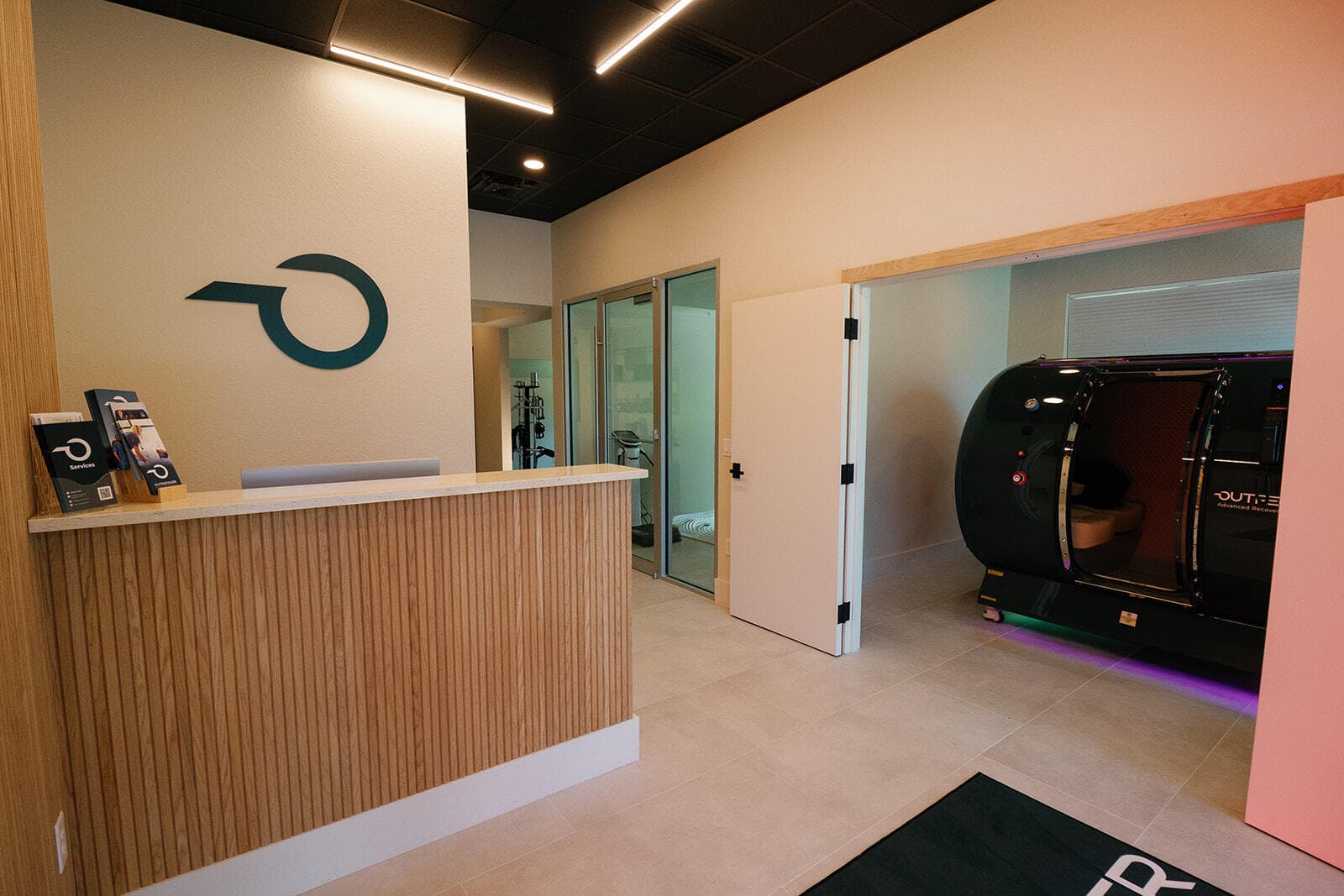
Only after your surgeon clears it, and the evidence is limited. Neither one replaces your garment, walking or follow-up visits. The studio adds a supporting layer for swelling, with the surgeon's plan first.
Lymphatic work. A 2026 systematic review of seven studies, mostly liposuction and abdominoplasty, found that manual lymphatic drainage (hands-on massage by a trained therapist) gave moderate benefit for swelling, inconsistent effects on pain and fibrosis, and few side effects. Results looked better when sessions began early, days 2 to 5, and ran 6 to 12 sessions. The authors called for higher-quality trials (Alsairefi and colleagues, 2026). That is evidence about hands-on drainage. OutRecover's BOA Max lymphatic compression is a machine: a full-body pneumatic suit that its own page says mimics manual drainage. We did not find a trial of a pneumatic suit after a tummy tuck, so we cannot say it reduces swelling here. Because the suit compresses the core as well as the legs and arms, ask your surgeon whether pressure on a fresh abdominal repair is acceptable. The studio's research summary covers what the studies show.
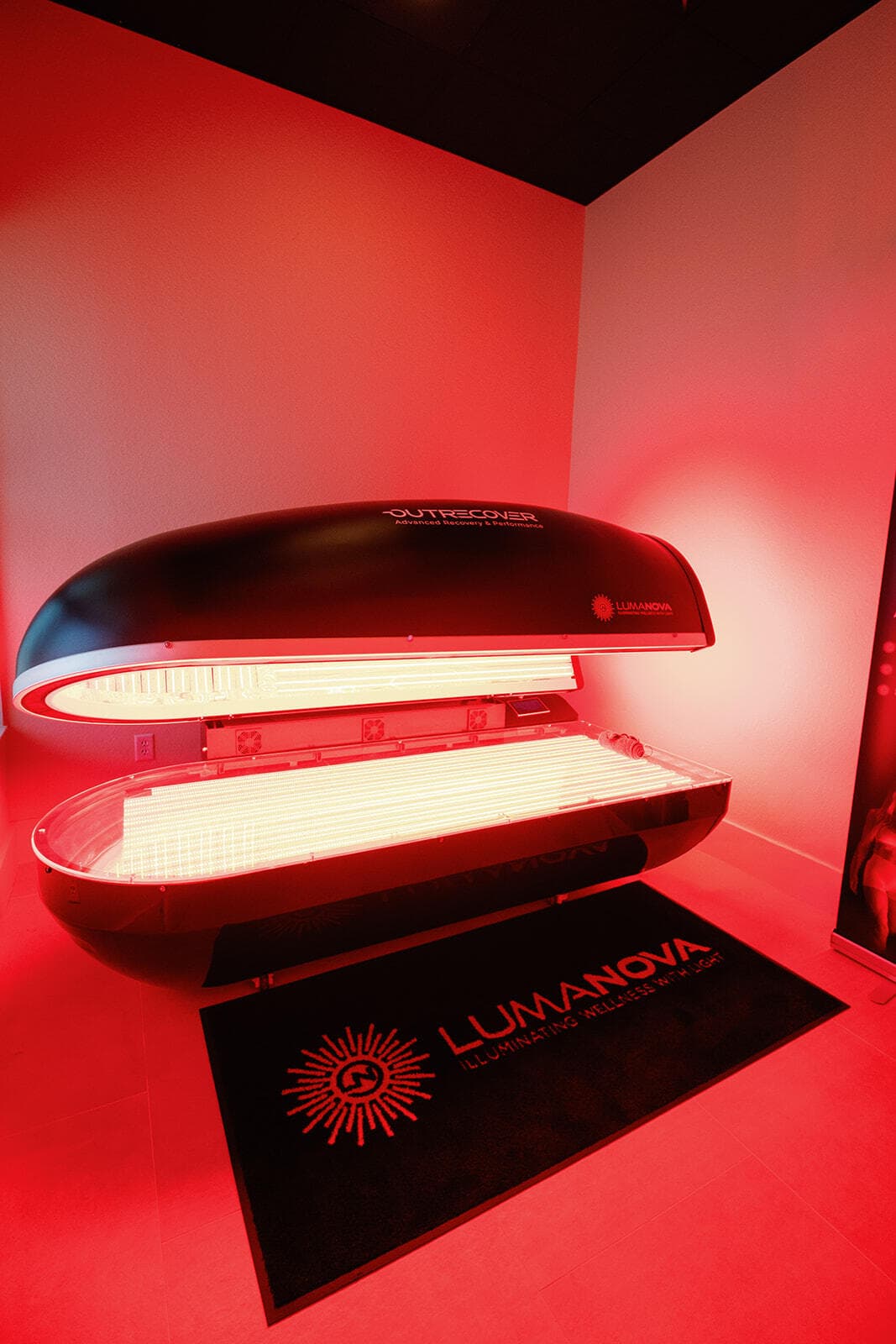
Red light. One small trial, not randomized, treated one half of 17 women's abdominoplasty scars with ten sessions of photobiomodulation. At six months patients and clinicians rated the treated side better, and by one year patients saw no difference (Ramos and colleagues, 2019). It used a specific device and dose, so it does not map directly onto a full-body bed. See does red light therapy work and the red light research summary. OutRecover's red light therapy page says to check with your surgeon before adding anything new in the first weeks.
Packages. OutHeal is the signature surgery program, and its page names tummy tucks among the procedures it is built for, with sessions scheduled around your surgery date and your surgeon's clearance. It adds hyperbaric oxygen, an IV and other services we found no tummy tuck trial for, so ask your surgeon about each piece, including any visit before surgery. If swelling is the only thing you want help with, OutRestore is narrower: it combines red light, lymphatic compression and molecular hydrogen, and its page says sessions after surgery follow your surgeon's clearance. OutFlow pairs red light with H-Wave and leaves out compression, for people whose surgeons say no to it. Pricing sits on the package pages.
What is your next step?
Write your surgeon's answers to the eight questions above on one page before surgery. If you want swelling support afterward, take that page, plus your surgery date, to the studio at 675 Piper Boulevard in North Naples, and start only on the date your surgeon clears.
Sources
- Wu C. Answers to common tummy tuck questions. ASPS blog (a surgeon's post), 2019. https://www.plasticsurgery.org/news/blog/answers-to-common-tummy-tuck-questions
- Salemy S. What you need to know about your tummy tuck recovery. ASPS blog, 2019. https://www.plasticsurgery.org/news/blog/what-you-need-to-know-about-your-tummy-tuck-recovery
- Sanders G. Drainless tummy tuck: what is it and how does it compare to a tummy tuck with drains? ASPS blog, 2025. https://www.plasticsurgery.org/news/blog/drainless-tummy-tuck-what-is-it-and-how-does-it-compare-to-a-tummy-tuck-with-drains
- Weiler J. Your guide to a tummy tuck: before, during and after. ASPS blog (a surgeon's post). https://www.plasticsurgery.org/news/blog/your-guide-to-a-tummy-tuck-before-during-and-after
- Vitenas P Jr. Five things to consider before getting a tummy tuck. ASPS blog (a surgeon's post). https://www.plasticsurgery.org/news/blog/five-things-to-consider-before-getting-a-tummy-tuck
- American Society of Plastic Surgeons. Tummy tuck risks and safety. ASPS. https://www.plasticsurgery.org/cosmetic-procedures/tummy-tuck/safety
- The Aesthetic Society. Tummy tuck (abdominoplasty) aftercare and recovery. https://www.theaestheticsociety.org/procedures/body/tummy-tuck/aftercare-recovery
- Li M, Wang K. Efficacy of progressive tension sutures without drains in reducing seroma rates of abdominoplasty: a systematic review and meta-analysis. Aesthetic Plastic Surgery, 2021. https://pubmed.ncbi.nlm.nih.gov/32856104
- Arkoubi AY. Effect of compression garments on post-abdominoplasty outcomes: a systematic review of the current evidence. JPRAS Open, 2024. https://pubmed.ncbi.nlm.nih.gov/39021663
- Fontes de Moraes BZ, et al. Do compression garments prevent subcutaneous edema after abdominoplasty? Aesthetic Surgery Journal, 2023. https://pubmed.ncbi.nlm.nih.gov/36282895
- Mittal P, et al. Venous thromboembolism (VTE) prophylaxis after abdominoplasty and liposuction: a review of the literature. Aesthetic Plastic Surgery, 2020. https://pubmed.ncbi.nlm.nih.gov/31858207
- Perzia BM, et al. Venous thromboembolism and bleeding events with chemoprophylaxis in abdominoplasty: a systematic review and pooled analysis of 1596 patients. Aesthetic Surgery Journal, 2021. https://pubmed.ncbi.nlm.nih.gov/33599713
- Keyes GR, et al. Incidence and predictors of venous thromboembolism in abdominoplasty. Aesthetic Surgery Journal, 2018 (data 2001 to 2011). https://pubmed.ncbi.nlm.nih.gov/29117339
- Centers for Disease Control and Prevention. Deep vein thrombosis and pulmonary embolism. CDC Yellow Book. https://www.cdc.gov/yellow-book/hcp/travel-air-sea/deep-vein-thrombosis-and-pulmonary-embolism.html
- MedlinePlus. Pulmonary embolism. National Library of Medicine. https://medlineplus.gov/pulmonaryembolism.html
- MedlinePlus. Surgical wound care, closed. National Library of Medicine. https://medlineplus.gov/ency/patientinstructions/000738.htm
- MedlinePlus. Surgical wound infection, treatment. National Library of Medicine. https://medlineplus.gov/ency/article/007645.htm
- Pluvy I, et al. Smoking and plastic surgery, part II. Clinical implications: a systematic review with meta-analysis. Annales de Chirurgie Plastique Esthétique, 2015. https://pubmed.ncbi.nlm.nih.gov/25447218
- Lee CC, et al. Impact of GLP-1 agonist on surgical wound complications after plastic and reconstructive surgery. Plastic and Reconstructive Surgery, 2026. https://pubmed.ncbi.nlm.nih.gov/41364427
- American Academy of Dermatology. Scars: diagnosis and treatment. https://www.aad.org/public/diseases/a-z/scars-treatment
- American Society of Plastic Surgeons. Fun in the sun: protecting your plastic surgery scars. https://www.plasticsurgery.org/news/articles/fun-in-the-sun-protecting-your-plastic-surgery-scars
- Alsairefi S, et al. Efficacy of manual lymphatic drainage in reducing postoperative complications after cosmetic plastic surgery: a systematic review. Plastic and Reconstructive Surgery Global Open, 2026. https://pubmed.ncbi.nlm.nih.gov/42840808
- Ramos RM, et al. Photobiomodulation improved the first stages of wound healing process after abdominoplasty: an experimental, double-blinded, non-randomized clinical trial. Aesthetic Plastic Surgery, 2019. https://pubmed.ncbi.nlm.nih.gov/30483937