The weeks before a hip replacement are your best chance to change the things that still can be changed: a low blood count, nicotine, blood sugar, a cavity that needs a dentist, and a house built for two good legs. Exercise before surgery may give you a small head start, and the evidence for hips is thinner than you would hope. This guide sorts the steps by how long each one takes, so you can start the slow ones first.
How to prepare for hip replacement surgery, in order of lead time
Begin with whatever needs the longest runway. Iron stores and nicotine need weeks. Dental work has to be booked and finished. A home setup takes a weekend. Use the table as a template, then replace the timing with your surgeon's own instructions, which always win.
| When | What to do | Why it sits here |
|---|---|---|
| As soon as the date is set | Ask for a blood count. Tell your team about nicotine, alcohol, opioids, diabetes and every supplement. Book dental work. Ask which surgical approach you will have and what movement rules follow. | Anemia, nicotine and dental work all need weeks to change or finish (AAOS; ERAS Society, 2020). |
| About 6 to 4 weeks out | Stay off nicotine. Treat any anemia your team finds. Start your exercises and a protein plan. Finish the medical check-up and tests. | ERAS guidance asks for at least 4 smoke-free weeks. |
| About 4 to 2 weeks out | Set up the home: chairs, toilet seat, dressing aids, one living floor. Cook and freeze meals. Line up your driver and a helper. | Walking a borrowed walker through your own rooms shows problems while there is still time to fix them. |
| Final 2 weeks | Stop or continue each medicine and supplement exactly as your team's written list says. Check your skin, including the groin. Report any fever, cold or skin break. | Infection on the skin can cancel surgery (AAOS). |
| Night before and morning of | Shower as told, do not shave the area, and follow your hospital's fasting rules. | Fasting rules differ between hospitals. |
Does exercise before hip replacement help?
A little, and mostly before the operation. A 2023 meta-analysis in JAMA Network Open pooled 48 trials across orthopedic surgery. For people awaiting a total hip replacement, moderate-certainty evidence favored prehabilitation for quality of life and for hip abduction strength before surgery. Punnoose et al., 2023
Other reviews are less certain about hips. A 2022 systematic review found six hip trials and judged the evidence for every hip outcome absent or insufficient. Konnyu et al., 2022 A 2025 overview of reviews, covering 19 hip trials and 1,110 hip patients, found prehabilitation favorable for strength, function and fewer complications, with the quality of the underlying reviews ranging from critically low to moderate and the effects mostly confined to the first six months. Keogh et al., 2025
The honest summary: it is low-risk, probably leaves you a bit stronger on day one, and will not decide your result. The AAOS suggests asking your surgeon which exercises to do, strengthening your upper body so a walker or crutches feel easier, and using isometric exercises to hold leg strength. AAOS OrthoInfo For balance work that suits the years before and after surgery, see balance exercises for seniors.
Why does a blood count matter before a hip replacement?
A low blood count raises the chance you will need a transfusion, and it is one of the few risks you can often fix in advance. The ERAS Society recommends that anemia be actively identified, investigated and corrected before hip and knee replacement, graded high-quality evidence. ERAS Society, 2020
A 2020 meta-analysis in BMJ Open pooled 10 studies of anemic people having hip or knee replacement. Transfusion happened in 15.1 percent of those given iron beforehand and 27.2 percent of controls, a 39 percent lower risk, though the authors warn that high-quality evidence is lacking. Scrimshire et al., 2020 In those studies oral iron was typically taken for a month or more before surgery, and intravenous iron was given within 4 weeks.
The practical point is timing. A blood count taken two days before surgery leaves no time to act. Ask for one when the date is set, and ask what caused any low result, because the cause matters. Do not start iron on your own.
What should you do about nicotine, alcohol, blood sugar and opioids?
Treat each as a conversation with your surgeon, and start early. For nicotine, the ERAS Society recommends 4 weeks or more of smoking cessation, graded high-quality evidence, and the American Association of Hip and Knee Surgeons advises stopping all nicotine products for at least 4 to 6 weeks. AAHKS
For diabetes, the AAHKS calls blood sugar that frequently reaches 180 mg/dL or more uncontrolled and says it brings a much higher risk of a problem. Ask for your target number and who will help you reach it.
On alcohol, the AAOS asks for none in the 2 days (at least 48 hours) before your operation. For opioids, the AAHKS describes a study of 802 hip and knee patients in which those using opioids before surgery had nearly twice the in-hospital complications and were about two and a half times as likely to still be using them three months later. AAHKS If hip pain has you on opioids, tell your surgeon and ask for a plan. Do not change a dose on your own.
What should you eat, and which supplements should you stop?
A balanced diet with enough protein is the goal, and your surgeon or a dietitian sets the number. In the run-up to surgery, ERAS protocols recommend 1.2 to 2.0 grams of protein per kilogram of body weight a day, in portions of 20 to 40 grams, according to a 2021 review of orthopedic nutrition. Hirsch et al., 2021 If you have kidney disease, get a personal target first. Our guide to foods that help healing after surgery has the practical side.
Supplements need a separate list. The American Society of Anesthesiologists says some supplements prolong the effects of anesthesia, raise bleeding risk, raise blood pressure or interfere with other medicines, and that your anesthesiologist may recommend stopping them at least two weeks ahead. Half of people who use herbal supplements do not tell their doctors. ASA, 2020 Write down every product and dose, bring the bottles, and keep taking prescriptions unless told otherwise.
Which hip-specific checks come before surgery?
Four checks are specific to a hip. Dental work comes first: the AAOS says major procedures such as extractions and periodontal work should be finished before surgery, and routine cleanings should wait several weeks after. Second, anyone with recent or frequent urinary infections should have a urological evaluation, and older men with prostate disease should consider finishing treatment first. Third, check your skin, including the groin, for cuts, rashes or bites, because a break in the skin can lead to surgery being cancelled. Fourth, tell your team about any fever or cold in the week before. AAOS, total hip replacement; AAOS, preparing for surgery
What are hip precautions, and should you practice them?
Hip precautions are movement rules, such as limits on bending the hip past 90 degrees, that surgeons use to protect a new hip while the tissue around it heals. The AAOS says they usually last about the first 6 weeks and vary with the approach your surgeon uses. AAOS OrthoInfo
The rules are also under review. A 2024 meta-analysis of three trials with 1,215 people found no significant difference in dislocation rates after a posterior approach with or without precautions, and the group without them did better on a hip score and stopped using mobility aids sooner. Guo et al., 2024 So ask which approach you will have, which rules apply to you, and for how long, then follow that answer. Practice putting on socks and getting in and out of a chair with your aids before surgery, not after.
How do you get your home ready for a hip?
Plan around hip height. The AAOS list for hips doubles as a checklist you can score yourself:
- A firm chair with two arms and a firm seat that keeps your knees lower than your hips. Firm pillows for the sofa and car, for the same reason.
- A raised toilet seat and a stable shower bench or chair, with safe grab bars.
- A sock aid, a dressing stick, a long-handled shoehorn and sponge, and a reacher, so you do not bend deeply at the new hip.
- Handrails on every stair, and a temporary living space on one floor if you can manage it.
- Loose carpets and cords removed from your walking routes.
- Meals cooked and frozen, and a helper arranged. The AAOS notes you may need help for several weeks with cooking, shopping, bathing and laundry. AAOS OrthoInfo
For what the weeks afterward look like, see our hip replacement recovery timeline. For clot warning signs, see blood clots after surgery, and for the swelling that follows most operations, reducing swelling after surgery.
What should you ask your surgeon about your hip?
Take these to the pre-op appointment and note each answer.
- Which approach will you use, and which hip precautions follow it, for how long?
- What was my blood count, and who treats it if it is low?
- Which medicines and supplements stop before the operation, and on which day?
- When do I stop eating and drinking on the morning of my hip surgery?
- Which leg and upper-body exercises should I start now, and how many days a week?
- What blood sugar number should I reach before the operation, and who helps me get there?
- What is the last date for dental work before my operation?
- How will you manage my pain, and who do I call if it is not controlled?
- Is it fine to add oxygen, PEMF or compression sessions before my operation?
The AAOS also publishes a longer list of questions to ask your surgeon.
Where do studio services fit before a hip replacement?
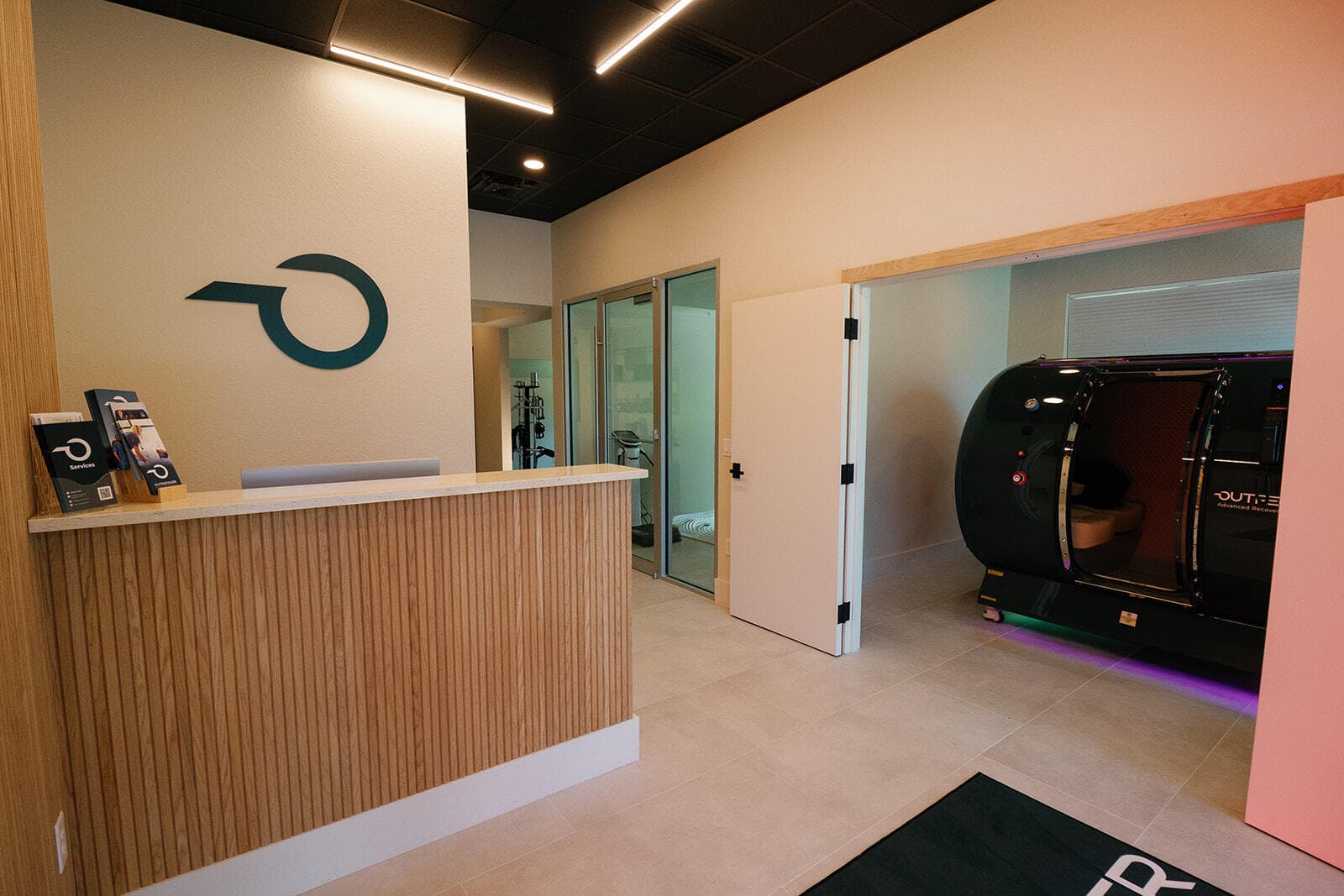
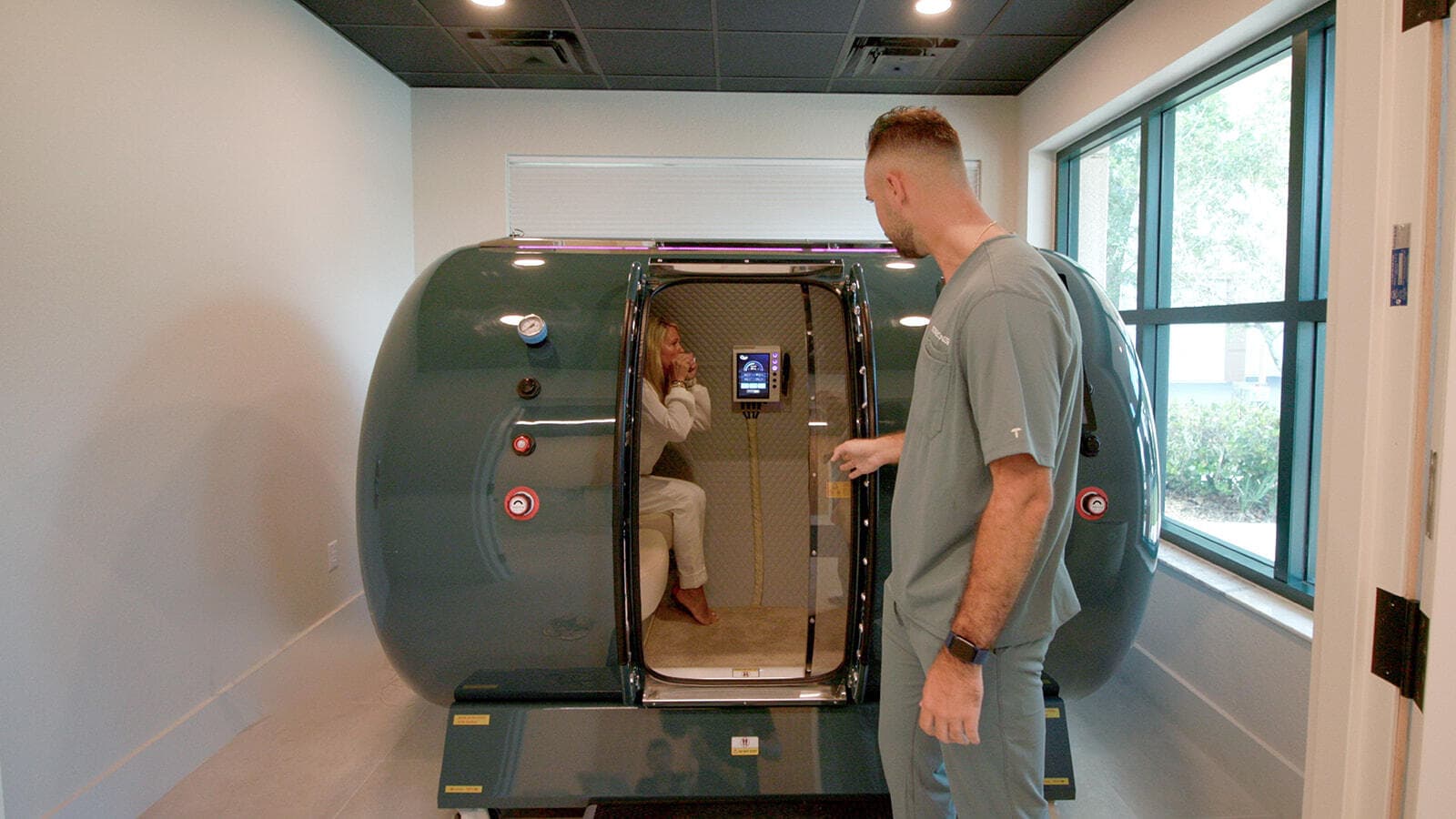
Studio sessions are optional extras beside the plan above, never a substitute for it. OutReady is a single pre-op visit with hyperbaric oxygen, a pre-op IV through partner OutInfuse (medical approval first) and compression. OutPrepare is the fuller visit, adding hydrogen and PEMF, which can be swapped for red light. If you also want a plan for the weeks after surgery, OutHeal lists hip replacement among its procedures and runs before and after your date. The studio schedules around your surgery date, and any session waits for your surgeon's clearance.
Here is what the evidence supports. On hyperbaric oxygen, the studio's own research page locates the strongest evidence in wound healing, decompression sickness, carbon monoxide poisoning and radiation injury. Preparing for an elective joint operation is not on that list. A 2026 narrative review of oxygen therapy in surgery says its protocols, endpoints and patients vary too much to compare cleanly, and it calls for multicenter randomized trials. González Flores et al., 2026 We searched for a trial of oxygen sessions before a hip replacement and found none.
Compression has a hip-specific study, but after surgery: a 2023 pilot trial of 47 people found that adding pneumatic compression to standard clot prevention reduced thigh and calf circumference, a measure of swelling, after hip replacement. Carnevale Pellino et al., 2023 It was small and did not test pre-surgery use. PEMF rests on osteoarthritis pain data, and we found no hip-replacement preparation trial for it. If you book any of these, do it for comfort and a guided routine, with your surgeon's agreement, and not to change your surgical result. The studio's compression page says to avoid active DVT sites, open wounds and skin infections, and its PEMF page advises against pacemakers and electrical implants.
Your next step
This week, build one page: your medicines and supplements with doses, your nicotine and blood sugar status, the date of your last dental visit, and the questions above. Send it to your surgeon's office and ask for a blood count. If a studio visit appeals, get your surgeon's clearance, then give the studio your surgery date so it can plan around it.
Sources
- American Academy of Orthopaedic Surgeons. Total Hip Replacement. OrthoInfo. https://orthoinfo.aaos.org/en/treatment/total-hip-replacement/
- American Academy of Orthopaedic Surgeons. Preparing for Joint Replacement Surgery. OrthoInfo. https://orthoinfo.aaos.org/en/treatment/preparing-for-joint-replacement-surgery/
- Punnoose A, Claydon-Mueller LS, Weiss O, Zhang J, Rushton A, Khanduja V. Prehabilitation for Patients Undergoing Orthopedic Surgery: A Systematic Review and Meta-analysis. JAMA Network Open, 2023. https://pubmed.ncbi.nlm.nih.gov/37052919
- Konnyu KJ, Thoma LM, Cao W, et al. Prehabilitation for Total Knee or Total Hip Arthroplasty: A Systematic Review. American Journal of Physical Medicine & Rehabilitation, 2022. https://pubmed.ncbi.nlm.nih.gov/35302954
- Keogh JAJ, Keng I, Dhillon DS, Bourgeault-Gagnon Y, Simunovic N, Ayeni OR. The Effects of Structured Prehabilitation on Postoperative Outcomes Following Total Hip and Total Knee Arthroplasty: An Overview of Systematic Reviews and Meta-analyses. Journal of Orthopaedic & Sports Physical Therapy, 2025. https://pubmed.ncbi.nlm.nih.gov/40298246
- Wainwright TW, Gill M, McDonald DA, et al. Consensus statement for perioperative care in total hip replacement and total knee replacement surgery: ERAS Society recommendations. Acta Orthopaedica, 2020. https://pmc.ncbi.nlm.nih.gov/articles/PMC7006728
- Scrimshire AB, Booth A, Fairhurst C, Kotze A, Reed M, et al. Preoperative iron treatment in anaemic patients undergoing elective total hip or knee arthroplasty: a systematic review and meta-analysis. BMJ Open, 2020. https://pmc.ncbi.nlm.nih.gov/articles/PMC7783611
- American Association of Hip and Knee Surgeons. Decreasing Your Risk of Infection (hip care). HipKneeInfo. https://hipkneeinfo.org/hip-care/decreasing-your-risk-of-infection/
- American Association of Hip and Knee Surgeons. Opioid Use Before Hip Surgery Can Mean Trouble. HipKneeInfo, revised 2024. https://hipkneeinfo.org/hip-care/opioid-use/
- Hirsch KR, Wolfe RR, Ferrando AA. Pre- and Post-Surgical Nutrition for Preservation of Muscle Mass, Strength, and Functionality Following Orthopedic Surgery. Nutrients, 2021. https://pmc.ncbi.nlm.nih.gov/articles/PMC8156786
- American Society of Anesthesiologists. Herbal and Dietary Supplements and Anesthesia. 2020. https://madeforthismoment.asahq.org/wp-content/uploads/2020/10/ASA_Supplements-Anesthesia_Updated-1.pdf
- Guo J, He Q, Sun Y, Liu X, Li Y. No need for hip precautions after total hip arthroplasty with posterior approach: A systematic review and meta-analysis. Medicine, 2024. https://pmc.ncbi.nlm.nih.gov/articles/PMC11651519
- González Flores JE, Vázquez Hernández DB, et al. Hyperbaric Oxygen Therapy in Modern Surgical Practice: Mechanistic Basis and Clinical Applications Across Specialties. Cureus, 2026. https://pmc.ncbi.nlm.nih.gov/articles/PMC12924891
- Carnevale Pellino V, Gatti A, Vandoni M, et al. Pneumatic Compression Combined with Standard Treatment after Total Hip Arthroplasty and Its Effects on Edema of the Operated Limb and on Physical Outcomes: A Pilot Clinical Randomized Controlled Study. Journal of Clinical Medicine, 2023. https://pmc.ncbi.nlm.nih.gov/articles/PMC10299544
- American Academy of Orthopaedic Surgeons. Total Joint Replacement: Questions Patients Should Ask Their Surgeon. OrthoInfo. https://orthoinfo.aaos.org/en/treatment/total-joint-replacement-questions-patients-should-ask-their-surgeon/