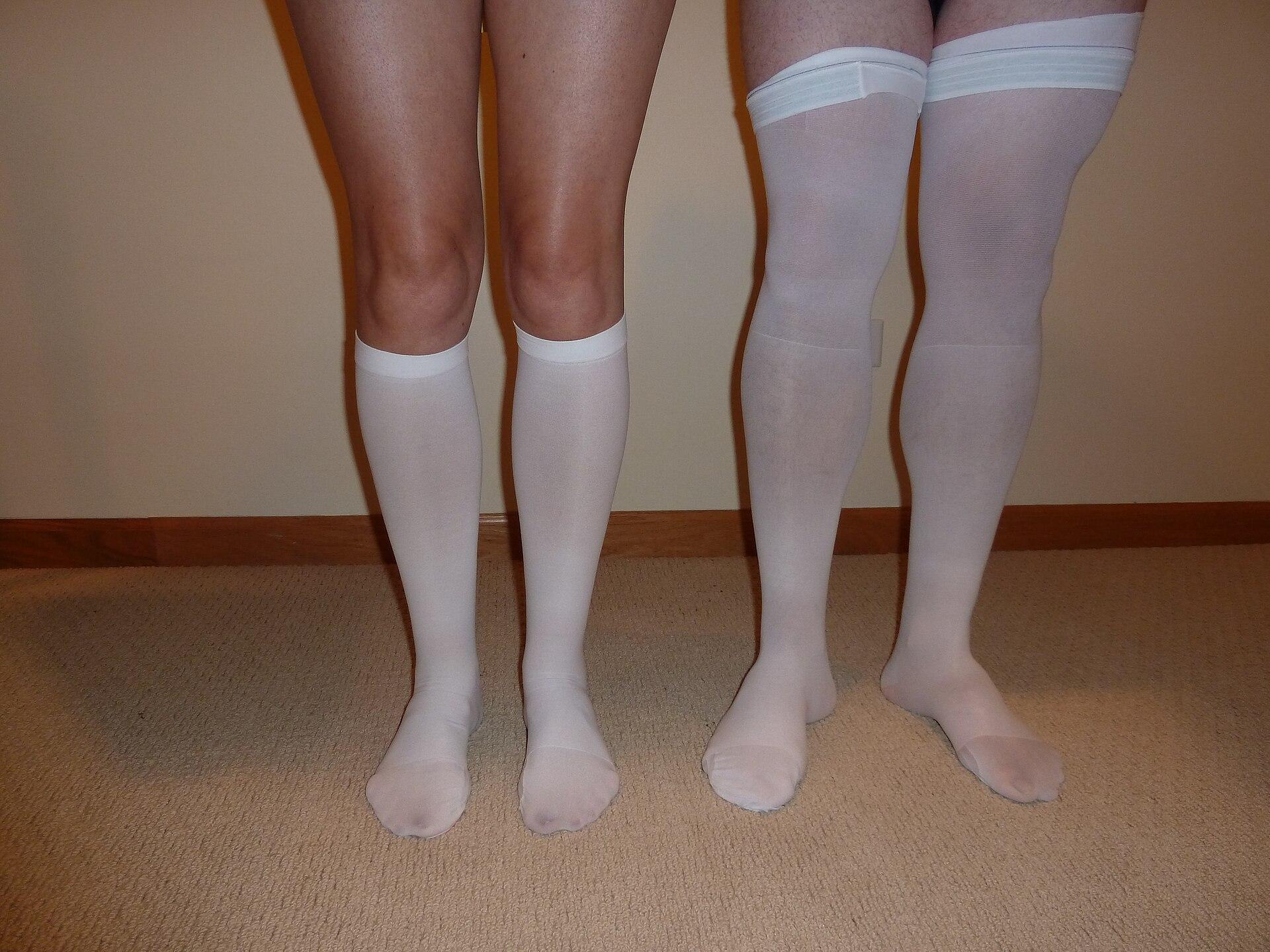
Blood clots after surgery are uncommon enough that most people never meet one, and serious enough that every surgeon plans around them. The practical goal is simple: know the few signs that matter, know who to call for each one, and follow the prevention plan you were given. This guide covers all three, and it starts with the part that cannot wait.
When to call 911 and when to call your surgeon
Call 911 for sudden shortness of breath, chest pain (especially pain that worsens when you breathe in or cough), coughing up blood, a racing or irregular heartbeat, or feeling faint. These are the signs of a clot that has reached the lungs, called a pulmonary embolism. The CDC says to seek immediate medical attention for them, and Mayo Clinic says to get emergency help (CDC, 2024; Mayo Clinic). Do not wait to see if it passes.
Call your surgeon as soon as possible for one swollen, painful or tender calf or leg. The AAOS lists pain in the calf and leg that is unrelated to your incision, tenderness or redness at or below the knee, and swelling of the thigh, calf, ankle or foot as warning signs of a clot in a deep vein (AAOS OrthoInfo). The CDC adds skin that feels warm or looks red or discolored (CDC). The CDC says to see your doctor as soon as possible for these signs, and its travel page says to seek medical care immediately. If you cannot reach your surgeon, call the office's after-hours line or seek urgent medical care rather than waiting.
Two details make the leg rule worth remembering. First, the CDC reports that about half of people with a deep vein clot have no symptoms at all (CDC). Second, you can have a lung clot without any leg symptoms. So the absence of a swollen calf does not clear you of the breathing signs above.
| What you notice | Who to call | When |
|---|---|---|
| Sudden shortness of breath, chest pain, coughing blood, fainting | 911 | Right now |
| One calf or leg swollen, painful, warm or red, not explained by your incision | Your surgeon | As soon as possible |
| Fever, drainage or spreading redness at the incision | Your surgeon | Promptly, by phone |
Swelling in both legs is common after surgery and is covered in our guide to reducing swelling after surgery. Do not try to tell a clot from ordinary swelling yourself. If you cannot tell, call.
What are blood clots after surgery, and why do they form?
A deep vein thrombosis (DVT) is a clot in a deep vein, most often in the lower leg, thigh or pelvis. A pulmonary embolism (PE) is the dangerous step: part of the clot breaks off and travels to the lungs. Together they are called venous thromboembolism, or VTE (CDC).
Surgery stacks the deck in three ways. The AAOS names them for orthopaedic cases: slow blood flow, blood that clots more readily, and damage to the vein wall (AAOS OrthoInfo). Lying still after an operation slows the flow, and the surgery itself triggers clotting and can injure veins. That is why the AAOS calls leg clots one of the most common complications of knee replacement (AAOS OrthoInfo).
How long does the risk last after surgery?
The risk is highest in the first three months and falls with time, according to the National Heart, Lung, and Blood Institute (NHLBI). The CDC adds a point that surprises people: more than a third of clots diagnosed each year are linked to a recent hospital stay, and most of those do not appear until after discharge (CDC, 2024).
In plain terms, the warning signs matter most at home, in the weeks when you are no longer being watched. Keep the table above where you can see it, and tell whoever is helping you at home what the 911 signs are.
Who is more likely to get a clot after surgery?
Risk adds up. The NHLBI notes that most people with a clot have more than one risk factor, and that the more you have, the greater the chance (NHLBI). Factors it lists include:
- Not moving for long periods, including bed rest after surgery and flights over four hours
- A past clot, or a close relative who has had one
- Cancer and cancer treatment
- Obesity, heart conditions and kidney disease
- Age: the chance of VTE nearly doubles every 10 years after 40
The AAOS adds that people having surgery on the hip or legs are especially at risk (AAOS OrthoInfo). The CDC asks you to tell your care team if you or anyone in your family has had a clot (CDC, 2024). That one sentence at your pre-op visit can change your plan.
How do surgeons prevent blood clots after surgery?
Surgeons combine movement with a plan matched to your risk. The AAOS describes a program that may include periodically raising your legs, lower leg exercises, support stockings and blood-thinning medication (AAOS OrthoInfo). After knee replacement, the AAOS also lists inflatable leg coverings (compression boots) and encourages foot and ankle movement right away (AAOS OrthoInfo). The CDC's advice for everyone is to get moving as soon as possible after being confined to bed (CDC).
What the evidence says about the choices:
- Medication or mechanical devices. The American Society of Hematology (ASH) 2019 guideline for major surgery suggests either drugs or mechanical methods, and says the certainty of the evidence is low. For people at high risk of bleeding, mechanical methods may be the better balance (ASH, 2019).
- Compression boots versus stockings. For people getting mechanical prevention, ASH suggests intermittent compression devices over stockings, on very low certainty evidence. Where devices are not available, it calls stockings reasonable (same guideline).
- How long to continue. ASH suggests extended prevention, generally beyond three weeks, over short-term prevention of up to two weeks, again with very low certainty (same guideline). This is why your surgeon may send you home on a blood thinner.
- Which drug. In a 2022 randomized trial of hip and knee replacement patients, aspirin for 35 days (hip) or 14 days (knee) did not match enoxaparin: symptomatic clots within 90 days were about two percentage points higher with aspirin (CRISTAL trial, JAMA 2022). Hospitals and surgeons weigh this against bleeding risk and cost, so follow the plan you were given and ask before changing it.
What to ask your surgeon
Bring these to your pre-op visit or your discharge conversation:
- What is my personal clot risk, and what in my history raises it?
- Which prevention steps am I using in the hospital, and which continue at home?
- If I am going home on a blood thinner or aspirin, for how many days, and what do I do if I miss a dose?
- Which leg or breathing signs should I call you about, and what is the after-hours number?
- How much walking should I do each day, and how often should I do ankle pumps?
- When can I travel, and what should I do on a long car or plane ride?
- Is any new recovery service (massage, compression, heat) safe for me right now?
What you can do each day
Your plan overrides any list, but the sources agree on the basics. Move early and often as your surgeon allows. Do the ankle and lower leg exercises you were taught. Take every dose of any prescribed medication, and wear stockings if you were told to. Avoid crossing your legs for long periods while sitting, as Mayo Clinic advises (Mayo Clinic). On trips over four hours, the CDC recommends regular breaks to walk and seated leg exercises (CDC).
Your joint-specific timelines are in our guides to knee replacement recovery and hip replacement recovery.
Where studio services fit, and where they do not
This is a safety topic, so the studio's role is small. No OutRecover service treats a blood clot or prevents one. Prevention and treatment belong to your surgeon, through the steps above.
The one place worth a note is compression. A Normatec compression session at the studio is a wellness service, separate from the hospital devices and prescribed prevention described in the guidelines. If you want to add it after surgery, ask your surgeon first. The service page itself says to avoid compressing over an active DVT site. If you have any leg swelling that is one-sided or painful, call your surgeon before booking anything. Our guide to compression boots covers what the evidence says for recovery use, and the research summary covers the clinical studies.
For people who are cleared to add sessions, the OutHeal package is built around joint replacement and other surgeries, and OutRestore is built around swelling and circulation support. Both schedule around your surgeon's clearance, and their pages hold current details and pricing.
Your next step
Write the 911 signs and your surgeon's number on a card and put it on the fridge today. At your next visit, ask the seven questions above. If you notice one painful, swollen calf or any trouble breathing between now and then, make the call first and sort out the rest later.
This guide is general education. It is not medical advice, and it does not replace your surgeon's instructions.
Sources
- Centers for Disease Control and Prevention. Understanding Your Risk for Healthcare-Associated VTE (Blood Clots). CDC, 2024. https://www.cdc.gov/blood-clots/risk-factors/ha-vte.html
- Centers for Disease Control and Prevention. About Venous Thromboembolism (Blood Clots). CDC, 2024. https://www.cdc.gov/blood-clots/about/index.html
- Centers for Disease Control and Prevention. Blood Clots During Travel. Travelers' Health, CDC. https://wwwnc.cdc.gov/travel/page/dvt
- American Academy of Orthopaedic Surgeons. Preventing Blood Clots After Orthopaedic Surgery. OrthoInfo, AAOS. https://orthoinfo.aaos.org/en/recovery/preventing-blood-clots-after-orthopaedic-surgery-video
- American Academy of Orthopaedic Surgeons. Deep Vein Thrombosis. OrthoInfo, AAOS. https://orthoinfo.aaos.org/en/diseases--conditions/deep-vein-thrombosis
- American Academy of Orthopaedic Surgeons. Total Knee Replacement. OrthoInfo, AAOS. https://orthoinfo.aaos.org/en/treatment/total-knee-replacement
- National Heart, Lung, and Blood Institute. Venous Thromboembolism: Causes and Risk Factors. NIH. https://www.nhlbi.nih.gov/health/venous-thromboembolism/causes
- Mayo Clinic. Deep vein thrombosis (DVT): Symptoms and causes. Mayo Clinic. https://www.mayoclinic.org/diseases-conditions/deep-vein-thrombosis/symptoms-causes/syc-20352557
- Anderson DR, et al. American Society of Hematology 2019 guidelines for management of venous thromboembolism: prevention of venous thromboembolism in surgical hospitalized patients. Blood Advances, 2019. https://ashpublications.org/bloodadvances/article/3/23/3898/429211/American-Society-of-Hematology-2019-guidelines-for
- CRISTAL Study Group. Effect of Aspirin vs Enoxaparin on Symptomatic Venous Thromboembolism in Patients Undergoing Hip or Knee Arthroplasty: The CRISTAL Randomized Trial. JAMA, 2022. https://pubmed.ncbi.nlm.nih.gov/35997730