A resting metabolic rate (RMR) test measures how much energy your body uses while you sit still, by analyzing the oxygen you breathe in and the carbon dioxide you breathe out. A formula can only guess that number from your age, height, weight and sex. The best-studied formula lands within 10% of the measured value for 75% to 87% of community-living adults in one 2013 study, and for fewer people in other groups (Frankenfield, 2013). So the useful question is how much a miss of that size would cost you, and whether a measurement is worth it.
What does a resting metabolic rate test measure?
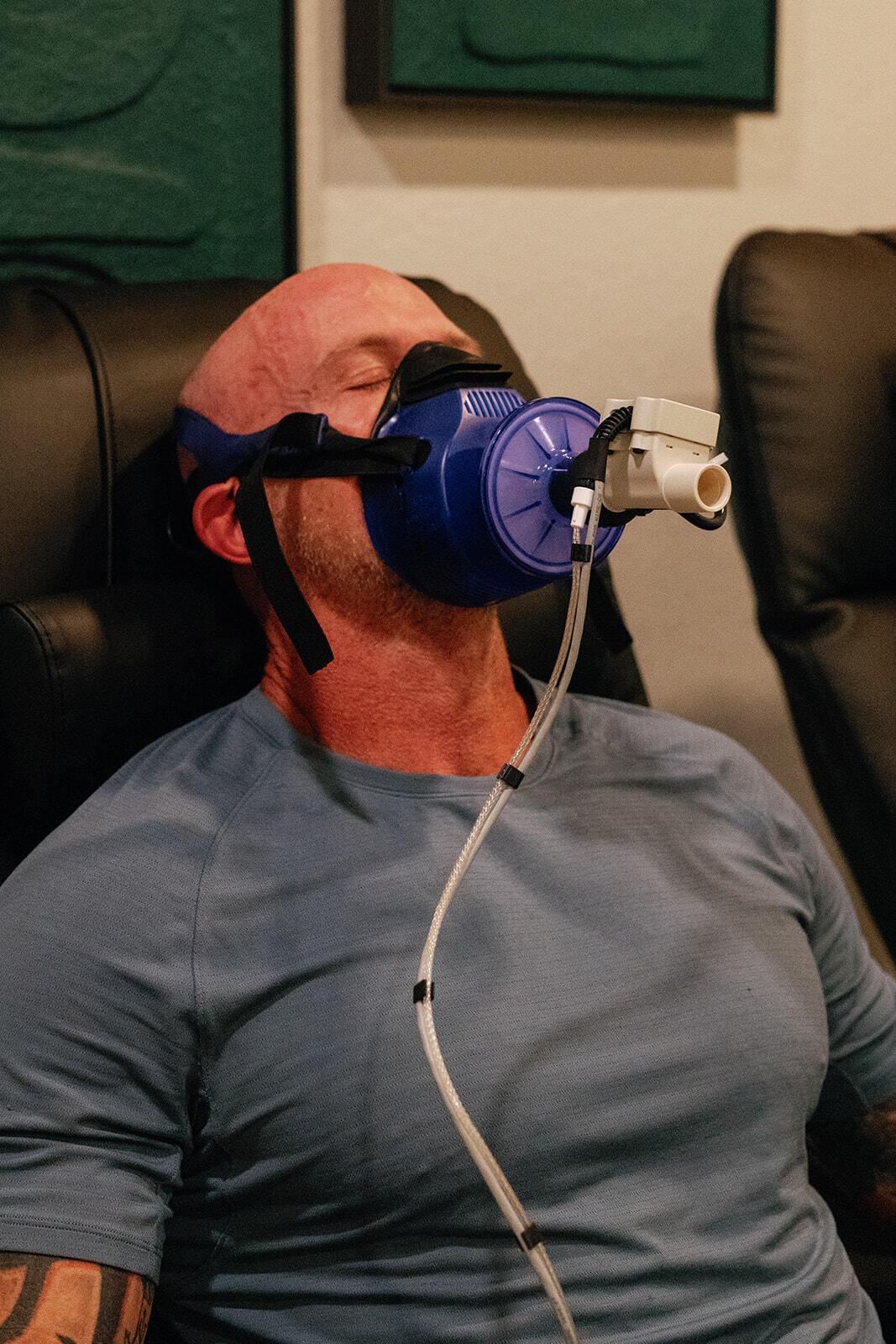
The test is called indirect calorimetry. Instead of measuring heat, it measures the gases you exhale: your body uses oxygen to burn fuel, so oxygen used and carbon dioxide produced let the device calculate energy burned at rest. An Academy of Nutrition and Dietetics review states that estimation errors would be eliminated by valid measurement with indirect calorimetry, done to an evidence-based protocol (Frankenfield et al., 2005).
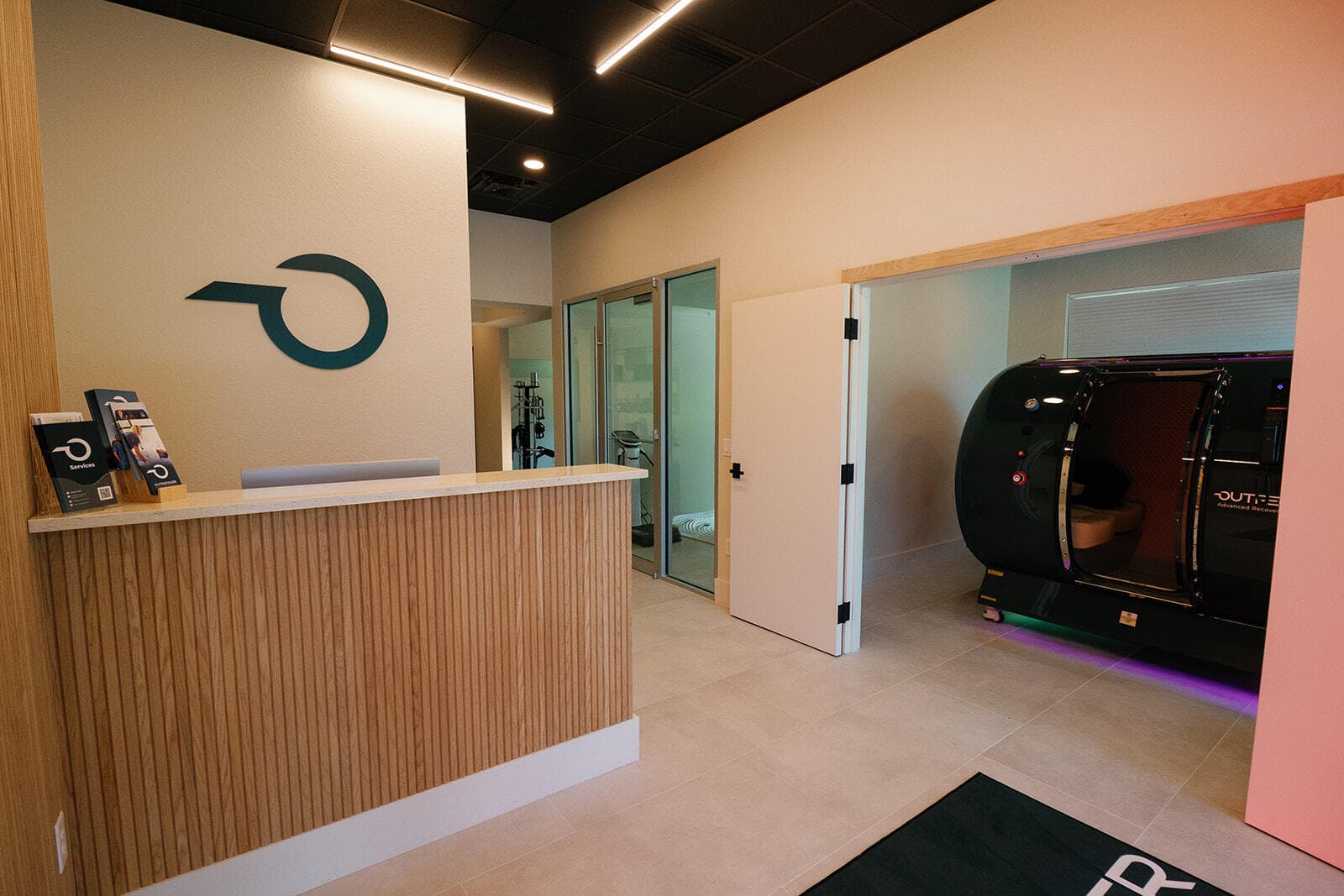
OutRecover's PNOE Metabolic Test page describes a portable analyzer that you breathe into through a mask, either sitting at rest (an RMR test) or during graded exercise on a bike or treadmill. It says the device measures oxygen consumption and CO2 output to calculate metabolic rate, fuel use and cardiorespiratory fitness, and that results are reviewed with you at the visit or in a follow-up consultation. Its list of uses includes resting metabolic rate, how your body uses fuel, fitness and VO2 max, and tracking recovery.
Your RMR is the resting part of your energy budget only. Moving, working and exercising add to it, which is why a resting number is a starting point for planning and falls short of a calorie target by itself.
How accurate are the formulas?
Equations such as Mifflin-St Jeor and Harris-Benedict are decent group averages and uneven individual predictors. The Mifflin-St Jeor equation was built in 1990 from 498 healthy adults whose RMR had been measured by indirect calorimetry. In that paper, the older Harris-Benedict equations, derived in 1919, overestimated measured resting energy by 5% (Mifflin et al., 1990).
Here is Mifflin-St Jeor as that paper gives it, with weight in kilograms, height in centimeters and age in years:
- Men: 10 x weight + 6.25 x height - 5 x age + 5
- Women: 10 x weight + 6.25 x height - 5 x age - 161
An illustration (no real person): a 40-year-old woman who is 165 cm tall and weighs 70 kg gets 700 + 1,031 - 200 - 161, about 1,370 kcal per day. A miss of 10% either way means her measured value could sit anywhere from roughly 1,230 to 1,510. That gap of nearly 300 kcal is the whole case for measuring.
| Study | Who | Finding |
|---|---|---|
| Frankenfield et al., 2003 | Obese and nonobese adults | Estimate was off by more than 10% in 22% of people with Mifflin-St Jeor, 33% with Harris-Benedict and 35% with Owen |
| Frankenfield, 2013 | 337 community-living adults | Mifflin-St Jeor was unbiased on average; within 10% of measured for 87% of non-obese and 75% of obese adults |
| Wright et al., 2016 | Overweight and obese clinic patients in Australia | Equations landed within 10% about 40% of the time |
| Griffith et al., 2022 | Adults 65 and older with obesity | 43.1% within 10% for Mifflin; no equation above 60% |
The 2005 systematic review that picked Mifflin-St Jeor as the most reliable of the four common equations also warned of "noteworthy errors" for individuals, and said older adults and US ethnic minorities were underrepresented in the validation studies (Frankenfield et al., 2005). That review dates from 2005, and most of the validation studies above are more than three years old, so treat them as a snapshot of a slow-moving field.
When is a measured test worth it?
A measurement earns its cost when your decision depends on a number that a formula cannot give you with confidence. The same Academy review advises judgment on when to accept an estimate, and says indirect calorimetry matters most when estimation fails an individual in a clinically relevant way (Frankenfield et al., 2005).
Use this rule of thumb:
- You belong to a group the formulas handle worst. The studies above show the weakest results in older adults and in people with obesity.
- You are planning food intake closely, for example preparing for surgery or rebuilding after it, and a 200 to 300 kcal error would change the plan. Check with your surgeon or dietitian first.
- You want a baseline to compare against later. A repeat test under the same conditions shows change; a formula only shows that your weight changed.
- You are curious and a single estimate will do. Then a formula is fine, and a test is optional.
A test also does not diagnose anything. If you suspect a thyroid problem or another medical cause for how you feel, that is a conversation for your doctor.
How do you prepare for a resting metabolic rate test?
Arrive fasted, rested, and free of caffeine, nicotine and hard exercise, then expect to lie or sit still without distraction. The Academy's 2015 evidence review says to fast at least 7 hours and rest 30 minutes in a quiet, dimly lit, thermoneutral room before the test (Fullmer et al., 2015).
| Step | What the published protocols say |
|---|---|
| Food | Fast at least 7 hours (Academy, 2015) |
| Caffeine | Effects last longer than 240 minutes (Academy, 2015) |
| Nicotine | Effects last longer than 140 minutes (Academy, 2015) |
| Alcohol | Control intake before the test (Compher et al., 2006) |
| Exercise | Moderate or vigorous activity has a carryover effect, so avoid it in the hours before (Compher et al., 2006); the 2015 review says how long is unknown |
| Rest | A short rest of 20 minutes or less is enough after daily activity (Compher et al., 2006); 30 minutes in the 2015 review |
| During the test | No reading, phone or fidgeting |
Details: Compher et al., 2006 and Fullmer et al., 2015.
The reading rule matters more than it sounds. In a randomized trial of 65 healthy adults, reading a magazine or a screen raised resting energy expenditure by 102.7 kcal per day compared with plain rest, and relaxing music raised it by 27.6 kcal per day (Snell et al., 2014).
The studio's own page gives a shorter minimum: fast for at least 4 hours and skip intense exercise for 24 hours before an RMR test. Those are the instructions for your visit, so follow them, and ask when you book whether a longer fast would be better for you. If you are recovering from surgery or taking medication, ask your surgeon or doctor before you change how you eat or move.
How repeatable is it, and how long before you retest?
Expect small day-to-day wobble even when you do everything right. In 10 healthy adults measured five times in two weeks, the within-person variation was 2% to 4%, and the authors concluded a change needs to exceed roughly 6% (about 96 kcal per day) with a ventilated hood, or 8% with a mouthpiece-and-nose-clip system, to count as meaningful (Roffey et al., 2006). That is a small study from 2006 on two different devices, so it gives you a scale to work with and no promise for any particular analyzer.
In practice, retest under the same conditions (same time of day, same fasting window) and judge change against that margin. A 30 kcal shift between two tests sits well inside that margin.
A portable analyzer is not the same as a lab hood. One pilot of 19 overweight adolescents found a portable indirect calorimeter agreed with a traditional one and repeated well (Henes et al., 2015). It tested a different device in a different age group, so it does not validate any specific machine for you. Ask any provider how their analyzer was checked.
Where does a resting metabolic rate test fit with body composition?
Lean tissue drives much of the number. In Mifflin's data, fat-free mass was the best single predictor of resting energy expenditure, ahead of weight alone (Mifflin et al., 1990). That makes pairing a breath test with a body composition scan sensible: one tells you how much energy you use at rest, the other estimates how much of you is lean tissue. Our InBody guide explains how far to trust that scan, and our guide to muscle loss after 50 covers why lean mass is worth tracking.
Where studio services fit
OutRecover's research summary on biometric testing covers the wider evidence on health screening, including where it helps and where broad screening has not changed outcomes. The PNOE page lists the test for use before and after surgery or an injury, and says a resting test works for anyone who cannot move much yet; check the PNOE service page for current session types and pricing, and clear anything new with your surgeon first. Testing gives you information. It is not a therapy and does not speed healing on its own.
If you train, the OutTrain and OutPerform athletic recovery packages include an InBody scan alongside recovery services. If your question is fitness rather than resting rate, our guide on how to increase VO2 max is the next read.
Your next step
Decide what number you need. If a rough estimate will do, use the formula above and stop. If a 200 to 300 kcal swing would change your plan, book an RMR test, follow the preparation steps, and retest later under identical conditions. Start from the PNOE Metabolic Test page, or take the studio's recovery quiz if you are not sure which service fits.
Sources
- Frankenfield D, Roth-Yousey L, Compher C. Comparison of predictive equations for resting metabolic rate in healthy nonobese and obese adults: a systematic review. Journal of the American Dietetic Association, 2005. https://pubmed.ncbi.nlm.nih.gov/15883556/
- Mifflin MD, St Jeor ST, Hill LA, et al. A new predictive equation for resting energy expenditure in healthy individuals. American Journal of Clinical Nutrition, 1990. https://pubmed.ncbi.nlm.nih.gov/2305711/
- Frankenfield DC, Rowe WA, Smith JS, Cooney RN. Validation of several established equations for resting metabolic rate in obese and nonobese people. Journal of the American Dietetic Association, 2003. https://pubmed.ncbi.nlm.nih.gov/12963943
- Frankenfield DC. Bias and accuracy of resting metabolic rate equations in non-obese and obese adults. Clinical Nutrition, 2013. https://pubmed.ncbi.nlm.nih.gov/23631843
- Wright TG, Dawson B, Jalleh G, Guelfi KJ. Accuracy of resting metabolic rate prediction in overweight and obese Australian adults. Obesity Research & Clinical Practice, 2016. https://pubmed.ncbi.nlm.nih.gov/26277698
- Griffith R, Shean R, Petersen CL, et al. Validation of resting energy expenditure equations in older adults with obesity. Journal of Nutrition in Gerontology and Geriatrics, 2022. https://pubmed.ncbi.nlm.nih.gov/35502533/
- Compher C, Frankenfield D, Keim N, Roth-Yousey L. Best practice methods to apply to measurement of resting metabolic rate in adults: a systematic review. Journal of the American Dietetic Association, 2006. https://pubmed.ncbi.nlm.nih.gov/16720129/
- Fullmer S, Benson-Davies S, Earthman CP, et al. Evidence analysis library review of best practices for performing indirect calorimetry in healthy and non-critically ill individuals. Journal of the Academy of Nutrition and Dietetics, 2015. https://pubmed.ncbi.nlm.nih.gov/26038298/
- Snell B, Fullmer S, Eggett DL. Reading and listening to music increase resting energy expenditure during an indirect calorimetry test. Journal of the Academy of Nutrition and Dietetics, 2014. https://pubmed.ncbi.nlm.nih.gov/24794837/
- Roffey DM, Byrne NM, Hills AP. Day-to-day variance in measurement of resting metabolic rate using ventilated-hood and mouthpiece and nose-clip indirect calorimetry systems. Journal of Parenteral and Enteral Nutrition, 2006. https://pubmed.ncbi.nlm.nih.gov/16931612/
- Henes ST, Johnson A, Toner M, et al. Assessing resting metabolic rate in overweight and obese adolescents with a portable indirect calorimeter: a pilot study for validation and reliability. Nutrition in Clinical Practice, 2015. https://pubmed.ncbi.nlm.nih.gov/26355040