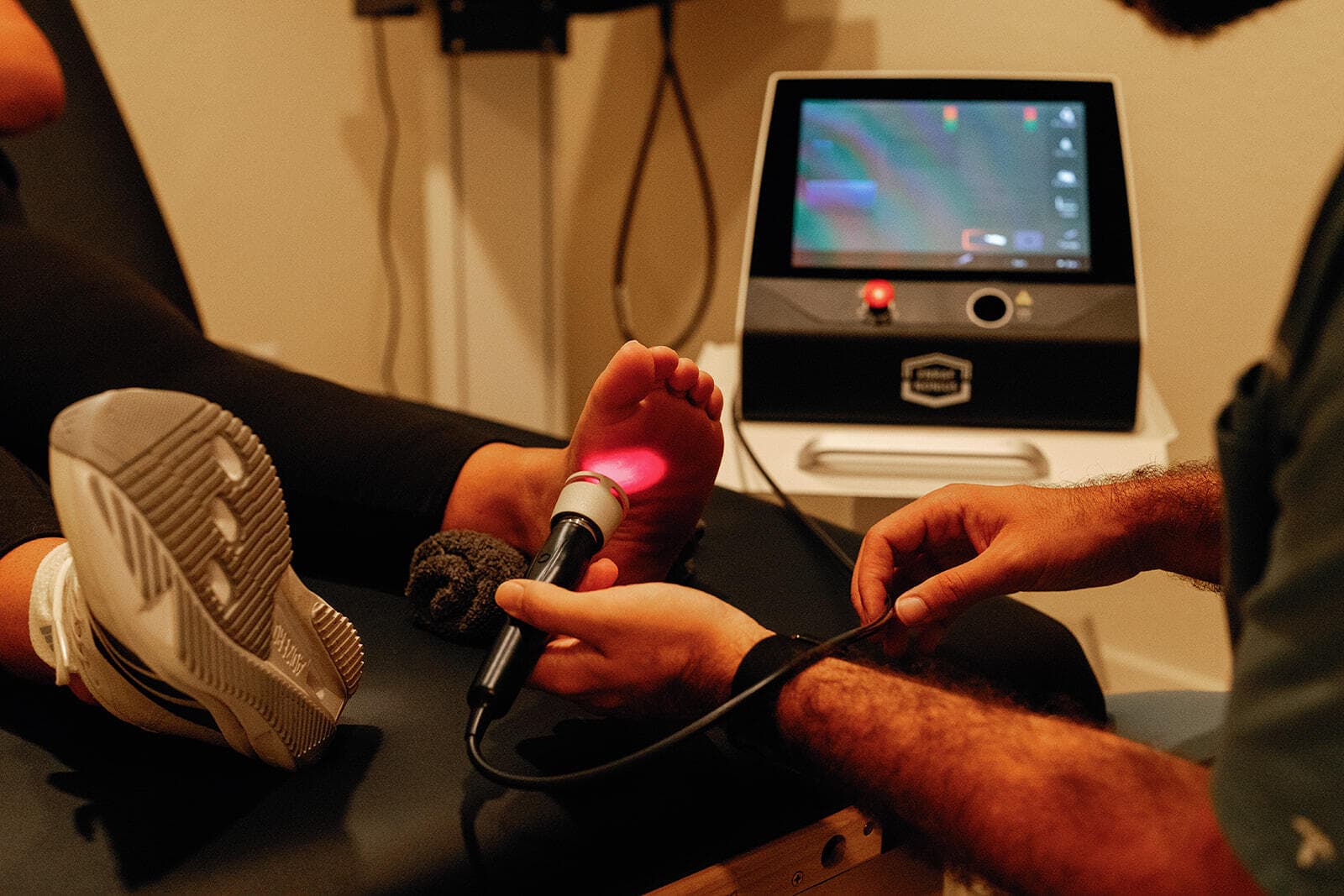
Burning, tingling or numb feet usually mean damaged nerves, and the care that helps most depends on what damaged them. Finding the cause comes first. For many older adults it is diabetes, a vitamin B12 shortfall, long-term alcohol use or chemotherapy, and sometimes no cause turns up. After that, the best-supported steps are steady blood sugar, daily foot checks, exercise that includes balance work, and nerve-pain medicines your doctor chooses. PEMF, red light, laser and electrical stimulation get offered too, and the research on them is small and mixed. This guide separates the well-backed from the unproven.
What is peripheral neuropathy, and what causes it in the feet?
Peripheral neuropathy is damage to the nerves outside the brain and spinal cord, and the feet are often where it shows first. Nerves that relay touch, temperature and pain signals misfire or go quiet, which feels like burning, tingling, pins and needles or numbness. Diabetes is the leading cause in the U.S. (NINDS, undated page), and the risk rises with age (Cleveland Clinic, undated page).
| Cause | What the sources say |
|---|---|
| Diabetes | Long-term high blood sugar damages the small blood vessels that feed nerves (Cleveland Clinic). |
| Vitamin problems | B12 deficiency is the best-known; excess B6 can also harm nerves (NINDS). The ADA lists B12 as a cause to consider, especially in people on metformin for years (ADA, 2026). |
| Alcohol | Direct nerve damage from long-term use, plus the vitamin shortfalls that come with it (Cleveland Clinic). |
| Chemotherapy | Only some drugs cause it, and it can continue long after treatment ends (NINDS). |
| Other conditions | Thyroid or kidney disease, infections, autoimmune disease and inherited forms (ADA, 2026). |
| No cause found | Called idiopathic (Mayo Clinic, undated page). |
Why does the cause matter, and what tests will a doctor order?
The cause decides the treatment. NINDS notes that when the underlying cause is corrected, neuropathy can resolve on its own as nerves recover and regrow (NINDS). Cleveland Clinic adds that some types can be stopped or reversed with quick diagnosis and treatment, and that the longer and more severe the damage, the less likely it reverses (Cleveland Clinic). Mayo Clinic says to seek care right away for new tingling, weakness or pain in the hands or feet (Mayo Clinic).
A work-up usually includes, per NINDS:
- A history covering symptoms, medications, alcohol use and toxin exposure
- A physical and neurological exam
- Blood tests for diabetes, vitamin deficiencies, liver or kidney problems and immune activity
- Sometimes an EMG with a nerve conduction study, which measures how well nerves pass signals along, or a skin biopsy
If you have diabetes, the ADA says to be assessed at diagnosis of type 2 and at least yearly, with a 10-gram monofilament test of the feet, and to look for other causes too, including alcohol, chemotherapy and low B12 (ADA, 2026). Bring your full medication list, any chemotherapy history and an honest account of alcohol use.
What is the best neuropathy in feet treatment to start with?
Start with the cause, then protect the feet, then manage the pain. For diabetes, the CDC calls keeping blood sugar in your target range one of the most important things you can do to prevent nerve damage or stop it from getting worse (CDC, undated page). The ADA rates that advice strongest for preventing neuropathy in type 1 diabetes and weaker, though still recommended, for slowing it in type 2 (ADA, 2026).
| Step | What the guidelines and agencies say |
|---|---|
| Treat the underlying condition | Managing diabetes and other conditions, quitting smoking, avoiding alcohol, eating well and keeping a healthy weight all support healthier nerves (NINDS). |
| Nerve-pain medicines | For painful diabetic neuropathy, the AAN guideline says doctors should offer tricyclic antidepressants, SNRIs, gabapentinoids and/or sodium channel blockers, and switch classes if the first does not help. It says not to use opioids (AAN, 2022). The ADA's list matches (ADA, 2026). |
| After chemotherapy | ASCO recommends no drug to prevent it and names duloxetine as the only drug with evidence for painful chemotherapy neuropathy, with limited benefit (ASCO, 2020). |
The AAN guideline is from 2022, a snapshot nearly five years old. The AAN adds that these drugs reduce pain but may not eliminate it (AAN, 2021 release). Dosing is your prescriber's call. If chemotherapy caused your symptoms, tell your oncology team early: ASCO says clinicians should consider delaying, reducing or changing the drug when neuropathy becomes intolerable (ASCO, 2020).
Does exercise help neuropathy in feet?
Yes, with limits on what is proven. A 2022 meta-analysis of 41 randomized trials found exercise beneficial for neuropathy, best documented in diabetic neuropathy, and recommended combining endurance and balance-and-coordination ("sensorimotor") training (Streckmann, 2022). A 2025 umbrella review of 14 reviews found benefits for symptoms and function but called the effects on fall risk and ulcer prevention inconclusive (Gracia-Sánchez, 2025). The ADA describes the strength of this evidence as low (ADA, 2026).
For older adults, a 2025 meta-analysis found balance and multicomponent exercise improved balance measures and reduced fall risk (Wang, 2025). The CDC suggests walking, cycling or swimming, and checking with your doctor about activities to avoid (CDC). A physical therapist can build a balance program that fits your feet.
How do you protect numb feet from wounds, burns and falls?
Numb feet cannot warn you. The CDC says that without pain you may miss a cut, blister or sore, and small problems turn serious if untreated (CDC). Cleveland Clinic lists burns from not feeling pain among the complications (Cleveland Clinic), and NINDS notes that lost position sense can make walking and balance harder (NINDS).
A daily routine from the CDC and NIDDK:
- Check both feet for cuts, redness, swelling, sores, blisters and calluses, using a mirror or a family member
- Wash in warm water, never hot, and test it with a thermometer (90 to 95 F is safe, per NIDDK) or your elbow
- Never go barefoot, even indoors, and check inside shoes for pebbles
- Do not remove corns or calluses yourself
- Get a full foot exam every year, more often if you have nerve damage
Heating pads, hot soaks, ice packs and any device that applies heat, cold or light share one risk when feeling is reduced: you may not notice damage as it happens. The sources name burns as a complication but do not test specific devices, so this is a rule of caution, not a finding. Check with something other than your foot, as NIDDK advises for bath water, and ask any provider how they check your skin before, during and after.
What does the research say about PEMF, red light, Class IV laser and H-Wave for neuropathy?
The studies are small, short and mixed, and the ADA's 2026 neuropathy recommendations do not mention any of these devices. Here is what the reviews and trials show, most of them in diabetic neuropathy.
| Therapy | What the research shows | How to read it |
|---|---|---|
| PEMF (pulsed electromagnetic fields) | A 12-trial review found no pain improvement versus control (Stein, 2013). A 225-person trial found no pain difference from sham (Weintraub, 2009). A 182-person trial found 30% less pain than sham in those without a device alert (Tassone, 2025). A 13-trial review found no significant pain reduction in peripheral neuropathy (Lara-Reyes, 2026). | Mixed to negative for pain. The trials used home devices on the feet for up to two hours a day, which differ from studio sessions. |
| Red light and low-level laser (photobiomodulation) | One review of eight studies concluded it improved diabetic nerve pain and nerve conduction (Korada, 2023), and another of six studies found a positive effect on pain (Anju, 2019). A 2026 review in type 2 diabetes called the effects on nerve function inconsistent and short-term, with low certainty (Wevers, 2026). | Encouraging but early. A 2017 review of a different light device (monochromatic infrared) found no pain relief and low-quality evidence (Robinson, 2017). |
| H-Wave (electrical stimulation) | A critical review found low- to moderate-quality studies reporting less pain and better function, with some of the relief seen in sham groups too, and called for better research (Williamson, 2021). | Weak. It is a different waveform from TENS, which Stein, 2013 found did reduce diabetic nerve pain. |
Those light reviews mostly cover low-level lasers and LEDs. I found no systematic review that isolates Class IV laser for neuropathy, so direct evidence for it is thinner still. Read every row as "might ease symptoms for some people, unproven for repairing nerves." In the Wevers review, trials that measured nerve fiber density found no difference between groups. The PEMF, red light, Class IV laser and H-Wave research pages go deeper on each.
When should you see a doctor urgently?
Same day: weakness that spreads or worsens, or a foot wound or infection. NINDS describes the weakness of Guillain-Barré syndrome as coming on quickly, worsening over hours or days and often starting in the feet (NINDS). NIDDK says to call right away for a cut, blister or bruise that has not started to heal after a few days, red, warm or painful skin, a callus with dried blood inside, or an infection that turns black and smelly (NIDDK).
| What you notice | What to do |
|---|---|
| Weakness spreading or getting worse over hours or days | Call your doctor or go to an emergency room today |
| A foot wound that is not healing, or red, warm, painful skin | Call your doctor or foot doctor the same day |
| New numbness, tingling or burning with no diagnosis | Book an appointment this week to find the cause |
Where do OutRecover's services fit?
OutRecover's services sit beside medical care, never in place of it. OutRecover's neuropathy packages are built for burning, tingling, numbness or pins and needles in the hands or feet. OutSignal combines red light therapy, PEMF therapy and an H-Wave home unit rental over a program of visits several times a week. OutNerve adds Class IV laser therapy for people who want a fuller program. Prices and visit details are on those pages.
Given the evidence, an honest way to use them is as a time-limited trial for symptoms. Before you start, pick one measure, such as a daily 0 to 10 pain score, hours slept or how far you can walk. Review it partway through, and stop if nothing has moved. A provider who promises to repair nerves or cure neuropathy promises more than any study here shows. Questions worth asking any studio:
- Do you ask for my diagnosis and the name of my doctor?
- How do you check feeling in my skin before using heat, light or laser?
- What does the first visit measure, and how will we know it is working?
- What would make you tell me to stop or see a doctor?
OutRecover's pages list their own cautions: no PEMF or H-Wave with pacemakers or implanted electronic devices, and no laser over cancerous lesions or the eyes. Tell the team about diabetes, numbness and any cancer history. OutRecover describes its services as wellness-based and not intended to diagnose, treat, cure or prevent disease, so keep your doctor's plan, foot exams and prescriptions as they are. For a plain-language look at each device, see what PEMF therapy is, whether red light therapy works and laser therapy for pain. If the burning starts in the back and runs down the leg, a pinched nerve is a different problem, covered in the sciatica guide.
Your next step
Without a diagnosis, book a medical visit and bring the list from the tests section. With one, ask your doctor which basics you are missing: a blood sugar target, a yearly foot exam, a balance program, a medicine review. If you then want a trial of the studio services, read the OutSignal and OutNerve pages and call the studio with your questions.
Sources
- NINDS. Peripheral Neuropathy. National Institute of Neurological Disorders and Stroke, undated page. https://www.ninds.nih.gov/health-information/disorders/peripheral-neuropathy
- NINDS. Guillain-Barré Syndrome. National Institute of Neurological Disorders and Stroke, undated page. https://www.ninds.nih.gov/health-information/disorders/guillain-barre-syndrome
- Mayo Clinic. Peripheral neuropathy: Symptoms and causes. Undated page. https://www.mayoclinic.org/diseases-conditions/peripheral-neuropathy/symptoms-causes/syc-20352061
- Cleveland Clinic. Peripheral Neuropathy: What It Is, Symptoms and Treatment. Undated page. https://my.clevelandclinic.org/health/diseases/14737-peripheral-neuropathy
- CDC. Your Feet and Diabetes. Centers for Disease Control and Prevention, undated page. https://www.cdc.gov/diabetes/diabetes-complications/diabetes-and-your-feet.html
- NIDDK. Diabetes and Foot Problems. National Institute of Diabetes and Digestive and Kidney Diseases, undated page. https://www.niddk.nih.gov/health-information/diabetes/overview/preventing-problems/foot-problems
- American Diabetes Association Professional Practice Committee. 12. Retinopathy, Neuropathy, and Foot Care: Standards of Care in Diabetes-2026. Diabetes Care, 2026. https://pmc.ncbi.nlm.nih.gov/articles/PMC12690177/
- Price R, et al. Oral and Topical Treatment of Painful Diabetic Polyneuropathy: Practice Guideline Update Summary. Neurology (AAN guideline), 2022. https://pubmed.ncbi.nlm.nih.gov/34965987
- American Academy of Neurology. AAN Issues Guideline for Treatment of Painful Diabetic Neuropathy (press release). December 27, 2021. https://www.aan.com/PressRoom/Home/PressRelease/4944
- Loprinzi CL, et al. Prevention and Management of Chemotherapy-Induced Peripheral Neuropathy in Survivors of Adult Cancers: ASCO Guideline Update. Journal of Clinical Oncology, 2020. https://pubmed.ncbi.nlm.nih.gov/32663120
- Streckmann F, et al. Exercise and Neuropathy: Systematic Review with Meta-Analysis. Sports Medicine, 2022. https://pubmed.ncbi.nlm.nih.gov/34964950/
- Gracia-Sánchez A, et al. Impact of Exercise Training in Patients with Diabetic Peripheral Neuropathy: An Umbrella Review. Sports Medicine - Open, 2025. https://pubmed.ncbi.nlm.nih.gov/40517337
- Wang D, et al. Effectiveness of various exercise types in reducing fall risk among older adults with diabetic peripheral neuropathy. Journal of Exercise Science and Fitness, 2025. https://pmc.ncbi.nlm.nih.gov/articles/PMC12002931
- Stein C, et al. Electrical stimulation and electromagnetic field use in patients with diabetic neuropathy: systematic review and meta-analysis. Brazilian Journal of Physical Therapy, 2013. https://pubmed.ncbi.nlm.nih.gov/23778776
- Weintraub MI, et al. Pulsed electromagnetic fields to reduce diabetic neuropathic pain and stimulate neuronal repair: a randomized controlled trial. Archives of Physical Medicine and Rehabilitation, 2009. https://pubmed.ncbi.nlm.nih.gov/19577022
- Tassone EE, et al. Assessing the Effects of Pulsed Electromagnetic Therapy on Painful Diabetic Distal Symmetric Peripheral Neuropathy: A Double-Blind Randomized Controlled Trial. Journal of Diabetes Science and Technology, 2025. https://pubmed.ncbi.nlm.nih.gov/37542366
- Lara-Reyes JA, et al. Effectiveness of Pulsed Electromagnetic Field Therapy on Neuropathic Pain: A Systematic Review and Meta-Analysis. Neurology International, 2026. https://pubmed.ncbi.nlm.nih.gov/41745713
- Korada HY, et al. Effectiveness of Photobiomodulation Therapy on Neuropathic Pain, Nerve Conduction and Plantar Pressure Distribution in Diabetic Peripheral Neuropathy: A Systematic Review. Current Diabetes Reviews, 2023. https://pubmed.ncbi.nlm.nih.gov/37622461
- Anju M, et al. Low level laser therapy for the patients with painful diabetic peripheral neuropathy: A systematic review. Diabetes and Metabolic Syndrome, 2019. https://pubmed.ncbi.nlm.nih.gov/31405692
- Wevers A, et al. Effects of Photobiomodulation on Metabolic, Inflammatory, and Neurological Outcomes in Type 2 Diabetes: A Systematic Review and Meta-Analysis. International Journal of Molecular Sciences, 2026. https://pubmed.ncbi.nlm.nih.gov/41516314
- Robinson CC, et al. Effects of monochromatic infrared phototherapy in patients with diabetic peripheral neuropathy: a systematic review and meta-analysis of randomized controlled trials. Brazilian Journal of Physical Therapy, 2017. https://pubmed.ncbi.nlm.nih.gov/28571697
- Williamson TK, et al. H-Wave Device Stimulation: A Critical Review. Journal of Personalized Medicine, 2021. https://pmc.ncbi.nlm.nih.gov/articles/PMC8619115
