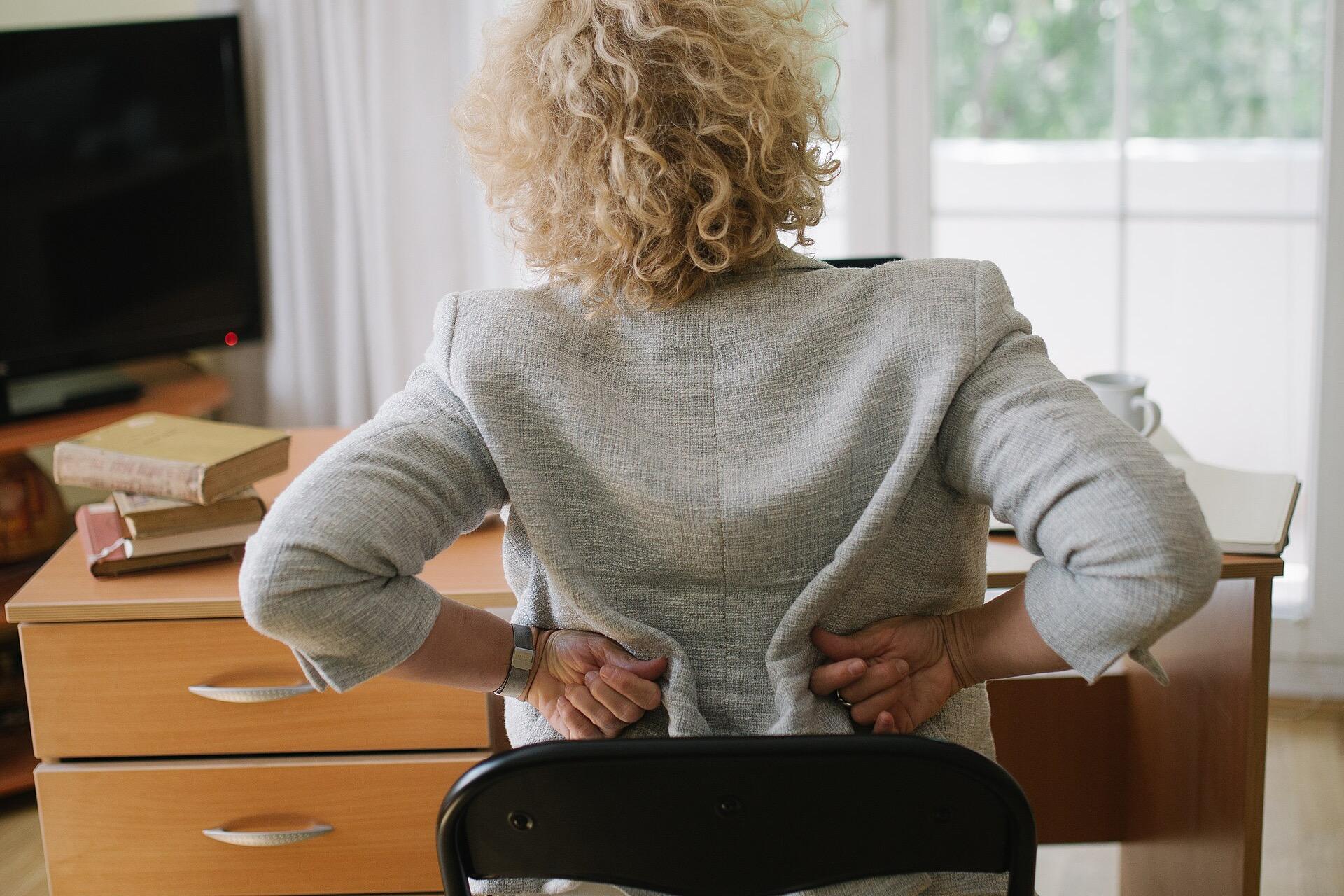
Most low back pain eases without a diagnosis or a procedure. A systematic review found that pain fell by about 58% within the first month in people with acute episodes. What the guidelines recommend in the meantime is plain: keep moving, use heat, and add exercise. What they advise against is also useful to know, because bed rest, routine scans and several popular devices are on that list. This guide covers what nonspecific low back pain is, the warning signs that mean you should not wait, the first-line care, and an honest read on laser, PEMF, red light and H-Wave.
What is nonspecific low back pain?
Nonspecific low back pain is back pain with no single structure that a test can blame. Mayo Clinic says back pain often develops without a cause that shows up in a test or an imaging study, and bending, twisting, lifting, standing or walking can make it worse. The AAOS says it can come on slowly or suddenly, may come and go, and in most cases goes away on its own within a few weeks.
That describes the pain that arrives after lifting a bag of mulch, an afternoon of gardening or a long drive on I-75. It also fits pain that keeps returning. If your pain runs down the leg, read our sciatica guide instead, since leg symptoms point to a different set of causes. Golfers will find more specific advice in our golf back pain guide.
Which symptoms mean you should not wait?
Fever, chills, unexpected weight loss, leg weakness, and loss of bladder or bowel control are the red flags. The AAOS lists weakness in your legs and loss of bladder and bowel control as signs to seek medical attention right away, and fever, chills or unexpected weight loss as reasons to call your doctor. Check yourself against this list:
- Fever, chills, flu-like symptoms or a rash when the back pain starts (Mayo Clinic)
- Significant or growing weakness in a leg
- New bladder or bowel changes, often with numbness around the rectum or genitals (same source: have this evaluated as soon as possible)
- A history of cancer, a suppressed immune system, or unexplained weight loss
- Back pain that began with trauma, such as a fall or a car crash
- Pain that is always present whatever your position or activity level (AAOS)
- Pain that has not improved after a few weeks, or lasts longer than eight weeks (AAOS, Mayo Clinic)
NICE says clinicians should exclude specific causes such as cancer, infection, trauma or inflammatory disease when they examine someone with back pain, particularly when symptoms are new or changing. Serious causes are the exception.
How long does low back pain last?
Most of the improvement comes in the first six weeks, and some pain can linger. A 2012 meta-analysis of 33 cohorts found acute low back pain averaged 52 out of 100 at the start, 23 at six weeks, 12 at 26 weeks and 6 at one year (Costa, 2012). A snapshot of one dataset: it is an average, and individual courses vary.
| Time since onset | Typical pain score (0 to 100) |
|---|---|
| Start | About 52 |
| 6 weeks | About 23 |
| 26 weeks | About 12 |
| 52 weeks | About 6 |
The 2003 review by Pengel and colleagues adds the less comfortable half: pain and disability are typically ongoing and recurrences are common, with 73% having at least one recurrence within 12 months. A later review (Stanton, 2017) cautions that the research does not give dependable estimates of recurrence; its one inception cohort found a 33% one-year recurrence. Read both as "it comes back for a meaningful share of people" rather than a precise rate.
What is the best lower back pain treatment to start with?
Stay active, use heat, and add exercise. Those three sit at the base of both the American College of Physicians (ACP) 2017 guideline and the UK's NICE guideline NG59. Here is the order most readers can use:
- Keep normal activity. NICE tells clinicians to give people information on the nature of back pain and encouragement to continue with normal activities (NG59, 2016; the page shows amendments as recent as 2026).
- Use heat. Because most acute and subacute back pain improves regardless of treatment, the ACP recommends starting with non-drug options, including superficial heat, which it rates as moderate-quality evidence (Qaseem, 2017).
- Add exercise. NICE says to consider a group exercise program, with biomechanical, aerobic, mind-body or mixed approaches, for a flare-up of low back pain. The ACP puts exercise first for chronic pain.
- Consider hands-on care, with exercise. The ACP lists massage, acupuncture and spinal manipulation as low-quality-evidence options for acute pain. NICE is narrower: manual therapy such as manipulation, mobilisation or massage only as part of a package that includes exercise, and it says not to offer acupuncture. The two guidelines do not agree on everything, which is worth knowing when a provider describes any one option as settled.
Where do medicines fit?
Medicines are a short-term option your clinician chooses after the first-line steps. The table summarizes the guidelines and gives no dosing; ask your clinician before starting or changing anything.
| Guideline | What it says |
|---|---|
| ACP, 2017 | If you want medicine for acute or subacute pain, NSAIDs or skeletal muscle relaxants (moderate-quality evidence) |
| NICE NG59 | Consider an oral NSAID at the lowest effective dose for the shortest time, with attention to stomach protection and other risks |
| NICE NG59 | Weak opioids only if an NSAID cannot be used, is not tolerated or has not worked; no opioids for chronic pain |
| NICE NG59 | Paracetamol alone is not recommended; gabapentinoids and antiepileptics are not recommended |
What should you skip?
Bed rest, routine imaging, and belts. A Cochrane review found moderate-quality evidence that advice to stay active gave small benefits in pain and function over advice to rest in bed for acute low back pain (Dahm, 2010, so an older review). A day of lying low is understandable; a week in bed is not helpful.
NICE says not to routinely offer imaging in a non-specialist setting for low back pain, and says imaging in specialist care should be considered only if the result is likely to change management. That is why a clinician may skip the scan: it usually does not change what you do next. NICE also advises against belts or corsets, traction, TENS, interferential therapy and ultrasound for low back pain.
Where do PEMF, Class IV laser, red light and H-Wave fit in lower back pain treatment?
As optional, comfort-focused add-ons with mixed evidence. Each has been reviewed for low back pain, and none is a guideline first-line treatment. Here is each one, with the strength stated as the reviews state it.
| Therapy | What the research shows | How strong |
|---|---|---|
| Class IV laser | A 2023 meta-analysis of high-intensity laser found less low back pain than controls (mean difference -1.65, with high variation between trials) (Abdildin, 2023). An earlier 2019 review of 10 trials in neck and low back pain found only two rated high quality (Alayat, 2019) | Promising but small, mixed-quality trials |
| PEMF | A 2022 review of 14 trials (618 people) found less pain in chronic low back pain, no significant difference in acute, and no improvement in function (Sun, 2022). A 2023 review of 9 trials (420 people) found 5 with significant pain and function gains, with wide variation in settings (Kull, 2023) | Benefit in chronic pain; not shown in acute |
| Red light | A 2020 review of 12 trials (1,046 people) of low-level laser and LED light found the effect on pain and disability clinically unimportant compared with sham, and concluded the evidence does not support its use (Tomazoni, 2020) | Not supported for low back pain |
| H-Wave | A 2021 critical review across several conditions rated its studies low to moderate quality, Level of Evidence III; two authors are consultants for the device's maker (Williamson, 2021). It is not a back pain review | Weak |
Three cautions apply. Laser studies pool devices and doses that vary widely, so a given studio's laser may not match what was tested. The ACP's low-level laser entry applies to chronic pain, on low-quality evidence, and Class IV lasers are a different class of device. And because NICE advises against TENS and interferential therapy for back pain, ask any provider why they expect H-Wave to behave differently; NICE does not address H-Wave by name. Our guides on laser therapy, PEMF and red light go deeper on each, and the science page on spine and nerve health lists the research OutRecover summarizes.
How do you stop lower back pain from coming back?
Exercise is the best-supported answer, ideally with education. The 2016 review by Steffens and colleagues in JAMA Internal Medicine pooled 21 randomized trials with 30,850 people. It found moderate-quality evidence that exercise combined with education reduces the risk of a back pain episode (risk ratio 0.55), and low- to very low-quality evidence that exercise alone may do so (0.65). Education alone showed no effect, and neither did back belts.
Read that as a pattern you can use: education helps in company with exercise and does little by itself. A later network meta-analysis of prevention trials reached a similar conclusion, with exercise alone and exercise plus education both preventing episodes (Huang, 2019). A practical routine:
- Exercise on a schedule. A 2018 review concluded that strengthening combined with stretching or aerobic exercise, 2 to 3 times a week, can reasonably be recommended for prevention (Shiri, 2018).
- Skip the belt. It did not lower the risk of episodes.
- Break up long sits and drives. The evidence here is guidance rather than trial data, but stopping to walk is a low-cost habit.
Where do OutRecover's therapies fit?
As a comfort-focused add-on for some people, alongside the care above, and never as a replacement for it. OutRecover in North Naples has no package for "back pain" in general, but three are built for back complaints, and which fits depends on your pattern.
- OutReset is the closest match for back pain that came on suddenly after lifting or twisting, or for spasms and flare-ups. It is a single visit that combines PEMF, Class IV laser, red light, H-Wave and an IV from OutInfuse, the studio's partner, which requires medical approval.
- OutMove suits ongoing stiffness and tightness, including stiffness after long sitting. It spreads PEMF, laser and red light over three weeks.
- OutRelief is for lower back or neck pain that is making daily life harder, recent or long-term, including pain that disrupts sleep. It runs over six visits and adds molecular hydrogen and IVs.
Be clear on what this evidence supports. The reviews above show pain relief in some settings, mixed or no benefit in others, and none of them show these therapies prevent recurrence. If you have a pacemaker or other implanted electronic device, tell the staff first. For prevention, the strongest evidence is still regular exercise. Prices and visit details are on the package pages.
What to do this week
- Check the red flag list. If any item fits, see a clinician now; bladder or bowel changes or growing leg weakness need care the same day.
- Keep moving within what your pain allows, and use heat.
- If the pain has not improved after a few weeks, book a visit with your primary care clinician or a physical therapist, and ask about an exercise program.
- If you want to add studio therapies, tell your clinician first. Wellness services are not a substitute for a clinician's plan.
Sources
- Pengel LHM, Herbert RD, Maher CG, Refshauge KM. Acute low back pain: systematic review of its prognosis. BMJ, 2003. https://pubmed.ncbi.nlm.nih.gov/12907487
- Costa LCM, Maher CG, Hancock MJ, et al. The prognosis of acute and persistent low-back pain: a meta-analysis. CMAJ, 2012. https://pmc.ncbi.nlm.nih.gov/articles/PMC3414626
- Stanton TR, Latimer J, Maher CG, Hancock MJ. Risk of Recurrence of Low Back Pain: A Systematic Review. Journal of Orthopaedic & Sports Physical Therapy, 2017. https://pubmed.ncbi.nlm.nih.gov/28355981
- Mayo Clinic. Back pain: Symptoms and causes. https://www.mayoclinic.org/diseases-conditions/back-pain/symptoms-causes/syc-20369906
- Mayo Clinic News Network. Mayo Clinic Q and A: Herniated disk symptoms often effectively treated without surgery. https://newsnetwork.mayoclinic.org/discussion/mayo-clinic-q-and-a-herniated-disk-symptoms-often-effectively-treated-without-surgery
- American Academy of Orthopaedic Surgeons. Low Back Pain. OrthoInfo. https://orthoinfo.aaos.org/en/diseases--conditions/low-back-pain
- National Institute for Health and Care Excellence. Low back pain and sciatica in over 16s: assessment and management (NG59), 2016, amended 2020 and 2026. https://www.nice.org.uk/guidance/ng59/chapter/Recommendations
- Qaseem A, et al. Noninvasive Treatments for Acute, Subacute, and Chronic Low Back Pain: A Clinical Practice Guideline From the American College of Physicians. Annals of Internal Medicine, 2017. https://pubmed.ncbi.nlm.nih.gov/28192789/
- Dahm KT, Brurberg KG, Jamtvedt G, Hagen KB. Advice to rest in bed versus advice to stay active for acute low-back pain and sciatica. Cochrane Database of Systematic Reviews, 2010. https://pubmed.ncbi.nlm.nih.gov/20556780
- Abdildin Y, Tapinova K, Jyeniskhan N, Viderman D. High-intensity laser therapy in low back pain management: a systematic review with meta-analysis. Lasers in Medical Science, 2023. https://pubmed.ncbi.nlm.nih.gov/37493840
- Alayat MSM, et al. The effectiveness of high intensity laser therapy in the management of spinal disorders: A systematic review and meta-analysis. Journal of Back and Musculoskeletal Rehabilitation, 2019. https://pubmed.ncbi.nlm.nih.gov/30932879
- Sun X, et al. Efficacy of pulsed electromagnetic field on pain and physical function in patients with low back pain: a systematic review and meta-analysis. Clinical Rehabilitation, 2022. https://pubmed.ncbi.nlm.nih.gov/35077249
- Kull P, Keilani M, Remer F, Crevenna R. Efficacy of pulsed electromagnetic field therapy on pain and physical function in patients with non-specific low back pain: a systematic review. Wiener Medizinische Wochenschrift, 2023. https://pubmed.ncbi.nlm.nih.gov/37999784
- Tomazoni SS, et al. Photobiomodulation therapy does not decrease pain and disability in people with non-specific low back pain: a systematic review. Journal of Physiotherapy, 2020. https://pubmed.ncbi.nlm.nih.gov/32680739
- Williamson TK, et al. H-Wave Device Stimulation: A Critical Review. Journal of Personalized Medicine, 2021. https://pmc.ncbi.nlm.nih.gov/articles/PMC8619115
- Steffens D, Maher CG, Pereira LSM, et al. Prevention of Low Back Pain: A Systematic Review and Meta-analysis. JAMA Internal Medicine, 2016. https://pubmed.ncbi.nlm.nih.gov/26752509
- Huang R, et al. Exercise alone and exercise combined with education both prevent episodes of low back pain and related absenteeism: systematic review and network meta-analysis of randomised controlled trials. British Journal of Sports Medicine, 2019. https://pubmed.ncbi.nlm.nih.gov/31672696
- Shiri R, Coggon D, Falah-Hassani K. Exercise for the Prevention of Low Back Pain: Systematic Review and Meta-Analysis of Controlled Trials. American Journal of Epidemiology, 2018. https://pubmed.ncbi.nlm.nih.gov/29053873
