Most people go home the same day as an ACL reconstruction, use crutches and often a brace for a few weeks, and start running again somewhere around three to five months. Cutting and pivoting sports take longer: the Hospital for Special Surgery (HSS) puts return to practice at about nine months and competition at about twelve. If you are an athlete or an active adult planning ACL surgery recovery, or a parent of one, this guide lays out each stage as the major sources describe it, and why tests matter more than the calendar.
Your surgeon and physical therapist set your plan, and graft type or a repaired meniscus can change it. Read what follows as a general picture and leave the schedule to your team.
What does an ACL surgery recovery timeline look like?
The table below combines HSS, the American Academy of Orthopaedic Surgeons (AAOS), MedlinePlus and the 2023 Aspetar clinical practice guideline. Where the sources differ, the table says so. Treat each row as typical and none as a deadline.
| Stage | What the sources report |
|---|---|
| Day of surgery to week 1 | Most people go home the same day (MedlinePlus). You can walk with crutches and a brace that day, and rehabilitation starts 2 to 3 days after surgery (HSS). Prop your leg on one or two pillows under the foot or calf, 4 to 6 times a day in the first week, never behind the knee (MedlinePlus). |
| Weeks 1 to 6 | A brace and crutches may be needed for 1 to 6 weeks, depending on the surgery (MedlinePlus). Weight-bearing is your surgeon's call (AAOS). Goals: less swelling, a mobile kneecap, full range of motion, and stronger quadriceps and hamstrings. HSS says physical therapists typically test you at 6 weeks, 12 weeks, 6 months and 9 months (HSS). |
| Weeks 6 to 12 | Strength and balance work builds. Most studies in a scoping review set a minimum of 12 weeks before running, a few 8 or 16. No study has shown whether running at or before 12 weeks is safe (Aspetar, 2023). |
| Months 3 to 5 | Running exercises begin at about 3 to 5 months (HSS), once running criteria are met (see below). |
| Months 5 to 8 | Pivoting exercises start at around 5 to 8 months (HSS). |
| Months 9 to 12 | HSS says 9 to 12 months is usual for a return to sport, with track or crew possible from 3 months and soccer or football about 9 months to practice and 12 to competition (HSS). AAOS says most patients are cleared within 6 to 12 months (AAOS). |
HSS also notes that if surgery is done too early, or with limited motion, a stiffening scar response called arthrofibrosis can develop, so reconstruction is usually scheduled 3 to 6 weeks after the injury (HSS). HSS adds that if cartilage or meniscus was repaired in the same operation, recovery can take longer (HSS). See the meniscus surgery recovery guide.
How do swelling and knee bend progress?
Swelling and range of motion are the first things your team tracks, and they gate everything after. AAOS lists the early rehabilitation goals as reducing swelling, keeping the kneecap mobile, regaining full range of motion and strengthening the quadriceps and hamstrings (AAOS). HSS says ice and anti-inflammatory medicine can help swelling and pain (HSS).
No source we opened gives a day-by-day bend target for every patient. What they give are milestones. The Aspetar guideline suggests these criteria before returning to running, based on expert agreement because research on the question is missing (Aspetar, 2023):
- 95% knee flexion range of motion (Aspetar, 2023)
- Full extension
- No effusion, or only a trace
- Quadriceps strength at least 80% of the other leg
- Eccentric impulse in a countermovement jump at least 80% of the other leg
- Pain-free aqua jogging and Alter-G running
- Pain-free repeated single-leg hopping
The 95%, 80% and similar thresholds above come from that guideline's expert agreement (Aspetar, 2023).
A knee that still swells after activity, or will not fully straighten, is telling you and your therapist something. For the general mechanics of swelling after any operation, see how to reduce swelling after surgery.
When can you return to sport after ACL reconstruction?
Return to sport should follow tests you pass rather than a date you reach. The 2020 Panther Symposium consensus says purely time-based decision-making should be abandoned in favor of a criteria-based progression with a multidisciplinary group, objective exam data and validated functional tests (Panther consensus, 2020). A 2025 review reaches the same place and adds psychological readiness and sport-specific skills to physical performance (Foley, 2025).
AAOS gives the plain-language version. You may return when (AAOS):
- pain and swelling are gone
- you have full range of motion
- strength, endurance and functional use of the leg are fully restored
- balance and control of the leg are fully restored
A decision rule that follows from the sources: if you pass the tests but sit before the nine-month mark, ask your surgeon what the data say about waiting (next section). If you miss the tests at nine months, keep rehabbing.
What does the reinjury data say about timing?
Two cohorts link an earlier return to more second injuries. In the Delaware-Oslo cohort of 106 pivoting-sport athletes followed for two years, the reinjury rate fell 51% for each month return was delayed up to nine months, with no further drop after that (Grindem, 2016). Those who returned to level I sports (the study's term) had a 4.32 times higher reinjury rate.
Among athletes who failed the return-to-sport tests, 38.2% were reinjured, against 5.6% of those who passed. That last comparison was reported as a hazard ratio of 0.16 with p = 0.075, so it was suggestive but short of conventional significance (Grindem, 2016). The tests were quadriceps strength, four single-leg jump tests and two patient-reported scores, each scored above 90 for a pass.
A Swedish cohort of 159 young athletes (average age 21.5) found a rate of second ACL injury about 6.7 times higher in those who returned to knee-strenuous sport before nine months. In that group, symmetrical strength at return was not linked to reinjury (Beischer, 2020). The two studies agree on nine months and disagree on strength, which is one reason testing should cover more than one measure.
Both are observational and about ten years old at most, so they show an association and cannot prove that waiting prevents injury. Meanwhile, a systematic review of data through 2013 found 81% of people returned to any sport, 65% to their preinjury level and 55% to competitive sport (Ardern, 2014). That is a snapshot of about twelve years ago.
When should you call your surgeon?
Call your surgeon for any of these, per MedlinePlus (MedlinePlus):
- bleeding that soaks the dressing and does not stop with pressure
- pain that medicine does not ease
- swelling or pain in the calf
- a foot or toes that look darker than normal or feel cool
- redness, pain, swelling or yellowish discharge at the incisions
- a temperature above 101°F (38.3°C)
AAOS calls a blood clot after ACL reconstruction rare but potentially life-threatening, which is why calf swelling or pain deserves a same-day call (AAOS). Chest pain or trouble breathing is an emergency.
Where do recovery-studio services fit after clearance?
Studio services are optional extras beside your surgeon's and therapist's plan, and they start only once your surgeon clears them. The Aspetar guideline names exercise as the mainstay of ACL rehabilitation and says physical therapy modalities can be helpful as an adjunct in the early phase, with very low certainty for most components (Aspetar, 2023). Here is what each service has behind it, as far as the sources we opened go.
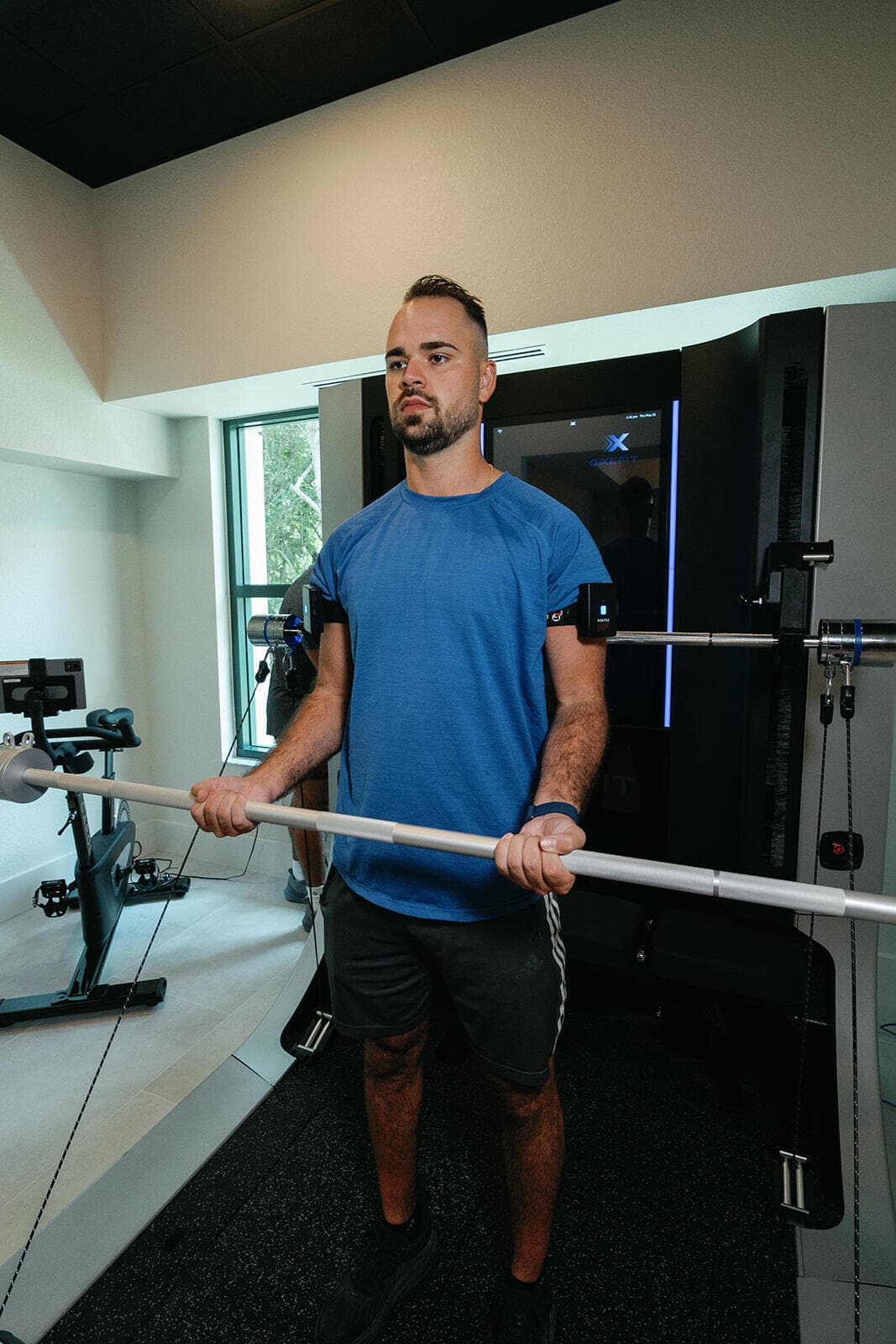
Blood flow restriction (KAATSU). This has the strongest rehab evidence of any service here. A 2026 systematic review and meta-analysis (17 studies, 643 people; 12 in the pooled analysis) found low-load training with cuffs improved quadriceps strength more than conventional rehab, with moderate-certainty evidence. Functional recovery was better on low-certainty evidence with high variation between studies, and effects on pain, balance and muscle size were inconclusive. No serious BFR-related adverse events were reported (Journal of Clinical Medicine, 2026). A second 2026 meta-analysis of nine randomized trials (372 people) also found better quadriceps strength and Lysholm knee scores, but no difference in IKDC scores, pain or range of motion. It rated the strength finding moderate-certainty and the pain, range of motion and safety findings low to very low, noting that adverse events were not consistently reported (Hu, 2026). Most trials paired low-load resistance exercise with cuffs set at 40 to 80% of the pressure that blocks arterial flow, started within 12 weeks of surgery and ran 2 to 16 weeks (Journal of Clinical Medicine, 2026). Ask your therapist whether a studio session matches a protocol like that. The studio's KAATSU BFR page says it is not appropriate with a history of deep vein thrombosis, certain circulatory disorders or active infection. The full research summary is on the science page.
PEMF. One double-blind trial of 69 people after hamstring-graft ACL reconstruction used a home device for 4 hours a day for 60 days. The active group had faster swelling resolution and recovery of range of motion, and used less anti-inflammatory medicine, with no significant difference at two years (Benazzo, 2008). It is a small, 18-year-old trial on a different device than the studio's PEMF mat, which is not recommended with pacemakers or electrical implants.
Class IV laser, compression and hyperbaric oxygen. In the sources opened for this guide we found no ACL reconstruction trial of Class IV laser or of studio-style compression. A 2026 systematic review of 19 studies called hyperbaric oxygen's benefit in ligament injuries inconclusive (HBOT review, 2026). For the compression basics, see compression boots benefits.
Packages. OutHeal lists ACL reconstruction among the procedures it is built for, with sessions scheduled around your surgery date and your surgeon's clearance. OutRepair is a smaller plan listed for procedures such as knee arthroscopy, so it fits a minor knee procedure better than a full reconstruction. Both include services this guide does not review.
What to ask your surgeon and therapist
Bring these to your next visit:
- Which graft did I have, and did you repair anything else in my knee?
- What range of motion and swelling should I hit by each checkup?
- Which return-to-sport tests will I take, and at what months?
- Can I add blood flow restriction training, and with what protocol?
- Is any studio service something you want me to skip or delay?
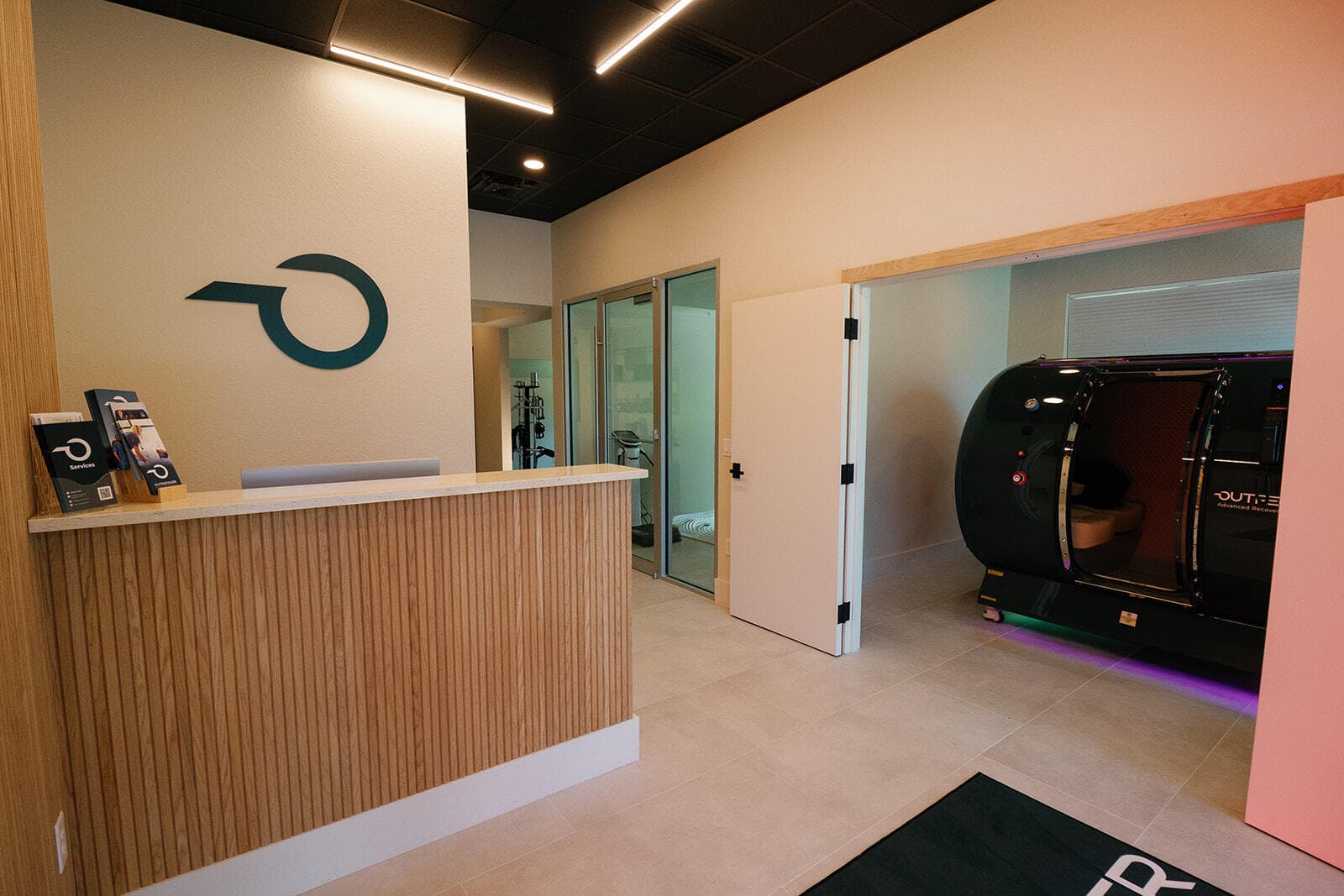
If you want to talk through the studio side, the team at OutRecover in North Naples can walk you through what fits your surgeon's plan. Call the studio or take the recovery quiz on its site.
Sources
- American Academy of Orthopaedic Surgeons. ACL Injury: Does It Require Surgery? OrthoInfo. https://orthoinfo.aaos.org/en/treatment/acl-injury-does-it-require-surgery
- Hospital for Special Surgery. ACL Reconstruction Surgery: Procedure and Recovery. HSS Health Library. https://www.hss.edu/health-library/conditions-and-treatments/list/acl-surgery
- Hospital for Special Surgery. ACL Surgery Recovery: Everything You Need to Know. HSS Health Library. https://www.hss.edu/health-library/move-better/acl-surgery-recovery
- MedlinePlus. ACL reconstruction. National Library of Medicine. https://medlineplus.gov/ency/article/007208.htm
- MedlinePlus. ACL reconstruction - discharge. National Library of Medicine. https://medlineplus.gov/ency/patientinstructions/000189.htm
- Kotsifaki R, et al. Aspetar clinical practice guideline on rehabilitation after anterior cruciate ligament reconstruction. British Journal of Sports Medicine, 2023. https://pubmed.ncbi.nlm.nih.gov/36731908 (full text: https://pmc.ncbi.nlm.nih.gov/articles/PMC11785408)
- Meredith SJ, et al. Return to sport after anterior cruciate ligament injury: Panther Symposium ACL Injury Return to Sport Consensus Group. Journal of ISAKOS, 2020. Open-access copy: https://pmc.ncbi.nlm.nih.gov/articles/PMC7328222
- Foley A, et al. Return to sport following ACL reconstruction. Current Reviews in Musculoskeletal Medicine, 2025. https://pmc.ncbi.nlm.nih.gov/articles/PMC12446172
- Grindem H, et al. Simple decision rules can reduce reinjury risk after ACL reconstruction: the Delaware-Oslo ACL cohort study (published title adds a percentage in its headline). British Journal of Sports Medicine, 2016. https://pubmed.ncbi.nlm.nih.gov/27162233
- Beischer S, et al. Young athletes who return to sport before 9 months after anterior cruciate ligament reconstruction have a rate of new injury 7 times that of those who delay return. Journal of Orthopaedic and Sports Physical Therapy, 2020. https://pubmed.ncbi.nlm.nih.gov/32005095
- Ardern CL, et al. Fifty-five per cent return to competitive sport following anterior cruciate ligament reconstruction surgery: an updated systematic review and meta-analysis. British Journal of Sports Medicine, 2014. https://pubmed.ncbi.nlm.nih.gov/25157180
- The effectiveness of blood flow restriction training on rehabilitation after anterior cruciate ligament reconstruction: a systematic review and meta-analysis. Journal of Clinical Medicine, 2026. https://www.mdpi.com/2077-0383/15/12/4706
- Hu Y, et al. Blood flow restriction training after anterior cruciate ligament reconstruction: a systematic review and meta-analysis of randomized controlled trials. Orthopaedic Journal of Sports Medicine, 2026. https://pmc.ncbi.nlm.nih.gov/articles/PMC13346806
- Benazzo F, et al. Effects of biophysical stimulation in patients undergoing arthroscopic reconstruction of anterior cruciate ligament: prospective, randomized and double blind study. Knee Surgery, Sports Traumatology, Arthroscopy, 2008. https://pmc.ncbi.nlm.nih.gov/articles/PMC2413121
- Effects of hyperbaric oxygen therapy on human musculoskeletal pathologies in clinical studies: a systematic review (19 studies). Systematic review, 2026. https://pmc.ncbi.nlm.nih.gov/articles/PMC13455398