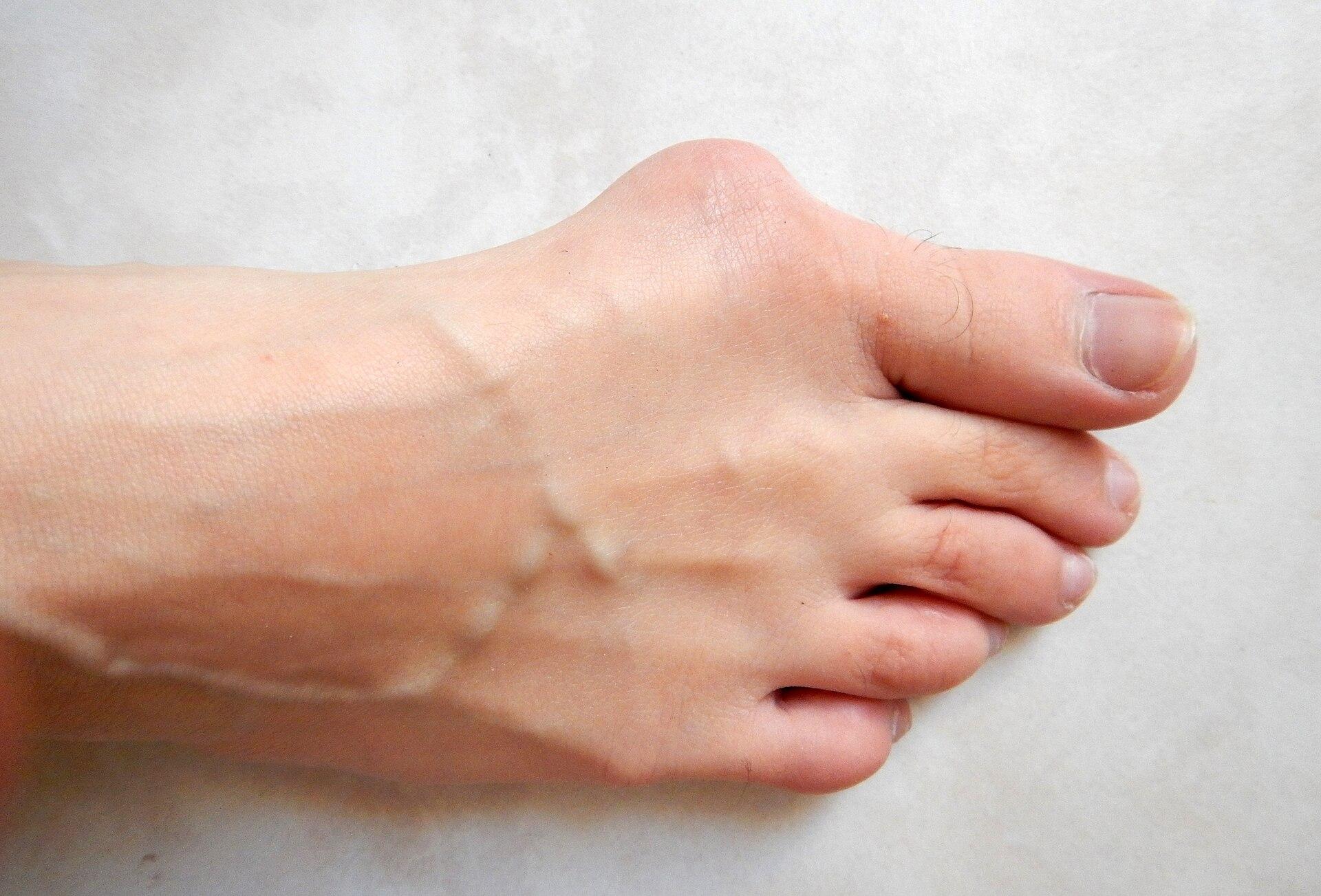
Most bunion surgeries are same-day procedures, and the recovery is longer than the surgery. Expect a protective shoe or boot for about the first six weeks, bone healing over roughly 6 to 12 weeks, a return to normal activities somewhere between 3 and 6 months, and swelling that can linger for up to a year. The American Academy of Orthopaedic Surgeons (AAOS) says full recovery often takes up to 6 months. The exact calendar depends on which procedure you had, so your surgeon's plan outranks any timeline here.
What is the bunion surgery recovery timeline?
The sources agree on the shape of recovery and differ on the dates, because bunion correction is several different operations. An osteotomy (cutting and realigning the bone) and a Lapidus procedure (fusing a joint in the midfoot) heal on different clocks. Use the table as a map of what to ask about, then replace each range with your surgeon's numbers.
| Stage | What to expect | Source |
|---|---|---|
| First 2 weeks | Bandage, splint or boot holds the toe in position. Dressing stays dry and untouched. Stitches usually come out around week 2. Foot raised as much as possible for the first few days. | AAOS, AOFAS FootCareMD, Lapidus |
| Weeks 2 to 6 | Either walking in a surgical shoe right away or no weight at all with crutches or a knee walker, depending on the procedure. | AAOS |
| Weeks 6 to 12 | Bones typically take 6 to 8 weeks to heal. After a Lapidus, full weight-bearing begins around week 6 in a boot or post-op shoe, then a slow move to regular shoes. Support from dressings or a brace can last 6 to 12 weeks. | AOFAS FootCareMD, Lapidus, AAOS |
| Months 3 to 6 | Cleveland Clinic says usual physical activities can resume after about three months. FootCareMD says most Lapidus patients are back to normal activities with minimal pain by 4 to 6 months. | Cleveland Clinic, 2026, AOFAS FootCareMD, Lapidus |
| Months 6 to 12 | Swelling and stiffness can persist. Follow-up visits can continue up to a year. | AAOS, AOFAS FootCareMD, bunions |
The American Orthopaedic Foot and Ankle Society's patient site (FootCareMD) describes minimally invasive bunion surgery as often faster and less painful early on, with a surgical shoe worn for walking for the first 6 weeks, and still says full recovery can take 6 months to a year. AAOS adds a caution that minimally invasive techniques have not been widely accepted and need more long-term research. Ask which technique you are having and what your surgeon's own recovery numbers are.
When can you put weight on the foot, and what do you wear?
You put weight on the foot when your surgeon says so, and not before. AAOS warns that putting weight on too early or without proper support can shift the bones, so the correction is lost or the bones do not heal. Some bunion procedures allow walking right away in a special surgical shoe. Many require a period of no weight, with crutches or a knee walker.
The timing is procedure-specific, which is why a friend's timeline may not be yours. A 2020 randomized trial of 51 patients (Ling and colleagues) tested 2 weeks versus 6 weeks of no weight after one particular minimally invasive soft-tissue procedure. The earlier group did better at 12 weeks, and the two groups matched at 26 weeks. That result applies to that procedure. It is not a license to move your own date.
Questions to put to your surgeon before the day of surgery:
- Which procedure am I having, and does it fuse a joint or cut and shift bone?
- Am I allowed any weight on the foot, and in which shoe or boot?
- How long until the stitches come out, and when can the foot get wet?
- When may I drive? AAOS notes driving may be restricted until the bones heal, especially after right-foot surgery.
- When do I start exercises, and will I see a physical therapist?
- Which sports and shoes are off the table, and for how long?
AAOS also suggests testing your weight-bearing plan at home before surgery day.
How long does swelling last after bunion surgery, and what helps?
Swelling is the slowest part of the recovery. AAOS says it is common to have some swelling from 6 months to 1 year after bunion surgery. Cleveland Clinic gives 6 to 9 months, and FootCareMD says it can be several months before you fit comfortably into regular shoes. A foot that is still puffy at month four is within the range the sources describe.
What the sources support is plain:
- Raise the foot. AAOS says to keep it raised as much as possible for the first few days.
- Ice as your surgeon directs. Never put ice directly on the skin, and keep the dressing dry (AAOS suggests covering the foot with a plastic bag to shower).
- Leave the dressing alone. It holds the toe in place, and AAOS says interfering with it could cause the bunion to come back.
- Do the exercises you are given. AAOS says specific exercises restore strength and range of motion, started slowly and as your surgeon or therapist instructs.
For the wider picture on what the research says about raising the limb, cold, compression and lymphatic massage after surgery, see our guide on how to reduce swelling after surgery. If the swelling is higher up the leg or in both ankles, read swollen ankles first, and tell your surgeon about swelling in one calf (see the warning signs below).
When can you wear normal shoes, walk far, golf or play pickleball?
Plan on regular shoes some months out, and on a shoe wardrobe that stays wider than before. In a 2016 study of 65 women (surgery in 2011 to 2013, so a snapshot over a decade old), 86% returned to comfortable footwear. Of those who wanted heels, 62% managed them, at a mean of 21.4 weeks. AAOS is blunter: bunion surgery may not let you wear a smaller shoe size or narrow, pointed shoes, and you may need to restrict shoe types for life, because a tight shoe can bring the bunion back.
For walking and activity, Cleveland Clinic's 3-month mark for usual physical activities is the earliest figure in the sources opened. For sport, the evidence is thinner and sits mostly outside classic bunion osteotomies:
- A 2023 systematic review of return to sport after first-joint fusion (Baumann and colleagues) covered running, yoga, golf, hiking, tennis and cycling. Most patients reported the same or easier sport afterward. The one study that reported timing gave 11.7 weeks. That review covered fusion of the big toe joint (patients averaged 58, treated for joint pain and deformity), which is a different operation from most bunion corrections, so it is a loose guide at best.
- A 2021 conference abstract (Unangst and Ryan), a retrospective review at a single institution, found 77% of 35 shaft-osteotomy patients and 81% of 16 Lapidus patients returned to running, with no significant difference between them. An abstract is an early report, not a full study.
None of the sources opened gives a date for pickleball, and none gives one for a first round of golf after a bunion osteotomy. Both sports load the forefoot (golf through the pivot, pickleball through lunges and quick stops), so treat 3 months as the earliest time to ask, and let your surgeon's X-ray decide.
What warning signs mean a call to your surgeon?
Call right away for signs of infection or a clot. AAOS lists persistent fever, shaking chills, persistent warmth or redness around the dressing, increased or persistent pain (especially a "sunburn" type), and significant swelling in the calf above the treated foot, particularly with a "charley horse" pain behind the knee or shortness of breath. Cleveland Clinic adds fever above 101 degrees Fahrenheit, bleeding, leaking, odor and discoloration.
Also call if the dressing loosens, comes off, gets wet or is moistened with blood or drainage. Shortness of breath alongside calf signs is urgent: call your surgeon at once, and go to emergency care if you cannot reach them.
How common are clots? A 2022 conference abstract (Martinazzi and colleagues) looked at a large online database of coded procedure records from 2011 to 2022 and found a clot within one month in 0.65% of 31,808 bunionectomy patients who did not receive blood thinners or antiplatelet drugs. That is a database count rather than a trial, and your own risk depends on your history. Your surgeon decides about prevention.
Can a bunion come back after surgery?
Yes, and the figures depend on how recurrence is defined. A 2021 meta-analysis of 23 studies and 2,914 people (Ezzatvar and colleagues) pooled a recurrence rate of about 25%, and linked it to the size of the deformity before surgery and to how well it was corrected after. A 2024 review of scarf osteotomies, with studies following patients 8 to 14 years on average (Lalevee and colleagues), found 40% of feet above a 15-degree angle, but only 2% above 25 degrees.
FootCareMD makes a point worth keeping: even when a bunion returns, it usually does not hurt. What you control is the dressing, the weight-bearing rules and your shoes. AAOS names a return to tight shoes as a cause of recurrence.
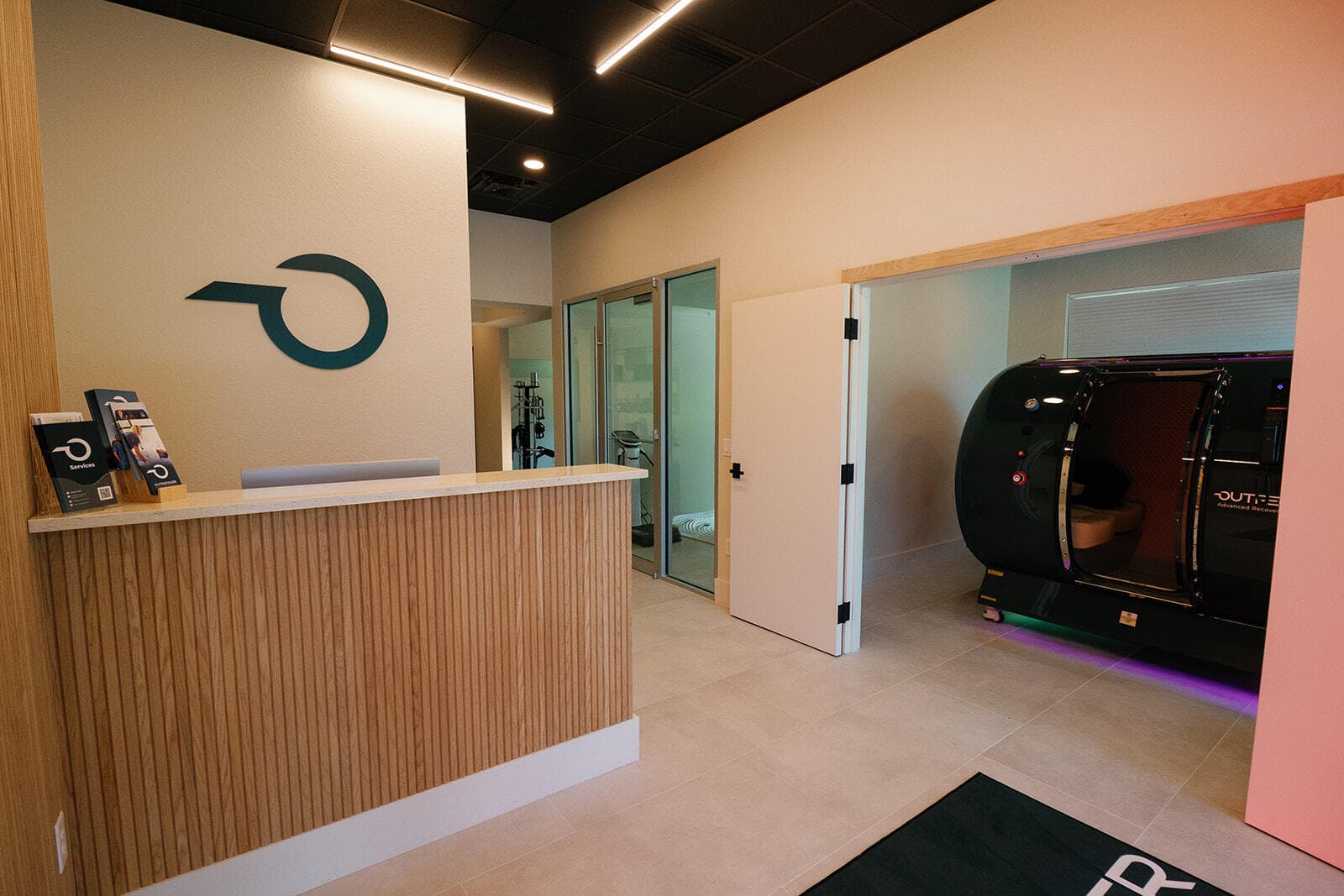
Where do studio services fit after your surgeon clears you?
Studio services fit as optional comfort and routine, once your incisions are closed and your surgeon agrees, and the evidence that any of them speeds bunion recovery is limited. We found no trial of red light, pneumatic compression or hyperbaric oxygen in bunion patients among the sources reviewed for this guide. OutRecover's own research page for red light therapy notes very low evidence certainty in one knee-pain meta-analysis, and its compression page centers on lymphedema rather than foot swelling after surgery. For manual lymphatic drainage after knee replacement, a 2024 meta-analysis found no benefit (covered in our swelling guide).
What a studio can offer is a structured way to spend recovery weeks: red light therapy sessions of about 15 minutes, and lymphatic compression that its page describes as passive. The compression page asks people with active infections, congestive heart failure or pulmonary edema to check with a physician first, and AAOS's warning about a swollen calf means a clinician should rule out a clot before any compression. Normatec compression works on the legs, and the same logic applies.
Two packages are the closest fit, best first:
- OutRestore pairs red light, lymphatic compression and molecular hydrogen. Its page lists swelling after an injury or surgery, once cleared, which matches the long swelling tail described above.
- OutRepair is built for minor and minimally invasive procedures and adds hyperbaric oxygen and a post-op IV (IVs need medical approval). Its page lists knee and shoulder arthroscopy and some hand and wrist procedures and leaves bunions unnamed, so ask the team whether it suits your operation. The hyperbaric research page shows the evidence for that service.
Current pricing is on each package page. Both pages say sessions after surgery follow your surgeon's clearance, so tell the studio your surgery date.
Your next step
Before your next surgeon visit, write down your procedure, your weight-bearing date, the date shoes change, and the date you may add golf, pickleball or long walks. If your surgeon clears swelling support, bring those dates and any instructions so sessions can be planned around them.
OutRecover's services are not a substitute for your surgeon's or physical therapist's plan.
Sources
- American Academy of Orthopaedic Surgeons. Bunion Surgery. OrthoInfo, accessed 2026. https://orthoinfo.aaos.org/en/treatment/bunion-surgery/
- American Orthopaedic Foot & Ankle Society. Lapidus Procedure for Bunion Surgery & Recovery. FootCareMD, 2026. https://www.footcaremd.org/foot-and-ankle-treatments/toes/lapidus-procedure
- American Orthopaedic Foot & Ankle Society. Minimally Invasive Bunion Surgery & Recovery. FootCareMD, 2026. https://www.footcaremd.org/foot-and-ankle-treatments/toes/minimally-invasive-bunion-surgery
- American Orthopaedic Foot & Ankle Society. Bunions (Hallux Valgus) Symptoms & Causes. FootCareMD, 2026. https://www.footcaremd.org/foot-and-ankle-conditions/toes/bunions
- Cleveland Clinic. Bunion Surgery (Bunionectomy). Health Library, last updated June 2026. https://my.clevelandclinic.org/health/procedures/bunion-surgery-bunionectomy
- Ling SKK, Wu YM, Li C, Lui TH, Yung PS. Randomised control trial on the optimal duration of non-weight-bearing walking after hallux valgus surgery. Journal of Orthopaedic Translation, 2020. https://pmc.ncbi.nlm.nih.gov/articles/PMC7256050
- Robinson C, Bhosale A, Pillai A. Footwear modification following hallux valgus surgery: the all-or-none phenomenon. World Journal of Methodology, 2016. https://pubmed.ncbi.nlm.nih.gov/27376022
- Baumann AN, et al. Return to Sport After First Metatarsophalangeal Arthrodesis: A Systematic Review. Foot & Ankle International, 2023. https://pubmed.ncbi.nlm.nih.gov/37750390
- Unangst AM, Ryan PM. Return to Run Rates Following Hallux Valgus Correction (conference abstract). AOFAS Annual Meeting, Foot & Ankle Orthopaedics, 2021. https://pmc.ncbi.nlm.nih.gov/articles/PMC8738938
- Martinazzi BJ, et al. Venous Thromboembolism in Foot and Ankle Surgery: How Common is It? (conference abstract). Foot & Ankle Orthopaedics, 2022. https://pmc.ncbi.nlm.nih.gov/articles/PMC9673575
- Ezzatvar Y, et al. Prevalence and Predisposing Factors for Recurrence after Hallux Valgus Surgery: A Systematic Review and Meta-Analysis. Journal of Clinical Medicine, 2021. https://pubmed.ncbi.nlm.nih.gov/34945049
- Lalevee M, et al. Recurrence rates with long-term follow-up after hallux valgus surgical treatment using shaft metatarsal osteotomies: a systematic review and meta-analysis. EFORT Open Reviews, 2024. https://pubmed.ncbi.nlm.nih.gov/39360793
- OutRecover. Red Light Therapy (Photobiomodulation): Clinical Evidence. OutRecover Research Library, accessed 2026. https://outrecover.com/the-science/red-light-therapy
- OutRecover. BOA Max Lymphatic Compression: Clinical Evidence. OutRecover Research Library, accessed 2026. https://outrecover.com/the-science/boa-max-lymphatic-compression