Most people go home the day of surgery or the day after, wear a sling for roughly two to six weeks, and cannot drive for about the same stretch. Gentle therapy starts early, strengthening starts after the sling, and studies report golf and swimming returning at roughly 4 to 9 months on average. The exact dates depend on which kind of shoulder replacement you had and on your surgeon's plan, so this guide shows the typical ranges and what to ask.
What is the difference between an anatomic and a reverse shoulder replacement?
An anatomic replacement copies the natural joint: a metal ball goes on the upper arm bone and a plastic cup goes in the shoulder socket. A reverse replacement switches them, so the ball sits on the shoulder blade and the cup sits on the arm bone. That switch lets the deltoid muscle do the work of a torn rotator cuff (AAOS, reverse total shoulder replacement).
AAOS says the vast majority of shoulder replacements in the United States are now reverse replacements. A reverse replacement is considered for arthritis with a damaged rotator cuff, a cuff tear that cannot be repaired, a complex fracture or a failed earlier replacement. An anatomic replacement suits bone-on-bone arthritis with an intact rotator cuff (AAOS, shoulder joint replacement).
Why this matters for recovery: the two designs protect different tissue early on. Seven of 10 published anatomic protocols limit outward rotation of the arm to about 30 degrees, and a 2026 review describes the aim as protecting the subscapularis, the tendon at the front of the shoulder. Reverse protocols vary more, from no motion limits to precautionary ranges, and all agree on early deltoid exercises (JOSPT systematic review, 2019; Cureus, 2026).
What does shoulder replacement recovery look like, stage by stage?
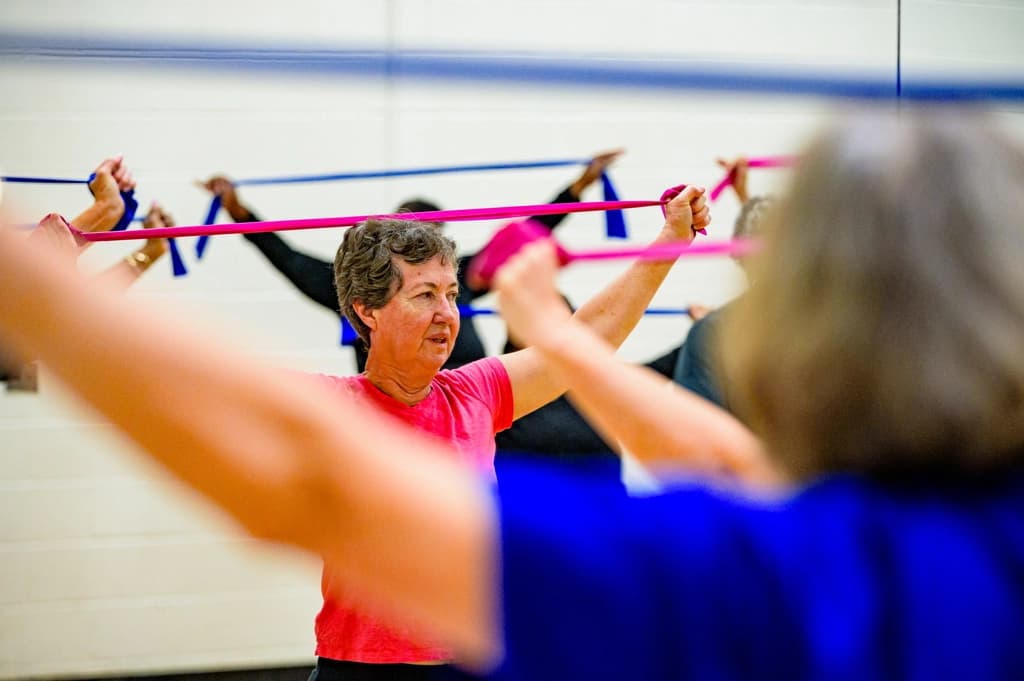
Expect a sling for 2 to 6 weeks, gentle motion first and strength later, and a gradual return to everyday tasks by about 3 months. HSS describes full recovery as 6 to 12 months. Surgeons set the actual milestones, and a 2019 review of 16 studies found little consistency among published protocols, so treat the table as a range.
| Stage | What is typical | Source |
|---|---|---|
| Day of surgery to day 2 | Home the same day or after one night. Sling on. Therapy begins within a day or two. | AAOS, shoulder joint replacement; Choose PT |
| Weeks 1 to 2 | Hand, wrist and elbow movement. Simple eating, dressing and grooming possible within about 2 weeks. Stitches or staples out at 1 to 2 weeks. | AAOS; MedlinePlus, 2025 |
| Weeks 2 to 6 | Protection phase. Therapist-guided passive motion. Most people leave the sling at 4 to 6 weeks (HSS). AAOS says 2 to 6 weeks, and anatomic protocols in the 2019 review run 3 to 8. | HSS, shoulder replacement, 2025; AAOS; JOSPT 2019 |
| Weeks 6 to 12 | Active motion, then light strengthening. Comfortable at 3 months, with about half of normal motion and some weakness (HSS). | HSS, shoulder replacement, 2025; Cureus, 2026 |
| 3 to 6 months | Strengthening and sport-specific work. HSS lists therapy for 3 to 6 months depending on your goals. | HSS, reverse shoulder replacement, 2025 |
| 6 to 12 months | Motion and strength reach about two-thirds of normal at 6 months. About 95% of patients have little to no pain at a year (HSS). | HSS, shoulder replacement, 2025 |
One caution on immobilization. Most surgeons recommend 4 to 6 weeks, yet two prospective studies reviewed in 2023 found early motion safe after reverse replacement (Curr Rev Musculoskelet Med, 2023). If a friend left the sling sooner than you will, their surgeon wrote a different plan.
Which precautions differ between anatomic and reverse replacement?
Both types share the same core rules for about six weeks. AAOS says to avoid extreme arm positions, such as straight out to the side or behind your body, and not to push yourself up from a bed or chair with the operated arm. For a reverse replacement it lists a 5 pound lifting limit (or the weight your surgeon sets) for the first 6 weeks (AAOS, reverse total shoulder replacement). For a conventional replacement it says nothing heavier than a glass of water for the first 2 to 6 weeks (AAOS, shoulder joint replacement).
What differs is the reason. After an anatomic replacement, the rules guard the repaired front tendon, so outward rotation is capped and active lifting waits. After a reverse replacement, surgeons who set lifelong weight limits cite instability, stress where the implant parts meet and faster implant wear, though no consensus exists on permanent limits (Obana and colleagues, 2026).
Lifelong limits are less settled. A 2026 review of 50 provider websites found 40% listed lifetime weight limits for reverse replacement, with maximums averaging about 26 pounds below shoulder height and 20 pounds above, while the authors noted that no formal recommendation in the literature supports a specific number (Obana and colleagues, 2026). Ask your surgeon for yours in writing.
How should you sleep after shoulder replacement?
Plan for broken sleep for several weeks. AAOS says pain with activity and at night is common for several weeks. For a reverse replacement, MedlinePlus advises resting the shoulder and elbow in front of a rolled towel or small pillow when lying down, which keeps the arm level with your body (MedlinePlus, 2025).
A 2026 systematic review of 18 studies and 2,512 patients found minimal sleep improvement in the first 6 weeks and a marked improvement by 6 months. Between 13% and 16% still reported trouble sleeping comfortably later (Shoulder & Elbow, 2026). Some protocols keep the sling on overnight. Ask yours.
When can you drive?
Most sources say wait until you are out of the sling and off opioid pain medicine. AAOS gives 2 to 6 weeks, HSS gives 2 to 4 weeks or until you are out of the sling (4 to 6 weeks), and MedlinePlus says at least 4 to 6 weeks after a reverse replacement. Your surgeon or therapist clears you (HSS, reverse shoulder replacement, 2025; MedlinePlus, 2025). Line up rides for the first weeks, and do not drive on opioids.
What warning signs mean you should call your surgeon?
Call your surgeon for fever above 101°F, redness, pain, swelling or yellow drainage at the wound, bleeding that soaks the dressing, or pain medicine that stops working. Also call for numbness or tingling in your hand, a hand or fingers that look darker or feel cool, swelling in the arm, or a shoulder that feels loose or out of position (MedlinePlus, 2025).
Three groups deserve a closer look.
- Infection. AAOS says infection can occur in the wound, deep around the implant, in the hospital, at home or even years later, and that any infection elsewhere in your body can spread to a joint replacement.
- Dislocation or implant trouble. A shoulder that feels like it is shifting is a call, not a wait-and-see.
- Blood clots. Surgery raises clot risk (HSS, 2025). NHLBI lists swollen, tender legs that hurt to the touch, and shortness of breath or pain when breathing, as signs, and says to call your provider right away (NHLBI, 2022).
When can you return to golf, swimming and pickleball?
Most studies report a return to golf and swimming between about 4 and 9 months, with wide variation. A 2026 scoping review of 23 studies found average return times of 4 to 9 months across sports and an overall return rate of 85%, higher after anatomic (93%) than after reverse replacement (75%). It also found that objective clearance tests are missing: most surgeons rely on time and judgment (Cureus, 2026).
For reverse replacement specifically, a 2026 systematic review of 15 studies and 937 patients (mean age 72.7) reported return rates of 50% to 100% for golf and 64% to 67% for swimming (Orthop J Sports Med, 2026). The scoping review reports average golf return times of 4.5 to 8.4 months and swimming at about 6.7 months.
Pickleball data are thin. A 2025 study of 23 players, only 7 of whom had a shoulder replacement, found everyone eventually returned and 57% of the replacement group was back within a year (JSES Reviews, Reports, and Techniques, 2025). With 7 arthroplasty patients, treat that as an early signal.
Swimming deserves a question to your surgeon. In the 2026 website review, only 14% of provider sites named swimming (24% named golf), so do not assume it is on your cleared list (Obana and colleagues, 2026).
How do you protect the shoulder in the long run?
AAOS says to avoid contact sports and repetitive heavy lifting for good, and to avoid overdoing it once pain is gone. Severe pre-surgery pain can lull you into doing more than is prescribed, and AAOS warns that early overuse can cause severe motion limits (AAOS, shoulder joint replacement).
A checklist for your six-week visit:
- Which sports are cleared, and from what month?
- What is my lifetime weight limit, below and above shoulder height?
- Which positions should I avoid for good?
- How often should I get implant X-rays?
- Do I need antibiotics before dental work or other procedures?
Where do recovery services fit after surgeon clearance?
Studio services can add comfort and routine around the work your surgeon and physical therapist direct. They do not replace it, and the evidence is limited. We did not find a trial of any of these services after shoulder replacement specifically, so here is what exists nearby.
- PEMF. A 2020 review of prospective studies and trials after hip, knee or shoulder replacement reported no adverse effects and said PEMF is not part of usual clinical practice (Lullini and colleagues, 2020). OutRecover's page says PEMF is not recommended with a pacemaker or electrical implant. See PEMF therapy.
- Red light. A 2026 review of four trials after knee or hip replacement found promising short-term effects on pain and swelling but called the evidence insufficient to be conclusive (Photobiomodulation, Photomedicine, and Laser Surgery, 2026). See red light therapy.
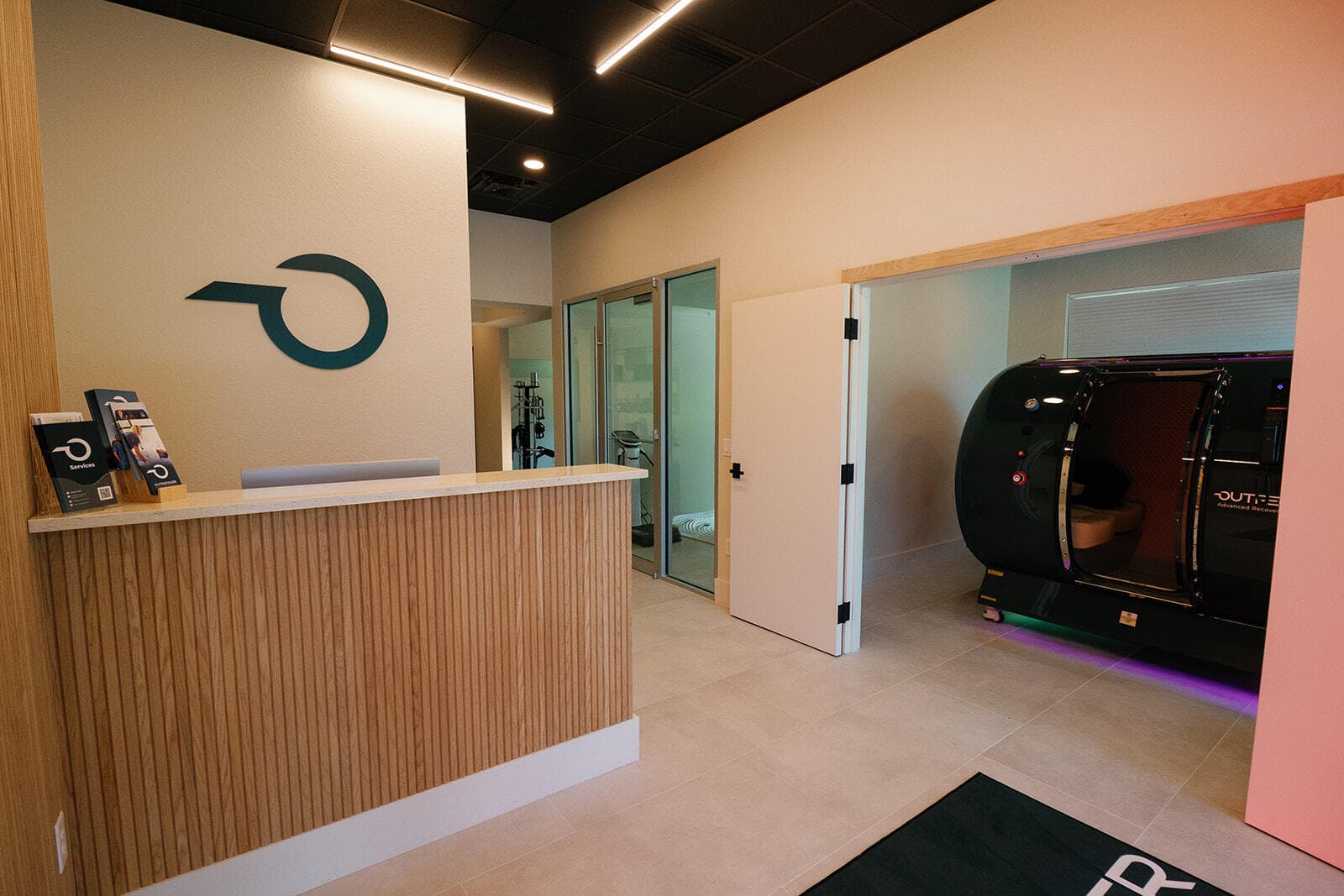
- Hyperbaric oxygen. A December 2025 review of 18 studies said HBOT may offer adjunctive benefits in postoperative conditions such as knee replacement, and that the evidence remains limited (Musculoskeletal pain review, 2025). See hyperbaric oxygen.
- Compression. The studio lists arm sessions on its compression page, and that page says to avoid compression over active clot sites. Because MedlinePlus lists arm swelling as a reason to call your surgeon, clear compression with your surgeon first. Our guide on reducing swelling after surgery covers what is normal.
Among packages, OutHeal lists shoulder replacement among the procedures it is built for, and is the best fit. OutRepair is built for lighter procedures such as minor shoulder arthroscopy, so for a replacement it is the lesser fit. Read each page for contents. Sessions after surgery follow your surgeon's clearance, and nothing here promises a faster recovery.
What should you do next?
Before your six-week visit, write down the answers to the checklist above and bring your sling and therapy instructions. If a rotator cuff repair rather than a replacement is on your calendar, read our rotator cuff surgery recovery timeline. When your surgeon has cleared you and you want to talk through what fits, the OutRecover studio at 675 Piper Boulevard in North Naples can walk you through it.
Sources
- AAOS (OrthoInfo). Shoulder Joint Replacement. Page read 2026-11-06. https://orthoinfo.aaos.org/en/treatment/shoulder-joint-replacement/
- AAOS (OrthoInfo). Reverse Total Shoulder Replacement. Page read 2026-11-06. https://orthoinfo.aaos.org/en/treatment/reverse-total-shoulder-replacement/
- Hospital for Special Surgery. Shoulder Replacement Surgery: Pain Relief and Function. Updated December 2025. https://www.hss.edu/health-library/conditions-and-treatments/list/shoulder-replacement-surgery
- Hospital for Special Surgery. Reverse Shoulder Replacement. Updated November 2025. https://www.hss.edu/health-library/conditions-and-treatments/reverse-shoulder-replacement
- MedlinePlus (NIH). Reverse total shoulder replacement - discharge. Review date June 2025. https://medlineplus.gov/ency/patientinstructions/000987.htm
- NHLBI (NIH). Venous Thromboembolism: Symptoms. Updated September 2022. https://www.nhlbi.nih.gov/health/venous-thromboembolism/symptoms
- Journal of Orthopaedic and Sports Physical Therapy. A Systematic Review of Proposed Rehabilitation Guidelines Following Anatomic and Reverse Shoulder Arthroplasty. 2019. https://pubmed.ncbi.nlm.nih.gov/31021690
- Current Reviews in Musculoskeletal Medicine. Optimizing Outcomes After Reverse Total Shoulder Arthroplasty: Rehabilitation, Expected Outcomes, and Maximizing Return to Activities. 2023. https://pmc.ncbi.nlm.nih.gov/articles/PMC10043097
- Cureus. Return to Sport After Shoulder Arthroplasty: A Scoping Review. 2026. https://pmc.ncbi.nlm.nih.gov/articles/PMC12863409
- Orthopaedic Journal of Sports Medicine. Variable Return-to-Sport Rates Despite Improved Shoulder Function and Outcomes Scores After Primary Reverse Shoulder Arthroplasty in Active Patients: A Systematic Review. 2026. https://pmc.ncbi.nlm.nih.gov/articles/PMC12796120
- JSES Reviews, Reports, and Techniques. The rate of return to play for pickleball is high following shoulder surgery. 2025. https://pmc.ncbi.nlm.nih.gov/articles/PMC12573592
- Obana KK and colleagues. Publicly available online activity restrictions after reverse total shoulder arthroplasty demonstrate marked variability. Journal of Shoulder and Elbow Arthroplasty, 2026. https://pmc.ncbi.nlm.nih.gov/articles/PMC13594875
- Shoulder & Elbow. Sleep quality after shoulder arthroplasty: a systematic review. 2026. https://pmc.ncbi.nlm.nih.gov/articles/PMC13198522
- American Physical Therapy Association (Choose PT). Physical Therapy Guide to Shoulder Replacement (Arthroplasty). Page read 2026-11-06. https://www.choosept.com/guide/physical-therapy-guide-total-shoulder-arthroplasty-replacement
- Lullini G and colleagues. Role of pulsed electromagnetic fields after joint replacements. World Journal of Orthopedics, 2020. https://pmc.ncbi.nlm.nih.gov/articles/PMC7298453
- Eladl HM and colleagues. Systematic Review on the Effectiveness of Photobiomodulation Therapy on Enhancing Musculoskeletal Rehabilitation Outcomes after Total Knee and Hip Arthroplasty. Photobiomodulation, Photomedicine, and Laser Surgery, 2026. https://pubmed.ncbi.nlm.nih.gov/42581717
- Effectiveness of Hyperbaric Oxygen Therapy for Musculoskeletal Pain Syndromes: A Systematic Review. Collection December 2025. https://pmc.ncbi.nlm.nih.gov/articles/PMC12736084