Hyperbaric oxygen therapy (HBOT) means breathing near-100% oxygen inside a pressurized chamber. In a hospital it is a prescribed treatment for a short list of conditions, and insurance pays for it only for those. In a studio it is a wellness session you book yourself, and the cost, the safety screening and the claims you hear all deserve a closer look before you book. This guide gives you the questions to ask, so you can decide with your doctor rather than with a friend's testimonial.
What is hyperbaric oxygen therapy?
The Undersea and Hyperbaric Medical Society (UHMS) defines it as breathing near-100% medical oxygen inside a chamber pressurized above sea level, and says the pressure must reach at least 1.4 atmospheres absolute (ATA) to count as hyperbaric therapy. Common hospital treatment pressures run from 2.0 to 3.0 ATA, for 90 to 120 minutes of oxygen breathing (UHMS MEDFAQs). Breathing pure oxygen through a mask at normal pressure does not qualify (UHMS indications, 13th ed.).
The research on what it does for athletic and surgical recovery is covered on our clinical evidence page for hyperbaric oxygen. This guide covers the consumer questions: safety, price, coverage and how to choose a provider.
Medical hyperbaric oxygen and a studio chamber are different things
The FDA has cleared hyperbaric oxygen for a defined list of conditions, among them decompression sickness, carbon monoxide poisoning, gas gangrene, crush injury, radiation injury, severe infections of skin and bone, and non-healing diabetic foot wounds. The FDA's consumer update, as reproduced by UHMS, adds a warning: some centers promote chambers for uses the FDA has not cleared, such as cancer, Lyme disease, autism or Alzheimer's disease (FDA update via UHMS). It also advises that if your provider recommends HBOT for a cleared condition, you get it at a facility accredited by UHMS.
Here is how to compare any chamber against the medical standard:
| Question | Medical HBOT, per UHMS, FDA and Mayo | What to ask a studio |
|---|---|---|
| Who decides you need it? | A physician, for a listed condition | Who reviews your health history, and what do they do with it? |
| Pressure | At least 1.4 ATA; commonly 2.0 to 3.0 ATA | What pressure does the chamber reach, and who set it? |
| Oxygen | Medical-grade oxygen, over 99% pure (UHMS indications, 2020) | What gas do I breathe, and from what source? |
| Monitoring | Team monitors you and checks your ears before you leave (Mayo Clinic) | Who is in the room, and what training do they have? |
| Fire rules | No lighters, no battery-powered heat sources, no lotion or hair products | What do you ask me to remove before I go in? |
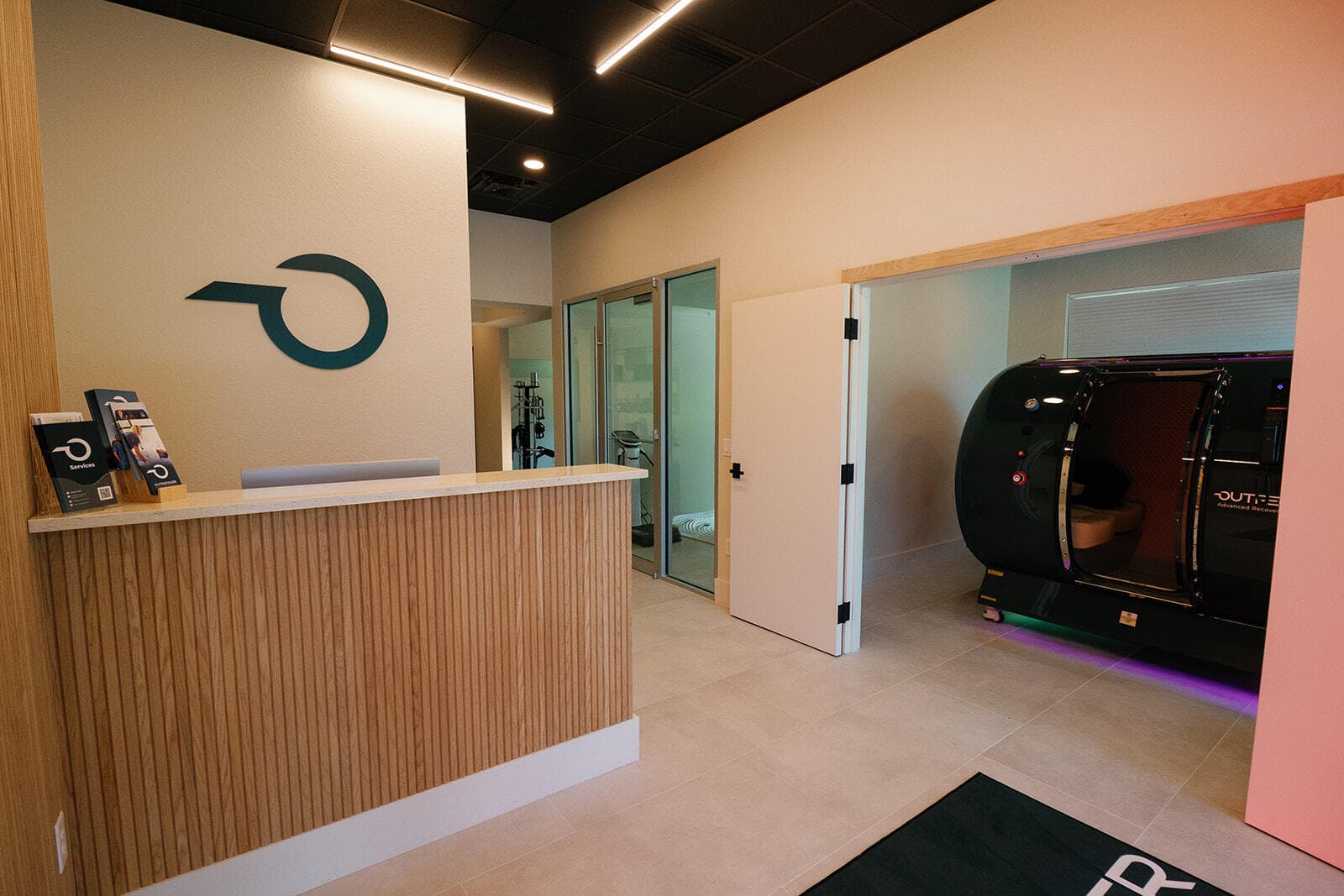
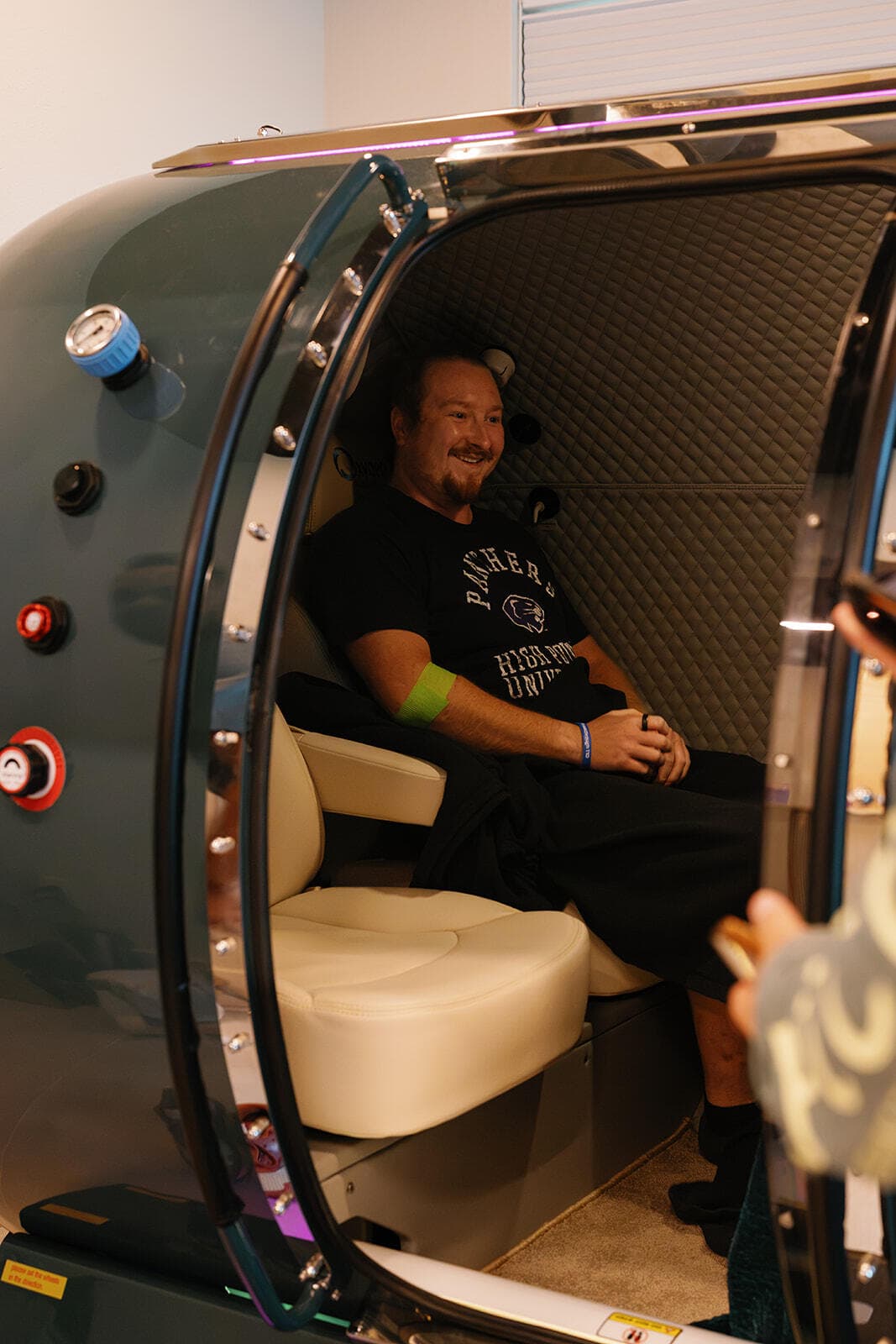
OutRecover's hyperbaric oxygen service page describes a seated chamber at its North Naples studio and sessions of roughly an hour to an hour and a half. It states that the service is wellness-based and is not meant to diagnose, treat, cure or prevent any disease. A seated studio session is not the hospital treatment the FDA clearance covers, and nobody should book it as a replacement for that care.
What are the side effects of hyperbaric oxygen therapy?
Most side effects come from pressure changes in the air spaces of your body, mainly the middle ear. The StatPearls review (updated 2025) names middle ear barotrauma as the most frequently affected site, ranging from mild redness to a ruptured eardrum, along with sinus pain, rare tooth pain and rare lung injury (StatPearls, 2025). Mayo Clinic describes the same sensation as the plugged ears you feel on an airplane, and notes complications are usually mild and short-lived, with risk rising for longer and repeated courses.
| Effect | What the sources say |
|---|---|
| Ear pressure or pain | The most common problem; roughly half of reported adverse events in one 2009 to 2010 monoplace study (StatPearls, 2025) |
| Sinus pain | Occurs when sinuses cannot equalize; people with an active upper respiratory infection are advised to wait |
| Confinement anxiety | Reported as a cause of discomfort; ask about it at intake |
| Oxygen toxicity seizure | Rare, but StatPearls puts the overall risk at about 1 in 2,000 to 3,000 treatments, about 1 in 10,000 at 2 ATA or less and higher at higher pressures (StatPearls oxygen toxicity); it usually stops once the person breathes normal air |
| Temporary nearsightedness | Reversible after treatment ends; most improvement within about six weeks |
| Tiredness or hunger | Mayo says you may feel somewhat tired or hungry after a session, without limiting your usual activities |
The same StatPearls review puts overall adverse effects at about 0.4% in that one study. That figure is a snapshot from 2009 to 2010 and from one chamber type, so use it as a rough scale and make no promise from it about any chamber.
Who should not do it, or should ask a doctor first?
The only absolute contraindication StatPearls lists is an untreated pneumothorax (a collapsed lung), because trapped air expands under pressure (StatPearls contraindications, 2025). Several other conditions call for a medical review first. If any of these apply, talk to your physician before you book:
- Chronic obstructive pulmonary disease, asthma, lung cysts or blebs
- A recent upper respiratory infection, or ears that do not clear easily
- Severe claustrophobia
- A pacemaker, defibrillator or other implant (not all are pressure-tested)
- Certain chemotherapy drugs, such as bleomycin or doxorubicin, which have specific waiting periods
- Heart failure with a low ejection fraction, a seizure history or uncontrolled blood pressure
OutRecover's page says its service is not suitable for people with an untreated pneumothorax or certain ear conditions, and that an intake assessment comes before the first session. If you are recovering from surgery, clear any new therapy with your surgeon first.
How much does hyperbaric oxygen therapy cost?
No dollar figure here would be both reputable and current, so use a method instead. Hospital HBOT is billed per session, and Medicare's coding guidance treats each session as one billing unit regardless of whether it lasts one hour or two (CMS coding guideline). The price that matters is the whole course, because sessions add up: Cleveland Clinic describes courses of up to 30 or more sessions (Cleveland Clinic), and Mayo says non-healing wounds may need 40 or more (Mayo Clinic).
An illustration with no real prices: if a session costs X and a plan calls for 30 sessions, the cost is 30X, before travel and time off. Ask any provider for the per-session price, the number of sessions they expect you to need and what they base that number on. A provider that cannot say why you need that many is selling a bundle without a plan behind it.
For OutRecover, the current single-session price and the packages that include hyperbaric oxygen are on the service page, which we keep current so this guide does not go stale.
Does insurance or an HSA/FSA pay for it?
Medicare covers hyperbaric oxygen only for conditions on its list in National Coverage Determination 20.29, and states that no payment may be made for any other condition. The covered list includes acute carbon monoxide poisoning, decompression illness, gas embolism, gas gangrene and selected wounds (CMS NCD manual, rev. 2017). Diabetic foot wounds qualify only after 30 days without measurable healing under standard wound care. Johns Hopkins says Medicare, Medicaid and many private insurers generally cover HBOT for approved conditions, but not in every case, and you may need pre-authorization (Johns Hopkins Medicine). A wellness session with no qualifying diagnosis should not be expected to be covered.
HSA and FSA accounts follow the IRS rules for medical expenses. IRS Publication 502 says medical care expenses must be primarily to alleviate or prevent a physical or mental disability or illness, and that costs merely beneficial to general health do not count (IRS Publication 502, 2025). So eligibility depends on whether the session is for a medical condition and on how your plan administrator reads it. Ask your plan before you pay, and do not rely on a provider's word that it qualifies.
How do you judge a provider?
Use this as a checklist before you book anywhere. A good provider answers every line without hesitation:
- Supervision. Who is responsible for my safety during the session, and who do I reach if something goes wrong?
- Screening. What health history do you collect, and what would make you turn me away? The StatPearls contraindication list is a fair test of whether they screen thoughtfully.
- Equipment. Is the chamber FDA-cleared? The FDA says hyperbaric chambers are Class II devices cleared through 510(k), searchable by product code CBF, and that it is aware of reports of fires with HBOT devices that resulted in serious injuries and deaths, which is why it urges following the manufacturer's instructions (FDA letter, 2025).
- Pressure and oxygen. What pressure does it run at, and is the gas medical-grade oxygen?
- Claims. Do they promise results for cancer, autism, Lyme disease or Alzheimer's? The FDA says these uses are not cleared. Walk away.
- Honesty about evidence. Can they tell you where the evidence is strong and where it is limited?
Item 6 matters for recovery in particular. Johns Hopkins lists sports injuries among conditions for which HBOT is not considered safe and effective, while our research summary covers newer, smaller studies on muscle recovery. Treat that as unsettled, and ask your clinician.
Where does a studio session fit?
Evidence for hyperbaric oxygen is strongest for the FDA-cleared conditions above, and those belong in a medical setting. For recovery from sports injuries and orthopedic procedures, the evidence is limited and mixed, and a studio session is a wellness choice that sits alongside a plan from your surgeon or therapist and never replaces it.
If you decide hyperbaric oxygen is worth trying, OutRecover offers single sessions and includes it in several packages. OutRebuild pairs it with red light, Class IV laser and vitamin D light for sprains and soft-tissue injuries. OutHeal and OutRepair are built for before and after surgery, and OutReady is a single visit before a procedure. Each package page lists what is included and who it fits. If you are weighing it against other options, our guide to reducing swelling after surgery covers other tools.
Your next step
Write down three things before you book: the condition you want to address, the questions from the checklist above and your surgeon's or doctor's view. Then call your insurer or HSA administrator about coverage. When you are ready to see how a session works, start with the hyperbaric oxygen page, where the intake and current prices are listed.
Sources
- Undersea and Hyperbaric Medical Society. MEDFAQs: treatment protocol (definition of HBO2, pressures, session length). UHMS, undated. https://uhms.org/resources/featured-resources/medfaqs-frequently-asked-questions-faq/safety-technical/treatment-protocol.html
- Undersea and Hyperbaric Medical Society. Hyperbaric Oxygen Therapy Indications, 13th edition (front matter and references). UHMS, 2014. https://uhms.org/images/indications/UHMS_HBO2_Indications_13th_Ed._Front_Matter__References.pdf
- Undersea and Hyperbaric Medical Society. HBO Indications. UHMS, 2020. https://uhms.org/resources/featured-resources/hbo-indications.html
- Undersea and Hyperbaric Medical Society. FDA recommends UHMS-accredited hyperbaric facilities for treatment of specific illnesses (reproducing the FDA consumer update "Hyperbaric Oxygen Therapy: Get the Facts"). UHMS, undated. https://uhms.org/resources/news-announcements/1104-fda-recommends-uhms-accredited-hyperbaric-facilities-for-treatment-of-specific-illnesses.html
- U.S. Food and Drug Administration. Follow Instructions for Safe Use of Hyperbaric Oxygen Therapy Devices: Letter to Health Care Providers. FDA, August 25, 2025. https://www.fda.gov/medical-devices/letters-health-care-providers/follow-instructions-safe-use-hyperbaric-oxygen-therapy-devices-letter-health-care-providers
- Sadri RA, Cooper JS. Hyperbaric Complications. StatPearls, NCBI Bookshelf, updated June 2025. https://www.ncbi.nlm.nih.gov/books/NBK459191
- StatPearls. Hyperbaric Oxygen Therapy Contraindications. NCBI Bookshelf, 2025. https://www.ncbi.nlm.nih.gov/books/NBK557661
- Mayo Clinic. Hyperbaric oxygen therapy. Mayo Foundation for Medical Education and Research, 2026. https://www.mayoclinic.org/tests-procedures/hyperbaric-oxygen-therapy/about/pac-20394380
- Cleveland Clinic. Hyperbaric Oxygen Therapy: What It Is and Benefits. Cleveland Clinic, undated. https://my.clevelandclinic.org/health/treatments/17811-hyperbaric-oxygen-therapy
- Johns Hopkins Medicine. Hyperbaric Oxygen Therapy. Johns Hopkins Medicine, undated. https://www.hopkinsmedicine.org/health/treatment-tests-and-therapies/hyperbaric-oxygen-therapy
- Centers for Medicare and Medicaid Services. Medicare National Coverage Determinations Manual, Chapter 1, section 20.29, Hyperbaric Oxygen Therapy (Rev. 203). CMS, 2017. https://www.cms.gov/regulations-and-guidance/guidance/manuals/downloads/ncd103c1_part1.pdf
- Centers for Medicare and Medicaid Services. Coding Guidelines 99183 Hyperbaric Oxygen (HBO) Therapy. CMS Medicare Coverage Database, undated. https://downloads.cms.gov/medicare-coverage-database/lcd_attachments/29192_2/99183_codeguide.htm
- Internal Revenue Service. Publication 502, Medical and Dental Expenses. IRS, 2025. https://www.irs.gov/publications/p502
- StatPearls. Oxygen Toxicity. NCBI Bookshelf. https://www.ncbi.nlm.nih.gov/books/NBK430743