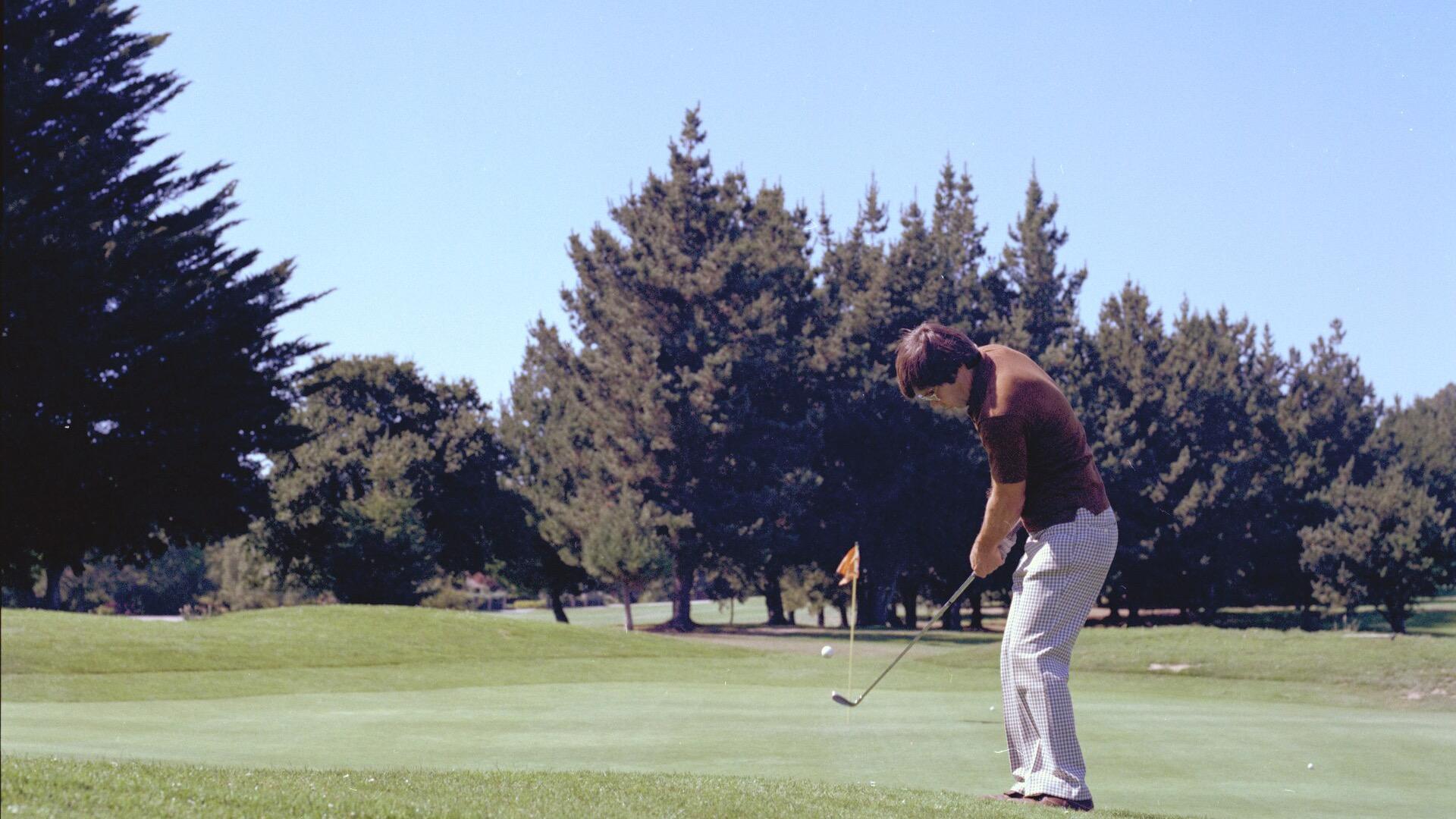
Golfer's elbow is a tendon problem on the inside of the elbow, and the treatment with the best support is a steady, loaded rehab program rather than a single procedure. Most people get better without surgery: StatPearls reports that more than 90% of patients improve with nonoperative treatment (2026). The catch is time: plan on weeks to months, and on hitting fewer balls while the tendon settles.
What is golfer's elbow, and how is it different from pain on the outside of the elbow?
Golfer's elbow (medial epicondylitis) is overload of the tendons that attach your wrist and finger flexors and your forearm rotators to the bony bump on the inside of the elbow. AAOS OrthoInfo (2025) describes tendons that fray and partially tear with repeated motion. Pain on the outside of the elbow is a different tendon, covered in our guide to pickleball elbow.
The inside version is the rarer one. StatPearls puts it at 10% to 20% of all epicondylitis, and a review of golf injuries found outside-elbow problems outnumbered inside-elbow ones about 5 to 1 (2005, drawing on older surveys). The name misleads in another way: StatPearls says most cases arise in non-athletes, particularly people who grip hard and repeatedly at work.
One detail changes how you treat it. Tissue studies find few inflammatory cells in these tendons, so StatPearls calls the condition a degenerative tendinosis rather than an inflammatory one. That explains why loading the tendon sensibly matters more than calming it with ice and pills.
What causes golfer's elbow in golfers, and in everyone else?
In golf the usual trigger is a sudden stop at impact, repeated often. A review of golf upper-limb injuries (2005) links inside-elbow injury to abrupt deceleration of the club head, most often a "fat" shot where the club hits the ground first, and most often in the trail arm (the right arm for a right-handed golfer).
| Cause | What the sources say |
|---|---|
| Hitting the ground or thick rough | The review above names fat shots as the likelier mechanism for amateurs |
| Sudden jump in practice volume or a changed grip | The same review ties overuse tendon problems in the forearm and wrist to these changes |
| Swing technique and equipment | AAOS lists improper technique or equipment as possible risk factors |
| Shaft material | A small 2026 muscle-activity study of 40 golfers found graphite shafts lowered forearm muscle activity late in the swing. It measured muscle signals and did not track pain or healing |
| Work and daily tasks | StatPearls links it to forceful gripping, loads over 20 kg (44 lb), vibrating tools, smoking and type 2 diabetes |
| Age | AAOS says it usually appears between ages 40 and 60 |
Grip pressure deserves a plain note. The golf review connects a tight grip to the outer elbow. We found no study that ties grip pressure to the inner elbow, so treat it as a question for your instructor and not as a proven fix.
How is golfer's elbow diagnosed, and what else can look like it?
Diagnosis is mostly clinical. A clinician asks what brings the pain on, presses along the inner elbow, and tests wrist flexion and forearm rotation against resistance; StatPearls says the diagnosis is primarily clinical. An X-ray rules out fracture and arthritis. AAOS says ultrasound or MRI are usually saved for pain that has lasted a long time or is not responding.
The main look-alike is the ulnar nerve, the "funny bone" nerve that runs just behind that bony bump. StatPearls reports that about 20% of patients also have ulnar neuropathy. Ligament injury and other elbow problems also sit on the differential list.
Tell your clinician if you notice any of these:
- Numbness or tingling in the ring and little fingers (AAOS ties this to ulnar nerve irritation)
- A swollen, hot elbow with fever, a misshapen elbow, or a possible broken bone, which Cleveland Clinic (2025) says needs urgent care
Golfer's elbow treatment: what does the evidence support?
Rehab loading has the most support, braces and short-term rest are reasonable, and the newer options have thinner evidence.
| Option | What the sources say | How firm |
|---|---|---|
| Activity change | StatPearls and AAOS both start by cutting the movements that provoke pain | Standard first step |
| Progressive exercise | AAOS calls exercise the long-standing main treatment and says eccentric work is "thought to be particularly beneficial" | Best supported, certainty still low |
| Counterforce brace | AAOS and StatPearls list a strap below the elbow to reduce load on the tendon | Common, modest evidence |
| Steroid injection | Short-term relief only, under 6 to 8 weeks per StatPearls; AAOS says it may lengthen rehab | Use with caution |
| PRP injection | Reviewed below | Limited |
| Shockwave | Reviewed below | Mixed, uncertain |
Exercise
AAOS describes a sequence: stretch for pain-free wrist motion first, then strengthen the wrist flexors and forearm rotators, with eccentric work (loading while the muscle lengthens). StatPearls adds isometric and isotonic exercises and shoulder and shoulder-blade strengthening. A 2026 systematic review of eccentric exercise for medial epicondylitis found five studies and 143 patients, with pain and function improving, and concluded that certainty is low and larger trials are needed. The AAOS exercise handout is a good start for a conversation with your therapist.
Injections
For steroids, the AAOS caution is worth reading twice: early relief can come with a longer road back. For PRP, a systematic review of studies from 2010 to 2020 found only two eligible comparisons with surgery, both lower-level cohort studies, and said the findings need caution. AAOS lists PRP as an option for which it is not yet known how effective it is compared with standard rehab.
Shockwave
Shockwave is on the AAOS list of options that may help but lack head-to-head proof against rehab. StatPearls says it may help in tendinopathy lasting more than 6 months. The one trial we opened that included inner-elbow patients was small: 22 people, 9 of them with medial epicondylitis (2012). Steroid worked faster over the first two weeks, and the groups were similar afterward through week 8.
The stronger trials are on the outer elbow, and they disagree. A 2002 multicenter trial found success rates of 25.8% with shockwave and 25.4% with placebo. A 2026 systematic review of 11 trials called the evidence inconclusive, suggesting shockwave may be a useful add-on to physical therapy. Our own research summary on shockwave lists plantar fasciitis, calcific shoulder tendinitis and knee osteoarthritis as its best-supported uses; the elbow is not among them.
How long does golfer's elbow take to heal?
Expect weeks to months. StatPearls says improvement is gradual and that surgery is considered after 3 to 6 months of appropriate nonoperative care. Cleveland Clinic suggests resting the arm for at least four to six weeks before returning to sport, and mentions surgery after six to 12 months without improvement.
- First weeks: cut what provokes the pain, use a brace if your clinician recommends one, begin gentle motion.
- Next weeks to months: progressive strengthening under a therapist's eye.
- If there is no change after several months: ask an orthopaedic surgeon about imaging and options. After surgery, AAOS says sports usually resume 3 to 6 months later.
Recurrence happens, particularly when risk factors are not addressed, according to StatPearls.
How do you return to golf after golfer's elbow?
Return in stages, shortest swings first, and let your clinician set the exact steps. The sequence below is an illustration built from the principles in the sources (activity modification, technique correction, workload monitoring and bracing during sport), and no published protocol was found. Agree on a stop rule with your therapist before you start, such as "pain stays at or below a level we name, and has settled by the next morning."
- Pain-free daily use. Gripping a coffee cup or turning a door handle no longer hurts, and your strengthening work is progressing.
- Putting and chipping. Short, low-force strokes, with the brace if your clinician advises it.
- Pitching and short irons off clean lies. Use a small bucket, not a full one.
- Range session, mid irons. Fewer balls than you used to hit.
- Full swing and a nine-hole round. Skip the thick rough, since sudden deceleration is the golf mechanism named in the review above.
- Eighteen holes and full practice. Raise volume in small steps, since a sudden jump in practice is a named trigger.
Ask your instructor to look at fat shots and divot depth, and ask your clinician about your shaft and grip size.
Where do OutRecover's services fit?
OutRecover's services sit beside medical care and rehab and do not replace either. They are wellness-based, and a clinician should diagnose the elbow first, especially if you have numbness or tingling.
Focused shockwave and Class IV laser are the two most relevant. The evidence above is the evidence: shockwave is mixed for the elbow, and OutRecover's laser research summary reports that the laser trials on the elbow involve the outer side and that overall quality is low to moderate. OutResolve is the package built for chronic tendon pain, lists golfer's elbow among who it is for, and combines laser and/or shockwave with PEMF. We did not review PEMF evidence for this condition.
H-Wave is described on its page for circulation, swelling and nerve discomfort. We did not find evidence for it in golfer's elbow, so consider it only if a clinician has pointed to a nerve component. If you have had elbow surgery, clear anything new with your surgeon first.
What should you do next?
Start with an exam, then a loaded rehab plan, and add studio services only alongside them. In order:
- Get the elbow examined if pain has lasted more than a few weeks, or if you have numbness or tingling.
- Ask for a rehab plan with progressive loading, and print the AAOS handout to bring along.
- Cut back what hurts now: fewer range balls, no thick rough.
- If you want to add shockwave or laser alongside rehab, look at OutResolve and bring your clinician's notes to the studio.
- When you return, follow the stages above and add volume slowly. For the other common golf complaint, see our guide to golf back pain.
Sources
- American Academy of Orthopaedic Surgeons. Medial Epicondylitis (Golfer's Elbow). OrthoInfo, updated 2025. https://www.orthoinfo.org/bodypart/elbow/medial-epicondylitis-golfers-elbow
- Li D, Hammad A, Kaiser K. Medial Epicondylitis (Golfer's Elbow). StatPearls, NCBI Bookshelf, last updated January 2, 2026. https://www.ncbi.nlm.nih.gov/sites/books/NBK519000
- Cleveland Clinic. Golfer's Elbow (Medial Epicondylitis): Symptoms & Treatment. Medically reviewed, February 7, 2025. https://my.clevelandclinic.org/health/diseases/21711-golfers-elbow-medial-epicondylitis
- American Academy of Orthopaedic Surgeons. Therapeutic Exercise Program for Epicondylitis (Tennis Elbow / Golfer's Elbow). OrthoInfo. https://www.orthoinfo.org/recovery/epicondylitis-therapeutic-exercise-program
- See ZH, Loo CE, Jaafar Z. Eccentric exercise therapy for medial epicondylitis: a systematic review of clinical outcomes. Complementary Therapies in Medicine, 2026. https://pubmed.ncbi.nlm.nih.gov/41887339
- Platelet-Rich Plasma Injections as an Alternative to Surgery in Treating Patients With Medial Epicondylitis: A Systematic Review. PubMed Central (studies 2010 to 2020). https://pmc.ncbi.nlm.nih.gov/articles/PMC9508787
- Lee SS, Kang S, Park NK, et al. Effectiveness of initial extracorporeal shock wave therapy on the newly diagnosed lateral or medial epicondylitis. Annals of Rehabilitation Medicine, 2012. https://pmc.ncbi.nlm.nih.gov/articles/PMC3503944
- Haake M, Konig IR, Decker T, et al. Extracorporeal shock wave therapy in the treatment of lateral epicondylitis: a randomized multicenter trial. Journal of Bone and Joint Surgery, 2002. https://pubmed.ncbi.nlm.nih.gov/12429759
- Verbeke A, Vanwalleghem E. Extracorporeal Shock Wave Therapy in Chronic Lateral Elbow Tendinopathy: A Systematic Review. Orthopaedic Journal of Sports Medicine, April 2026. https://pmc.ncbi.nlm.nih.gov/articles/PMC13153552
- McHardy AJ, Pollard HP. Golf and upper limb injuries: a summary and review of the literature. Chiropractic & Osteopathy, 2005. https://pmc.ncbi.nlm.nih.gov/articles/PMC1175860
- Graphite shafts reduce forearm muscle activity in golf: a prospective case series of 40 right-handed amateur and professional golfers. PubMed, 2026. https://pubmed.ncbi.nlm.nih.gov/41673660
- OutRecover. Focused Shockwave Therapy: Clinical Evidence; Class IV Laser Therapy: Clinical Evidence; OutResolve package page. https://outrecover.com/the-science/shockwave-therapy
